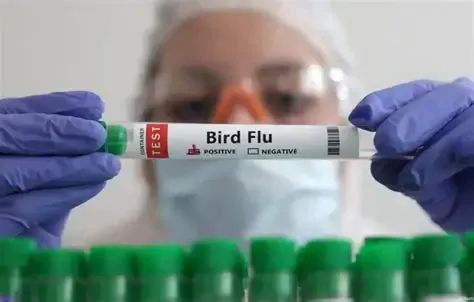
Australia has confirmed its first case of the H5 strain of avian influenza, marking the end of its status as the only continent previously untouched by the highly contagious virus.
The country’s Agriculture Minister, Julie Collins, announced on Saturday that the virus was detected in a migratory brown skua found in a remote part of Western Australia. The diagnosis was verified by Australia’s national science agency.
Collins also disclosed that tests conducted on a giant petrel indicated a likely infection, although further confirmation was still being awaited.
Speaking at a press briefing in Canberra, Collins described the development as unfortunate but not surprising given the virus’s rapid spread across the globe.
“While this news is disappointing, it is not entirely unexpected considering the worldwide spread of the H5 bird flu strain,” she said.
According to the minister, authorities have not recorded any large-scale deaths among bird populations, nor has the virus been detected in domestic poultry.
“At this stage, there is no evidence of mass bird deaths, and there are no confirmed cases in poultry farms,” Collins added.
Following the discovery, Australian animal health and agricultural authorities convened an emergency meeting to assess the situation and coordinate a national response aimed at preventing further spread.
Collins noted that experts had long anticipated the possibility of the virus reaching Australia.
“We understood that remaining free of bird flu indefinitely was unlikely, and preparations have been ongoing for this possibility,” she stated.
Australian Prime Minister Anthony Albanese also expressed concern over the detection, assuring citizens that the government was prepared to respond swiftly.
“This outbreak is linked to migratory birds and reflects a challenge that many countries around the world have faced. We have been preparing for such an event and will continue efforts to contain its spread,” Albanese said.
The H5 strain of bird flu has caused widespread outbreaks in many parts of the world, resulting in significant losses among poultry and wild bird populations. Species most vulnerable to the virus include waterfowl, seabirds, shorebirds and birds of prey.
Beyond birds, the disease has also been detected in several mammal species, including seals, cats, goats, alpacas and pigs.
Earlier this week, Australian researchers reported that the virus was responsible for the deaths of more than 13,000 elephant seal pups on a sub-Antarctic island that serves as one of Australia’s external territories.
Health and agricultural authorities are continuing surveillance efforts as they monitor the situation and work to prevent the virus from spreading to poultry farms and other wildlife populations.