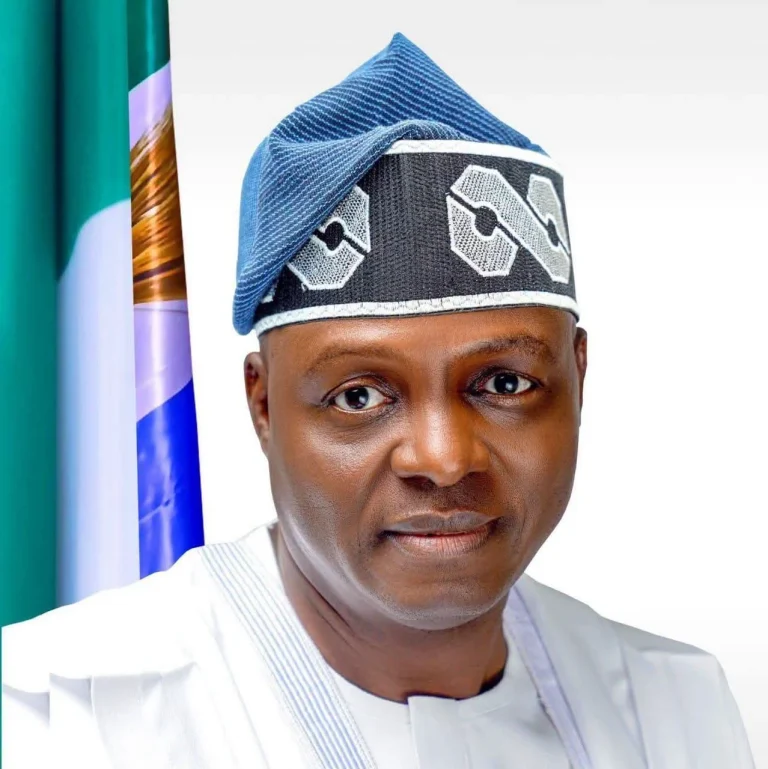
The All Progressives Congress has clarified why Rivers State Governor, Siminalayi Fubara, has yet to be formally received into the party following his defection.
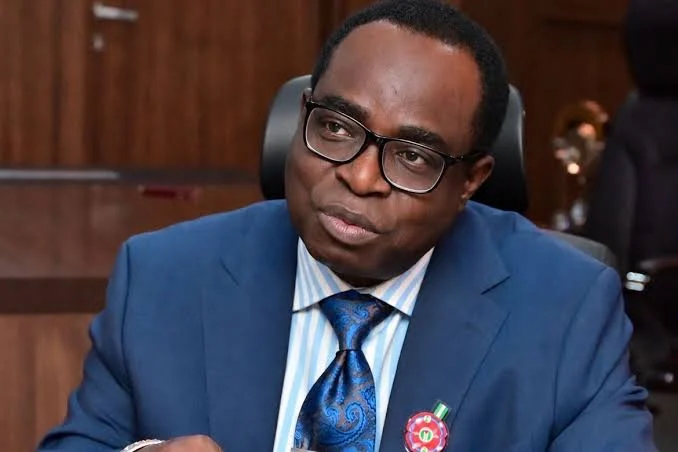
Speaking during a television interview on Sunday, the National Chairman of the APC, Professor Nentawe Yilwatda, said the delay was a calculated political decision aimed at managing regional and religious sensitivities, especially in northern Nigeria.
According to Yilwatda, the party is currently prioritising engagements in the North ahead of the Ramadan season.
“We are preparing activities in places like Kano. In politics, timing is critical. We chose to attend to the northern states first because Ramadan is approaching and a large number of people there are Muslims,” he said.
He explained that many northern communities are particularly sensitive to political activities during the fasting period, making it necessary for the party to adjust its schedule.
“We felt it was important to conclude our engagements with northern governors and stakeholders before moving to the South, where Ramadan does not pose the same challenge,” Yilwatda added.
The APC chairman dismissed suggestions that the delay reflected any limitation in Fubara’s authority within the party.
“This decision has absolutely nothing to do with Governor Fubara lacking authority or relevance. It is purely strategic and based on respect for community sensitivities,” he said.
Responding to claims that the Rivers governor has been unable to assert himself as the party’s leader in the state, Yilwatda challenged those making the allegations to provide evidence.
“Who has complained? Has any petition been submitted? I am the national chairman, and I have not seen any complaint,” he said.
“The media should not invent petitions and then act as the complainant, the judge, and the enforcer all at once.”
On remarks credited to the Minister of the Federal Capital Territory, Nyesom Wike, suggesting that political actors in Rivers State were aligning under President Bola Tinubu’s ‘Renewed Hope’ agenda, Yilwatda said such alignments did not equate to party structures.
“Support groups are not the same as party organs. Are they operating under the office of the APC chairman?” he asked.
The controversy surrounding Fubara’s position within the APC is rooted in the prolonged political crisis in Rivers State, which followed the collapse of his relationship with his predecessor, Nyesom Wike, after the 2023 elections.
The political rift escalated into widespread instability, prompting President Bola Tinubu at one point to declare a six-month state of emergency in the state.
Fubara formally left the Peoples Democratic Party (PDP) for the APC on December 9, 2025, a move widely interpreted as part of efforts to secure a second term in 2027 and strengthen his political base following his fallout with Wike.
However, Wike, who remains influential in Rivers politics despite not being a member of the APC, has argued that Fubara’s defection does not automatically confer party leadership on him. He has maintained that control of grassroots structures and party machinery determines leadership, many of which are still occupied by his loyalists.