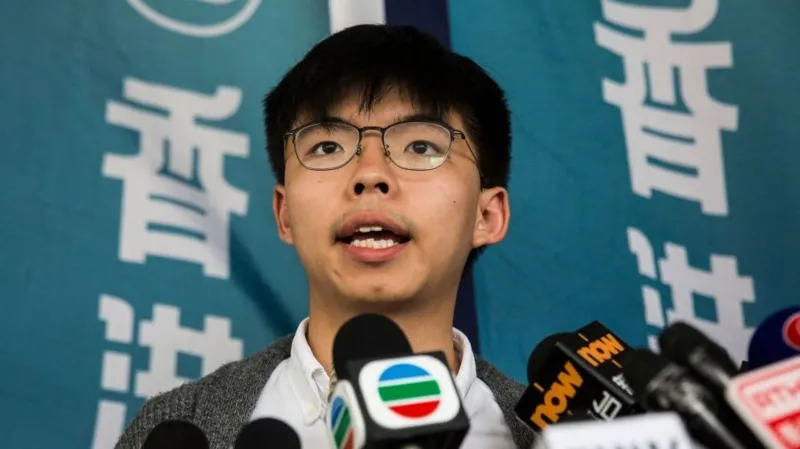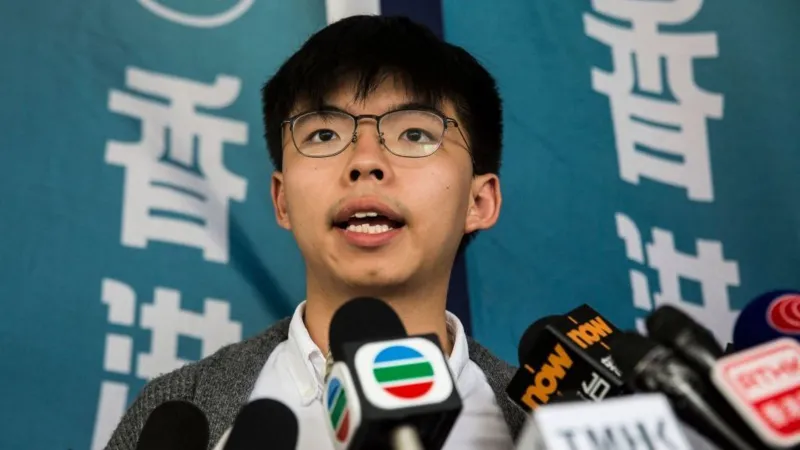
Hong Kong pro-democracy activist, Joshua Wong, has been sentenced to 10 years in prison for colluding with foreign forces under the territory’s national security law, extending his imprisonment by another decade.
Wong, 30, was one of the most prominent figures in Hong Kong’s pro-democracy movement, which was largely suppressed following mass protests against Beijing’s growing influence in the territory.
He has already spent six years behind bars and was expected to be released in January before the latest sentence was handed down on Thursday.
The activist is among hundreds of campaigners and residents arrested under the controversial security law introduced in 2020.
While critics argue that the legislation has been used to suppress dissent and undermine Hong Kong’s autonomy, the authorities maintain that it is necessary to preserve stability.
Wong, who pleaded guilty to the latest charges in September, was accused of conspiring with other activists, including exiled campaigner Nathan Law, to lobby foreign governments for sanctions and blockades against Beijing.
Prosecutors said the alleged activities took place between July and late November 2020.
The judge ruled that two months and two days of his 10-year sentence would run concurrently with his existing prison term.
Wong and Law were co-founders of Demosisto, a now-defunct pro-democracy political party. His friend and fellow activist Frances Hui, who is now based in the United States, expressed anger and sadness over the ruling.
“Today’s sentencing is not just about Joshua. It is part of a broader political crackdown that seeks to rewrite a chapter of Hong Kong’s history and erase the contributions of an entire generation who believed they could shape the future of their city,” she told the BBC.
Human Rights Watch also condemned the sentence, describing it as “cruel and unjust”.
The organisation’s Asia director, Elaine Pearson, said the authorities appeared to be using multiple charges against influential pro-democracy figures to weaken opposition and limit international criticism.
“To keep Hong Kong society subdued, and to reduce the chance of an international outcry, the Hong Kong government appears to have adopted the tactic of stacking charges against influential pro-democracy leaders,” Pearson said.
The sentence is among the harshest imposed under Hong Kong’s national security law, following the 20-year jail term handed to former media tycoon Jimmy Lai for colluding with foreign forces.
Wong’s activism began at the age of 14 when he co-founded the student group Scholarism in 2011.
The organisation mobilised more than 100,000 people the following year against plans to introduce mandatory patriotic education in schools, forcing the government to withdraw the proposal.
He later emerged as a leading figure in the 2014 Umbrella Movement and co-founded Demosisto in 2016 alongside Law and Agnes Chow.
The party disbanded in 2020 after Beijing introduced the national security law, while Law and Chow subsequently went into exile.
Wong was also among 47 activists charged with conspiracy to commit subversion in 2021, in what became the largest prosecution under the security law.
He was serving a 56-month sentence for the conviction when he was charged with collusion last year.
Despite years of imprisonment, Wong had continued to express confidence in Hong Kong’s people.
In an Instagram post addressed to residents in November 2020, he wrote, “To be honest, I have never had much faith in Hong Kong’s politics, but I have every confidence in the people of Hong Kong.
“Even as political power now poses a comprehensive challenge to the resilience of our civil society, I believe the people of Hong Kong will, as always, find a way to see things through.”