Former Hong Kong media magnate, Jimmy Lai, has been sentenced to 20 years in prison, concluding a prolonged legal saga that has come to symbolize Beijing’s sweeping clampdown on the city once known for its vibrant freedoms.
The 78-year-old self-made billionaire, a leading critic of the government, is among the most prominent figures prosecuted since China introduced a sweeping national security law in 2020. His 20-year sentence, the harshest under the law, means he will not be eligible for parole until his late 90s.
The ruling is expected to intensify international calls for Lai’s release. US President Donald Trump, who previously pledged to “get him out,” is scheduled to meet Chinese leader Xi Jinping in the coming months, and Lai’s supporters plan to press his case during those talks.
Lai’s son, Sebastien, described the sentence as draconian and “life-threatening” for his father. His daughter, Claire, called it “heartbreakingly cruel,” adding, “I have watched my father’s health deteriorate dramatically and the conditions he’s kept in go from bad to worse. If this sentence is carried out, he will die a martyr behind bars.”
Lai’s outspoken defense of Hong Kong’s shrinking freedoms and his role as founder of the now-defunct pro-democracy tabloid Apple Daily, long made him a target of Beijing.
Both Hong Kong and Beijing have consistently dismissed claims that Lai’s prosecution was politically motivated or an attack on press freedom, insisting that he has received adequate medical care while imprisoned.
Steve Li, chief superintendent of the national security department, stated, “The court has affirmed the gravity of his crime, showing that he’s the mastermind and leader behind the scene.”
Lai was convicted in December on two national security charges and one sedition charge after a years-long court process.
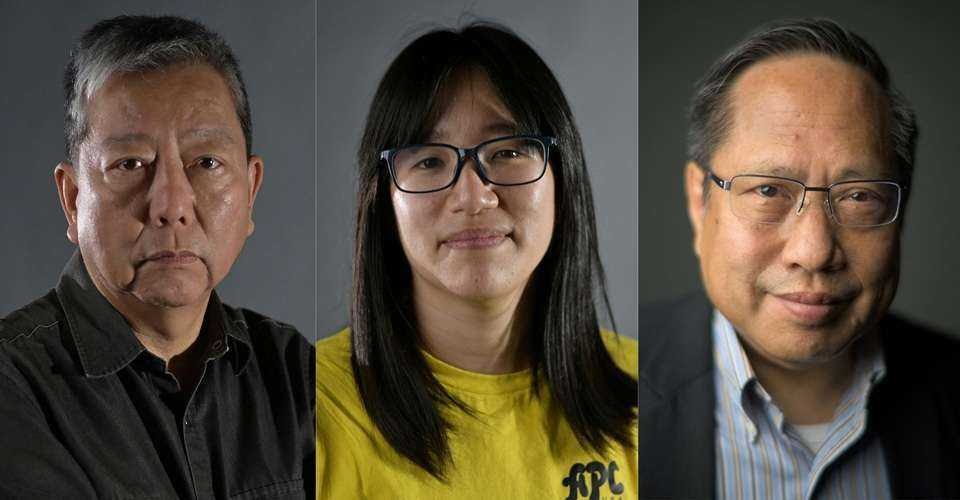
Dressed in a white jacket and looking noticeably slimmer, Lai smiled faintly upon hearing the sentence. Before proceedings began, he greeted the audience with clasped hands and glanced at six former Apple Daily colleagues also awaiting sentencing.
Those colleagues received prison terms ranging from six years, nine months to ten years, while Apple Daily and affiliated companies were fined 6 million Hong Kong dollars ($767,000).
Beijing’s national security law has reshaped Hong Kong, jailing numerous dissidents, shuttering civil society groups and outspoken media, and stifling the city’s political life. Authorities argue the law has “restored stability” after the violent anti-government protests of 2019.
Supporters of Lai lined up outside West Kowloon court days in advance to see him. Police increased security, screening those in line.
“He is the flag of Hong Kong,” said 75-year-old Chan Chun-yee. “I don’t agree with everything he did but I aligned with his spirit and the things he pursued, such as freedom, democracy and justice.”
Conspiracy ‘mastermind’
In December, the three judges appointed by Hong Kong to handle national security cases described Lai as the “mastermind of the conspiracies,” citing his resentment and hatred toward the PRC.
The court noted his lobbying of US politicians, including meetings with senior White House officials and attempts to meet Trump, as evidence of sedition and collusion with foreign forces.
Judges also concluded Lai had used Apple Daily to advocate for international sanctions against China and Hong Kong. Prosecutors noted that Apple Daily published as many as 161 seditious articles.
The judges described Lai’s actions as “conspiracies” that were “not only well planned but were premeditated,” targeting both local and international audiences. They classified the sedition as the “most serious category” due to the number of articles and the duration of the offence.
Lai retains the right to appeal, though such cases can take years with few successes; only one person among nearly 100 prosecuted under the national security law has ever been fully acquitted.
Will Trump intervene?
Experts suggest Lai’s case could become a diplomatic issue. A British citizen and practicing Catholic, he has supporters lobbying for his release in both the UK and the US, particularly among the Christian right.
Trump has repeatedly promised to advocate for him, including an August request to Xi Jinping to consider granting Lai freedom.
Hung Ho-fung, Professor of Political Economy at Johns Hopkins University, noted, “Trump will likely raise it again in his bargaining with Xi. He (Lai) is British citizen and a pro-democracy icon in the greater China region. Just raising the issue to Beijing is good press.”
Beijing could also view Lai as a bargaining tool, given his frail health. “If Beijing could exact compromises from Washington over trade, tech, and even Taiwan by eventually granting Lai a compassionate release based on health grounds, it is a good bargain. Better than letting him die in jail and become another martyr,” Ho said.
Human rights groups swiftly condemned the sentence. Amnesty International called it “a cold-blooded attack on freedom of expression.” Western governments have also criticized the prosecution, with a joint statement from the EU High Representative and G7 foreign ministers stressing concern over “deteriorating rights, freedoms and autonomy in Hong Kong.”
A Hong Kong government spokesperson countered, accusing Western leaders of “wantonly vilified” behavior and “continued to unscrupulously distort the facts,” while Beijing expressed “strong dissatisfaction and resolute opposition,” accusing foreign nations of interfering in internal Chinese affairs.
A city and a life transformed
Lai’s personal story mirrors that of Hong Kong. Born in mainland China, he arrived in British-ruled Hong Kong at age 12, part of a wave of mainlanders fleeing communism. He rose from factory laborer to wealthy clothing tycoon before founding Apple Daily in 1995, two years prior to the city’s handover to China.
The tabloid became a pro-democracy voice, operating in an era of greater press freedom. Police raids and frozen assets forced the newspaper to print its final edition in June 2021. Many former journalists have left Hong Kong since.
Hong Kong’s press freedom ranking has plunged, from 18th in 2002 to 80th in 2021, then falling further to 140th last year, according to Reporters Without Borders.
A government spokesperson insists Lai’s case “has nothing to do with freedom of the press at all.”
Eric Lai, senior fellow at Georgetown University’s Center for Asian Law, said, “With critical media outlets shut down and criminalized, as well as open exchange with foreign officials and policymakers on critical policy affairs being deemed criminal activities, the state of information access and free exchange of ideas and opinions are sharply jeopardized.”
He added, “It has nothing to do with press freedom because they prioritize the need for safeguarding regime security over freedom of expressing sharp critiques.”