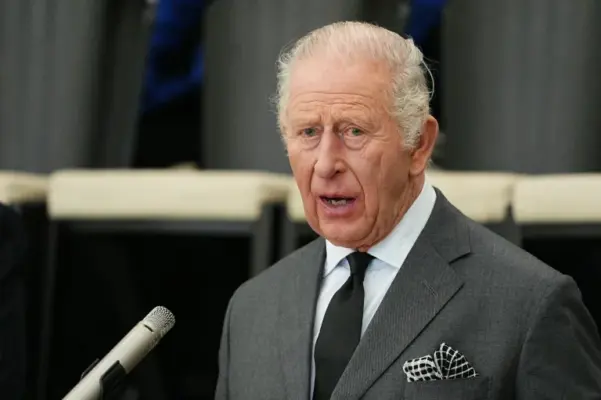
Britain’s King Charles III has begun a nine-day tour of the Caribbean amid increasing demands for a formal apology and reparations for the transatlantic slave trade.
The 77-year-old monarch arrived in the Bahamas on Tuesday for the first leg of the tour, during which he is expected to “acknowledge the great suffering of the past” while addressing the effects of climate change on vulnerable island nations.
Charles will visit the Bahamas and Guyana before being joined by Queen Camilla for the final stage of the trip in Antigua and Barbuda.
He is also scheduled to address the Commonwealth Heads of Government Meeting (CHOGM) summit during the visit.
The tour comes amid renewed calls from former British colonies for the monarchy to formally apologise for slavery and support reparations for its historical consequences.
Several countries have argued that Britain and its monarchy should take greater responsibility for their role in the transatlantic slave trade.
In the Bahamas, Charles is expected to acknowledge the painful history of the islands while recognising their cultural achievements.
He is expected to say that “some of what is best in Bahamian culture today, the most joyful, the most hopeful, the most bright, was born out of darkness.”
He is also expected to tell a youth rally that “(It is) only right that we should acknowledge the great suffering of the past in these islands and beyond, even as we rejoice in the successes of the present, and build new opportunities for the future.”
The calls for reparations have gained momentum, with Guyana’s President, Irfaan Ali, describing the recognition of slavery’s historical impact as an initial step towards accountability.
Ali told ITV News that the king’s recognition of the “darkest days” was just the “first step”.
“Now, moving to the apology is the next step,” Ali said, arguing that the former empire had “exploited the region”, “destroyed lives” and “created underdevelopment”.
Last month, Jamaica, where Charles remains head of state, filed a petition in a London appeals court to advance its demand for reparations for Africans who endured centuries of enslavement.
Although successive British monarchs have expressed remorse over slavery, none has issued a formal apology, while the UK government has resisted calls for financial compensation.
Commonwealth Secretary-General Shirley Ayorkor Botchwey has also backed discussions on the issue, saying it “wouldn’t hurt” for the king to apologise. She added that the “time has come” to discuss reparations, whether through financial payments or other forms of compensation.
Beyond the historical debate, the royal tour is expected to focus on climate change and economic cooperation.
Buckingham Palace has described the trip as an opportunity for Charles to engage with young people and discuss pressing challenges facing the region, particularly the vulnerability of low-lying islands to climate change.
On arriving in the Bahamas, the king is also expected to highlight the need to address environmental threats, declaring that “our world cries out for healing.”
The Commonwealth, which comprises 56 member countries with Charles as its head, is expected to discuss investment and trade opportunities at the summit in St John’s, Antigua and Barbuda.
The meeting is scheduled to hold from November 1 to 4.
A palace spokesman said the visit represented “both a new journey but also the continuance of a lifelong one, in which he has sought to engage, understand and educate about the most shameful aspects of our past”.