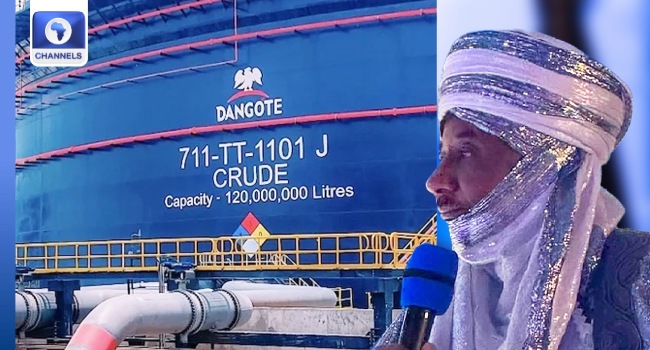
Nigeria imported an average of 78,000 barrels of petrol daily between April and August, even as the Dangote Petroleum Refinery exported some of its products to other West African countries, a report by Argus Media has revealed.
The report attributed the development to differences between domestic demand and refinery output, alongside opportunities to sell petroleum products in regional markets.
According to the report, Nigeria consumed an average of 279,000 barrels of petrol per day during the five-month period, while the Dangote refinery produced approximately 258,000 barrels daily.
The shortfall in production was supplemented by imports, which averaged 78,000 barrels per day during the period.
Despite the higher domestic demand, the report noted that the refinery exported some of its petrol output when prices and trading conditions in neighbouring markets made overseas sales attractive.
“Gasoline presents a different picture,” the report stated, explaining that Nigeria’s consumption exceeded the refinery’s output, while imports continued to contribute to domestic supply.
The refinery’s exports to West African markets nevertheless increased significantly, reaching a record 172,000 barrels per day in September, according to data from commodity intelligence firm Kpler cited by Argus Media.
The figure surpassed the previous record of 152,000 barrels per day recorded in August, with shipments extending across several countries in the region, from Senegal to Angola.
Petrol accounted for 62,000 barrels per day of the September deliveries, while diesel and gasoil shipments stood at 57,000 barrels daily. Jet fuel exports reached 36,000 barrels per day, with other refined petroleum products contributing another 17,000 barrels.
The report also highlighted the refinery’s growing capacity to supply regional markets, although West Africa continued to depend substantially on petroleum products imported from outside the region.
Kpler data showed that external suppliers delivered 516,000 barrels of refined petroleum products daily to West Africa in September, the second-lowest monthly volume since the end of 2017.
Meanwhile, imports from the European Union, the United Kingdom and Norway declined to a five-month low of 282,000 barrels per day.
The increase in the Dangote refinery’s supplies coincided with higher crude oil receipts at its Lekki facility. Argus tracking data showed that crude deliveries averaged a record 665,000 barrels per day in September, exceeding the previous high of 660,000 barrels recorded in June.
Beyond petrol, the refinery’s output of diesel and aviation fuel also exceeded domestic consumption, creating room for exports.
Data from the Nigerian Midstream and Downstream Petroleum Regulatory Authority indicated that the refinery produced an average of 130,000 barrels of diesel daily between April and August, compared with domestic consumption of 98,000 barrels per day.
This represented an average surplus of 32,000 barrels daily.
The difference was more pronounced in the aviation fuel market, where output averaged 136,000 barrels per day against domestic consumption of just 16,000 barrels daily.
These figures suggest that the refinery had substantial volumes of diesel and jet fuel available for international markets during the period.
However, the Dangote Group has maintained that its petrol production exceeds Nigeria’s consumption, a position that contrasts with the figures cited in the Argus report.
The report concluded that domestic petrol imports and exports from the refinery could occur simultaneously because of the interaction between local demand, production levels and opportunities in regional markets.