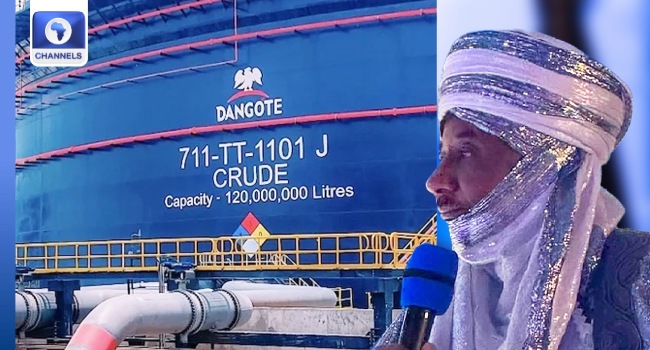
The Dangote Petroleum Refinery has again increased the ex-depot price of Premium Motor Spirit, popularly known as petrol, to N1,175 per litre.
The latest adjustment, announced to marketers on Monday, represents the third price increase within a week and has raised concerns about further rises in transport fares and the cost of goods and services across the country.
According to industry sources, the gantry price of petrol rose from N995 per litre announced on Friday to N1,175 per litre, reflecting an increase of N180, or about 18.1 per cent within three days.
A senior official of the refinery, who spoke on condition of anonymity, confirmed the development.
“Yes, the gantry prices have been adjusted. PMS is now N1,175 per litre while Automotive Gas Oil is N1,620 per litre,” the official said.
The official explained that the adjustment was influenced by market conditions and rising costs in the global oil market.
“The market has been extremely volatile, and replacement costs have shifted significantly in recent days.
These adjustments reflect prevailing market fundamentals and the cost environment we are currently operating in,” the source added.
Checks on the industry pricing platform, petroleumprice.ng, showed that the revised rates had already been reflected across petroleum depot pricing systems, signalling a new benchmark for downstream marketers.
The latest increase follows earlier adjustments that moved the gantry price from N774 to N995 per litre within the same week.
As a result, pump prices in several states have already exceeded N1,000 per litre, with some filling stations reportedly selling petrol at about N1,200 per litre.
Transporters and commuters who spoke on the development expressed concern over the impact of the rising fuel price on transportation and the broader economy.
One transporter said the increase in petrol prices had forced operators to review transport fares.
“The cost of fuel has gone up again and we have no choice but to increase transport fares. It is affecting both transporters and passengers,” he said.
Some operators also linked the surge in petrol prices to geopolitical tensions in the Middle East, which they said had pushed global crude oil prices upward.
A commuter also lamented the rising transport costs, saying, “The increase in fuel price has made transport fares higher, and it is affecting the economic situation of many people.”
The latest price hike is expected to trigger another round of increases at filling stations nationwide, as higher fuel costs typically lead to higher transportation, logistics and production expenses.
Meanwhile, the Federal Government, through the Nigerian National Petroleum Company Limited, has been exploring ways to secure crude oil supply for the refinery through third-party international traders in order to sustain domestic refining operations.
Officials, however, warned that the intervention may not immediately translate to lower petrol prices for consumers as Nigerians continue to grapple with rising energy costs.