The Federal Government has set a target of increasing electricity access across Nigeria to more than 80 per cent within the next five years, while also pledging to eliminate the gap between installed and available generation capacity within three years.
According to The Punch, the Minister of Power, Joseph Tegbe, disclosed this during a presentation titled, ‘Industrialisation and Regional Competitiveness: The Role of Power,’ at the recently concluded Nigeria Economic Summit Group event in Lagos.
Represented at the summit by his Special Adviser, Martins Olajide, Tegbe also committed the government to supporting the Nigerian Electricity Regulatory Commission’s goal of bringing Aggregate Technical, Commercial and Collection losses below 16.92 per cent within three years.
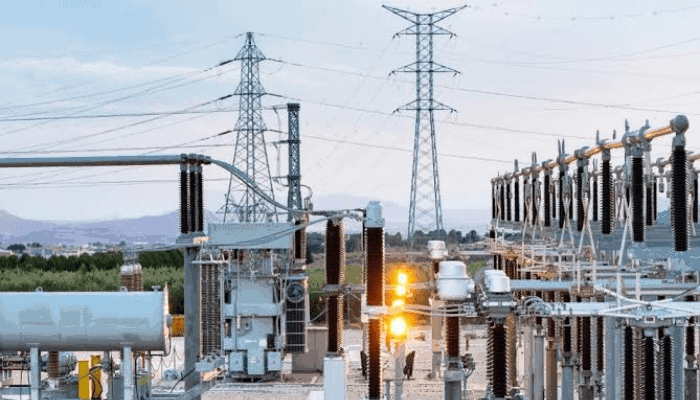
According to the minister, the government’s electricity reform programme will focus on upgrading critical transmission corridors, including Lagos, Enugu-Port Harcourt and Abuja-Kaduna-Kano, while expanding access and improving the reliability of electricity supplied to households and businesses.
“Over 80 per cent access, ATC&C losses below 17 per cent, the capacity gap closed – Nigerian industry gets the reliable, affordable power it needs to compete for AfCFTA’s 1.4 billion consumers,” he stated.
Tegbe said the electricity reforms were central to President Bola Tinubu’s objective of transforming Nigeria into a $1tn economy, stressing that dependable power supply was essential to achieving the ambition.
“President Bola Tinubu has been absolutely clear about the economic direction of this administration, to transform Nigeria into a one trillion-dollar economy and electricity sits at the heart of that ambition,” he said.
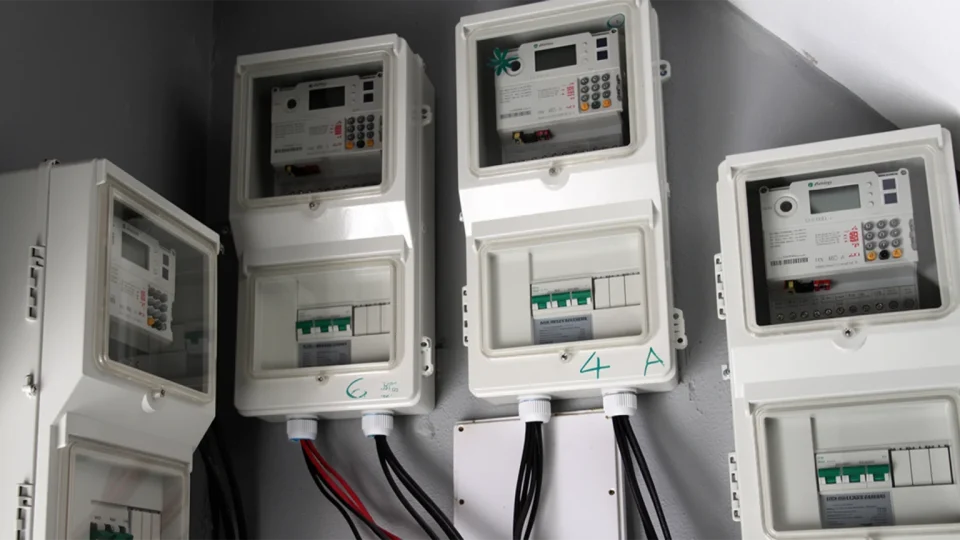
He explained that efforts were already underway to improve transmission infrastructure along major economic corridors, distribute seven million electricity meters and train 5,000 people.
“The plan is in motion: transmission corridors through Lagos, Enugu–Port Harcourt and Abuja–Kaduna–Kano are being strengthened, seven million meters are rolling out, training of 5,000 recently commenced, and captive economic clusters are linking power directly to industry,” he said.
The minister further disclosed plans to develop an independent electricity market with minimal government intervention, strengthen the sector’s liquidity and sustainability, and tackle persistent debts and operational losses.
The ministry identified inadequate electricity supply as one of the major barriers to industrial growth, noting that Nigeria currently has 13,625 megawatts of installed grid capacity, but only about 4,854MW is available on average each day.
It said roughly 62 per cent of the installed capacity remained unused, while actual peak electricity demand was estimated at about 20,000MW.
The ministry noted that the unreliable power supply had compelled businesses, particularly manufacturers, to depend heavily on alternative sources of electricity, significantly increasing their operating costs.
“4,500 to 5,000MW average available for 200m+ people. 26 grid collapses in 2024. Energy is 30 to 40 per cent of factory cost,” the power minister stated.
The ministry also reported that Nigerians spent N16.5tn on self-generation in 2023, compared with approximately N1tn generated through grid electricity revenue.
It added that the World Bank estimated that unreliable electricity supply cost Nigeria about $25bn annually, representing between five and seven per cent of the nation’s Gross Domestic Product.
The government said stabilising the national grid, developing economic clusters and expanding transmission infrastructure along major commercial corridors would improve industrial productivity, attract investment and enhance the competitiveness of Nigerian businesses.
Speaking during a panel discussion at the summit, the Director of the Research and Economic Policy Division of the Manufacturers Association of Nigeria, Dr Oluwasegun Osidipe, said poor energy supply remained the biggest challenge confronting manufacturers.
“In the Q2 2026 Manufacturers’ CEO Confidence Index Report by MAN, manufacturers highlighted 10 top constraints limiting their operations.
According to that report, the first on the list was inadequate energy supply,” he said.
Osidipe said manufacturers had invested substantially in alternative electricity generation because of the unreliability of the national grid, adding that the additional expenditure was hurting their ability to compete.
“Manufacturers have suddenly, apart from setting up their own production units, they have also set up power-generating facilities. And when you look at the cost of maintaining that facility, for example, manufacturers in 2035 spent about N1.35tn on alternative energy sources,” he said.
He stressed that the spending on alternative power was in addition to electricity bills paid for grid supply, making production more expensive for Nigerian manufacturers.
“And that is excluding the bills they’ve paid for energy supply from the grid. So how do you expect such a manufacturing concern to be competitive?” Osidipe said.
He also identified regulatory bottlenecks as another major obstacle, citing the burden of dealing with several agencies, overlapping regulations and additional administrative costs.
“The second issue is regulatory tyranny. You have a situation where you have multiple regulations, and the time that CEOs and staff should focus on core manufacturing is used to attend to regulatory agencies,” he said.
Other challenges highlighted by Osidipe included exchange-rate pressures, manufacturers’ reliance on imported machinery, spare parts and key raw materials, as well as poor coordination between monetary and fiscal policies.
“The fourth one is the weak handshake between the monetary and fiscal policy. You see the government coming up with one monetary policy and on the other hand, the fiscal authority is also using a contradictory policy,” he stressed.
He added, “You might agree with me that the manufacturing sector cannot be competitive in an environment where the government is using its right hand to counter what the left hand is extending to the industry.”