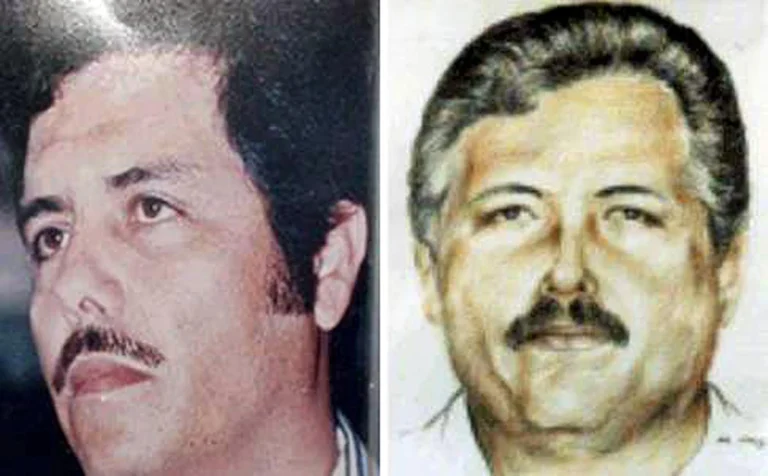
Ismael “El Mayo” Zambada, the co-founder of the infamous Sinaloa cartel, is set to be sentenced in a New York court, the United States, on Monday in a case expected to see the veteran Mexican drug kingpin spend the rest of his life behind bars.
Zambada, 76, was arrested in July 2024 after arriving at a US airport under circumstances he insists were orchestrated by a cartel associate who deceived him into boarding a plane that ultimately delivered him to American authorities.
Renowned for avoiding public attention and rarely being photographed, Zambada managed to evade capture and survive numerous assassination attempts while building one of the world’s most powerful criminal organizations.
Born in 1950 in Mexico’s northwestern state of Sinaloa, he grew up in a region known for farming corn, beans and cattle, but which later became notorious as a major hub for marijuana and opium production before evolving into a key transit route for Colombian cocaine destined for the United States.
The rise of Mexico’s drug trade has been accompanied by escalating violence. Since 2006, government estimates indicate that nearly 500,000 people have been killed, while another 130,000 remain missing.
‘Systematic assassinations’
Zambada began his criminal career with the Guadalajara and Juarez cartels, working alongside Miguel Angel Felix Gallardo and Amado Carrillo Fuentes, widely known as “The Lord of the Skies.”
He later joined forces with fellow Sinaloa native Joaquin “El Chapo” Guzman to establish the Sinaloa cartel during the 1980s and 1990s.
Authorities say Zambada played a central role in bribing officials, building extensive drug distribution networks across the United States and moving billions of dollars in illicit profits back into Mexico, helping transform the Sinaloa cartel into the world’s largest drug trafficking organization.
The cartel is among six Mexican criminal groups designated as Foreign Terrorist Organizations by US President Donald Trump.
US court filings portray Zambada as both highly strategic and exceptionally ruthless. Prosecutors allege he ordered the killing of his own nephew, whose body was later discovered inside a vehicle abandoned along a roadside.
They further accused him of carrying out “systematic assassinations” targeting rival cartel members, police officers and military personnel.
In a rare 2010 interview with the Mexican magazine Proceso, Zambada disclosed that Mexican soldiers had narrowly missed capturing him on four separate occasions.
Nicknamed the “man in the hat,” he admitted he feared imprisonment more than death and argued that his arrest or killing would do little to disrupt drug trafficking in Mexico.
Nearly a year after his arrest in the United States, he pleaded guilty to charges including drug trafficking and organized crime.
$15 billion forfeiture
His longtime associate, Joaquin “El Chapo” Guzman, is already serving a life sentence in the United States.
Following El Chapo’s imprisonment, a violent internal conflict erupted within the Sinaloa cartel between supporters of Zambada and El Chapo’s sons, leaving around 2,000 people dead.
One of El Chapo’s sons, Joaquin Guzman Lopez, was aboard the same aircraft that transported Zambada into US custody.
Lopez was arrested after admitting he had kidnapped Zambada as part of his own plea agreement with US prosecutors.
The circumstances surrounding the operation continue to generate controversy almost two years later, fuelling diplomatic friction between Mexico and the United States over allegations that the FBI participated in the mission.
Although US authorities have denied involvement in bringing Zambada into the country, Mexico recently demanded clarification after the aircraft used in the operation was displayed as part of an FBI operations collection.
A federal court in Brooklyn is expected to hand down Zambada’s sentence on Monday.
As part of his plea agreement, he accepted a mandatory minimum sentence of life imprisonment without parole on a racketeering conviction.
He also agreed to surrender $15 billion in proceeds allegedly derived from criminal activities, according to the US Department of Justice.