The United Nations has warned that artificial intelligence (AI) could deepen global inequality unless countries work together to establish a common governance framework that ensures the technology benefits all nations.
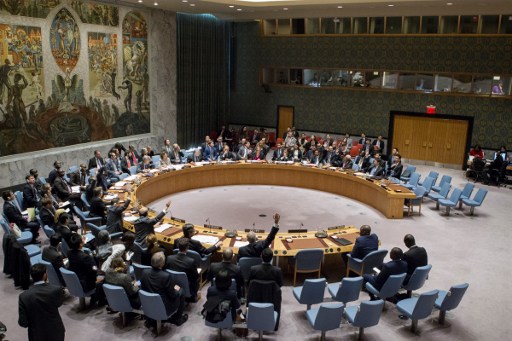
The warning came as government officials, technology companies and experts gathered in Geneva, Switzerland, for the inaugural United Nations Global Dialogue on Artificial Intelligence Governance, a two-day meeting focused on developing international approaches to AI regulation.
Speaking at the event, Co-Chair of the Global Dialogue and Ambassador of El Salvador, Egriselda López, said disparities in technological development were creating an “AI divide” between nations.
“The AI divide is real.
While some countries have advanced infrastructure, research capacity and technical expertise, many others are still struggling with basic connectivity and public infrastructure needed to benefit from AI,” she said.
Also speaking, Estonia’s Ambassador and Co-Chair of the Dialogue, Rein Tammsaar, described artificial intelligence as a technology capable of transforming economies, healthcare, scientific research and productivity.
However, he warned that without inclusive global governance, countries with limited access to AI could be left further behind.
“The frontier developers are basically concentrated in two countries. This leaves other countries with a lot of questions,” Tammsaar said, referring to the United States and China.
He added that many developing nations fear they may never catch up if AI innovation remains concentrated in only a few economies.
The discussions are being guided by the first report of the United Nations Independent International Scientific Panel on Artificial Intelligence, a 40-member body established to provide scientific advice on the opportunities and risks associated with AI
The report notes that although artificial intelligence has enormous potential to improve lives, governments currently lack effective national and international governance systems to manage the rapidly evolving technology.
Co-Chair of the scientific panel, Yoshua Bengio, said AI is advancing faster than existing scientific understanding and regulatory frameworks.
“We don’t have the right national or even international governance tools, and we don’t have good ways to ensure the benefits are shared by everyone,” Bengio said.
The panel also warned that emerging evidence of deceptive behaviour by advanced AI systems means scientists cannot yet guarantee they will not cause catastrophic harm if misused or exploited by malicious actors.
Nobel Peace Prize laureate and panel Co-Chair, Maria Ressa, said artificial intelligence has already accelerated the spread of misinformation online, posing serious risks to democratic institutions and public trust.
“The world cannot govern what it cannot understand,” Ressa said, urging governments to act before the consequences of inaction become more severe.
The United Nations said the Global Dialogue represents its first dedicated platform on AI governance and is expected to shape future international discussions on standards, oversight and equitable access to one of the world’s fastest-growing technologies.