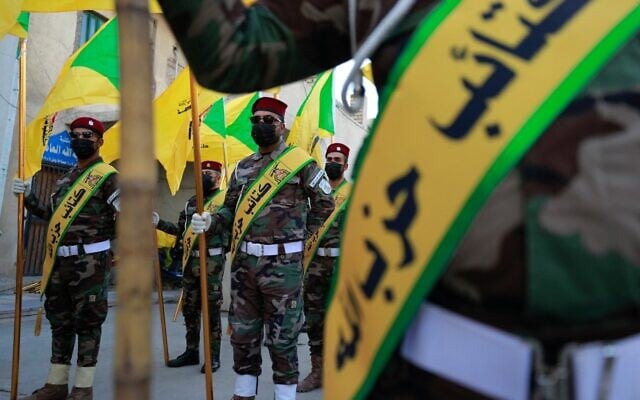
The Islamic Revolutionary Guard Corps has established covert new cells in Iraq to launch attacks on Gulf states hosting U.S. forces, operating outside established militia structures in a move aimed at avoiding detection, according to eight Iraqi sources cited by Reuters.
Reuters reported that three to four cells, each made up of about 10 elite Iraqi Shi’ite fighters, reportedly carried out at least seven drone strikes between April 20 and May 17 from desert areas near Basra and Samawa.
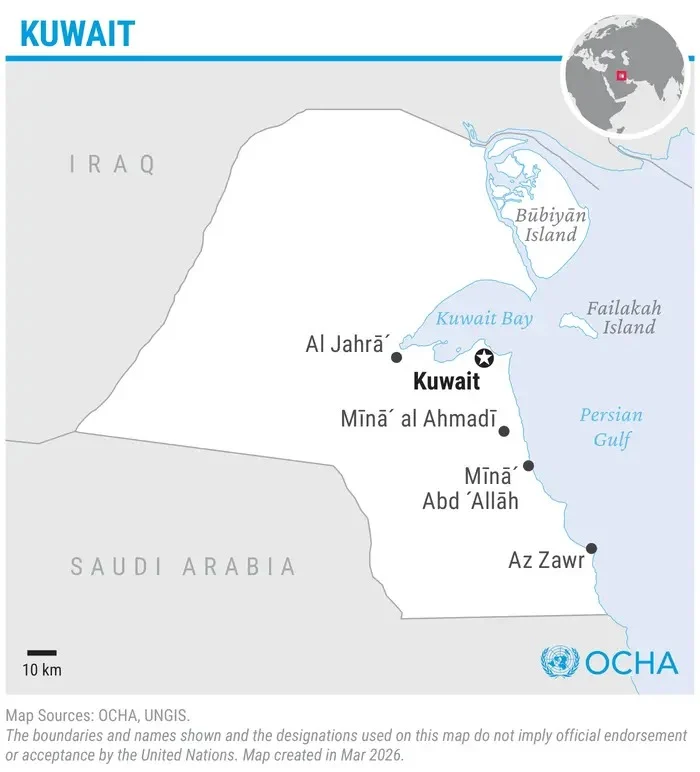
The targets included locations in Kuwait, Saudi Arabia and the United Arab Emirates, according to three of the sources.
A number of the operatives were recruited from Islamic Resistance in Iraq, an umbrella coalition of Shi’ite factions with thousands of fighters.
However, the new units are said to function independently of its command structure and instead report directly to the IRGC, according to two Iraqi military officials, another security official and five militia commanders.
The emergence of these cells, previously unreported, signals a shift in IRGC strategy as Iran seeks to maintain regional influence while its proxy networks and domestic resources face strain, the militia commanders said.
“The establishment of the new Iraqi cells, which has not previously been reported, reflects a shift in IRGC tactics aimed at preserving Iran’s ability to project force across the region at a time when its armed proxy groups are greatly diminished and its own military and economic resources are depleted,” the five militia commanders said.
Iraq hosts numerous Shi’ite militias, many of which maintain close ties with Tehran and form part of what Iran describes as its “Axis of Resistance,” spanning Gaza, Lebanon, Yemen and Iraq.
Groups under the Islamic Resistance in Iraq banner have claimed responsibility for multiple drone and rocket attacks on U.S. interests in Iraq, prompting retaliatory strikes, particularly after heightened regional tensions earlier this year.
However, there has been no large-scale mobilization of Iran-backed factions inside Iraq.
Some influential Iraqi Shi’ite factions have recently indicated willingness to disarm and focus on domestic politics in order to avoid escalating tensions with Washington.
Analysts believe this may have contributed to Iran’s decision to form smaller, more tightly controlled cells.
“The newer groups established by the IRGC appear smaller, more ideologically hardened and more tightly controlled, reflecting Iran’s need to conserve resources amid economic strain,” said Jasim al-Bahadli, a retired Iraqi army general and expert on Shi’ite armed groups.
Two prominent factions, Asaib Ahl al-Haq and the Imam Ali Brigades, recently announced plans to begin surrendering weapons to state authorities following U.S. pressure on Baghdad to rein in armed groups.
U.S. and Iranian officials recently signed an interim agreement aimed at ending the conflict, with further negotiations expected on Iran’s nuclear programme.
However, Tehran has made clear that its support for allied armed groups is not part of the talks.
“The U.S. and Iranian presidents signed an interim agreement on Wednesday to end the war, with negotiations to follow on difficult issues like the future of Tehran’s nuclear programme. But Iranian officials have said Tehran’s support for “resistance groups” is not up for discussion, and the agreement does not address the issue.”
The U.S. State Department, meanwhile, said it expects Baghdad to act against Iran-backed armed groups operating on Iraqi soil.
“The U.S. State Department reiterated “expectations that the Iraqi government take immediate measures to dismantle all the tools of Iran’s destabilizing activities in Iraq to include the IRGC and Iran-aligned terrorist militias in Iraq.”
Iraqi Prime Minister Ali al-Zaidi and U.S. envoy Tom Barrack reportedly discussed plans to disarm militias and ensure Iraqi territory is not used to threaten regional stability.
“The meeting focused on Iraqi plans to ensure “the complete disarmament and disbandment of all armed groups” operating outside Iraqi state control and to ensure “Iraqi territory cannot be used by any side to threaten regional peace,” according to a joint statement.”
Security sources say the new cells are designed to provide Iran plausible deniability by distancing operations from established militias, reducing pressure on Baghdad.
The attacks allegedly included drone strikes on Kuwait’s Ali Al Salem Air Base, a U.S.-deployed facility, and a military terminal at Kuwait’s international airport. Other attempted strikes on Saudi Arabia and the UAE were reportedly intercepted.
Officials in Kuwait, Saudi Arabia and the UAE did not respond to requests for comment.
Iraqi authorities are still investigating the scope of the operations and whether a May 17 drone attack that caused a fire at the Barakah Nuclear Power Plant is connected.
Saudi Arabia said it intercepted drones entering its airspace that same day, which Iraqi officials believe were launched by one of the newly formed groups.
Prime Minister al-Zaidi condemned the incidents, calling them criminal acts and promising a joint investigation with Gulf states to determine responsibility.