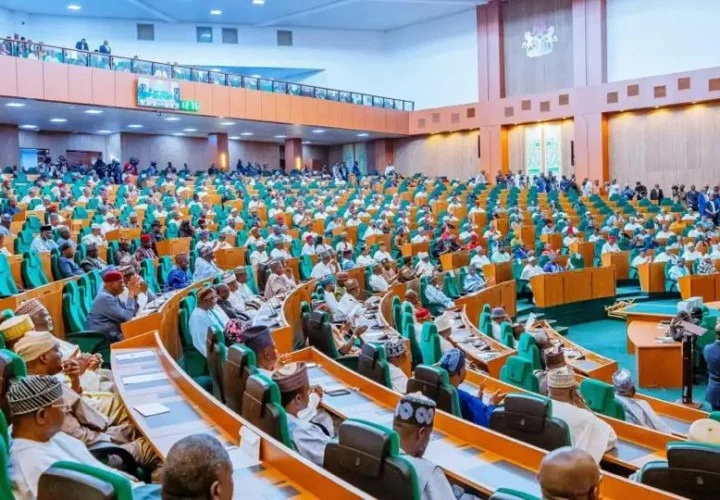
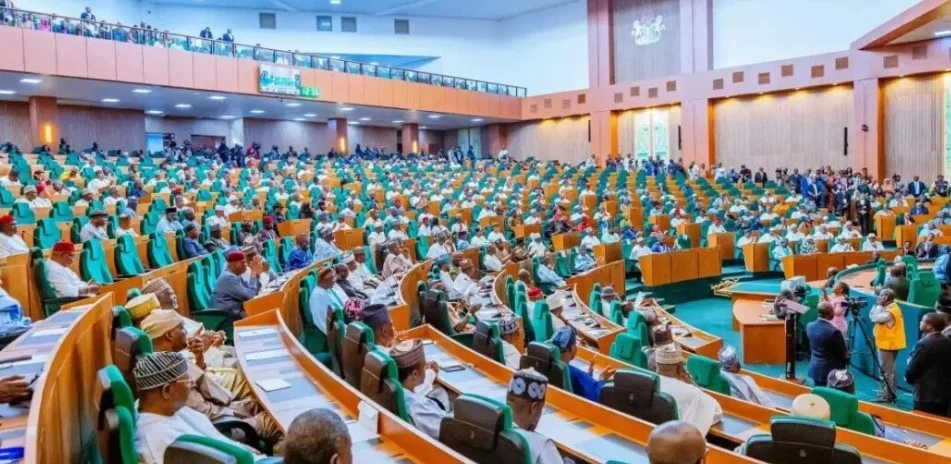
The House of Representatives has begun consideration of a bill seeking major amendments to the Central Bank of Nigeria Act, with lawmakers pushing for stronger oversight, improved governance, and clearer checks on the apex bank’s powers.
The proposed legislation, co-sponsored by House Leader Julius Ihonvbere and Lagos lawmaker Jesse Onakalausi, scaled second reading on Thursday without opposition.
During the debate, Onakalausi said recent economic challenges had made it necessary to review the CBN’s operational framework.
“The Central Bank plays a crucial role in stabilising our financial system and maintaining public confidence,” he said.
“But governance lapses, forex market distortions, weak oversight, and the communication failures we saw during the currency redesign have exposed gaps in the current Act.”
A central feature of the amendment is the separation of the roles of CBN Governor and Board Chairman—positions currently held by one individual.
According to Onakalausi, this concentration of power is out of step with global best practices. “In most jurisdictions, the governor handles day-to-day operations while the board ensures proper oversight.
This separation avoids conflicts of interest and strengthens institutional balance,” he noted.
The bill also proposes to tighten rules on Ways and Means advances, a provision often criticised for enabling excessive government borrowing from the apex bank.
The new amendment sets a ceiling of 10 per cent of the previous year’s actual revenue to curb inflationary deficit financing.
Other reforms outlined in the draft include stronger independence for the Monetary Policy Committee, stricter transparency requirements in foreign exchange management, and mandatory 90-day notice and National Assembly briefings before major policy moves such as currency redesign or demonetisation.
Lawmakers also want the CBN to submit its audited accounts within two months of year-end and publish quarterly monetary policy reports to promote better accountability.
Another clause recommends a six-year single term for the governor and deputy governors, with at least two deputies drawn from the bank’s internal directors to preserve institutional continuity.
The revised MPC composition would include the governor, four deputies, two board members, and four independent external experts who cannot hold public office.
Onakalausi stressed that while central bank autonomy is important, it must be balanced with strong oversight.
“Independence cannot mean operating without checks. Nigerians deserve transparency in how monetary decisions are made,” he said.
If enacted, the bill would mark one of the most sweeping reforms to the CBN Act since 1991, with wide-ranging implications for monetary policy, governance, and the financial system.