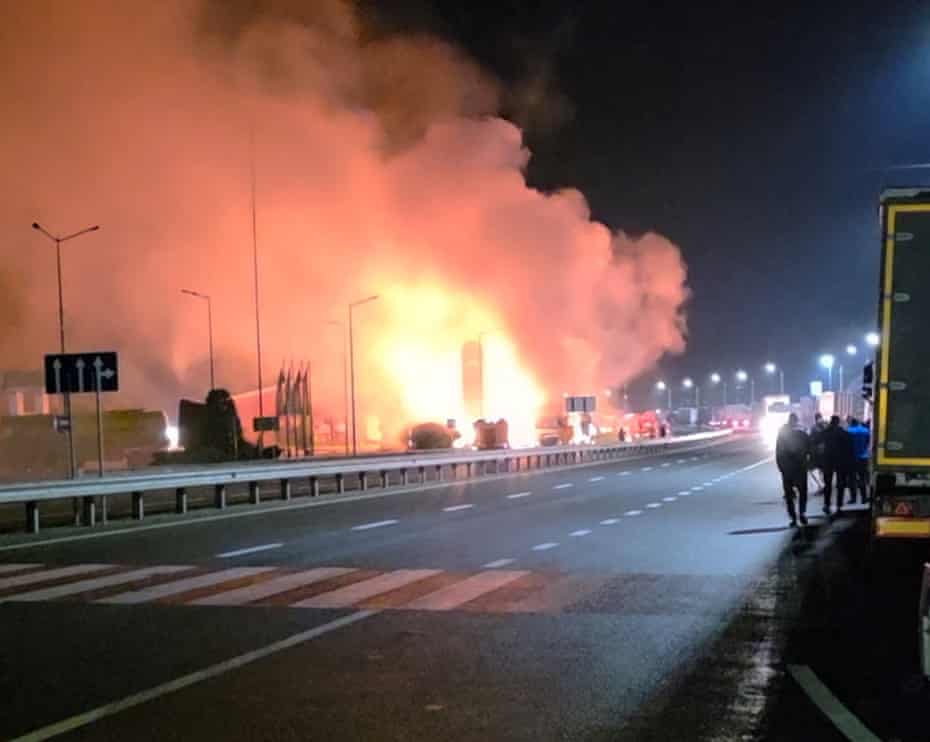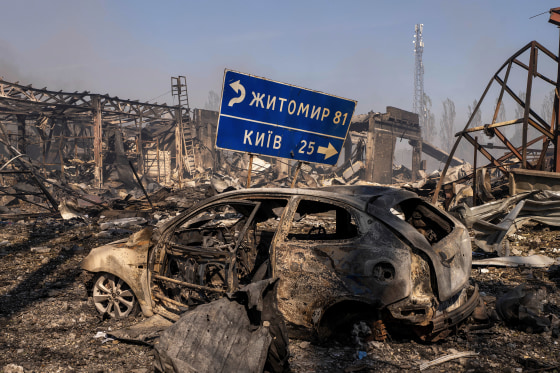
At least 37 people have been killed and dozens more injured after a Russian drone strike hit an ammunition storage facility in the Bucha district near Kyiv, triggering a massive fire and a series of explosions that continued for several hours.
The attack occurred amid an intense wave of Russian aerial assaults across Ukraine, with the ammunition stored at the facility believed to have significantly worsened the destruction.
Tymur Tkachenko, head of the Kyiv region military administration, said 37 people had died as of Saturday afternoon and warned that the death toll could increase.
The incident is among the deadliest attacks recorded around Kyiv since Russia launched its full-scale invasion more than four years ago.
“This is a terrible and irreparable loss. Our heartfelt condolences go out to the families and loved ones of those who have died,” Tkachenko said.
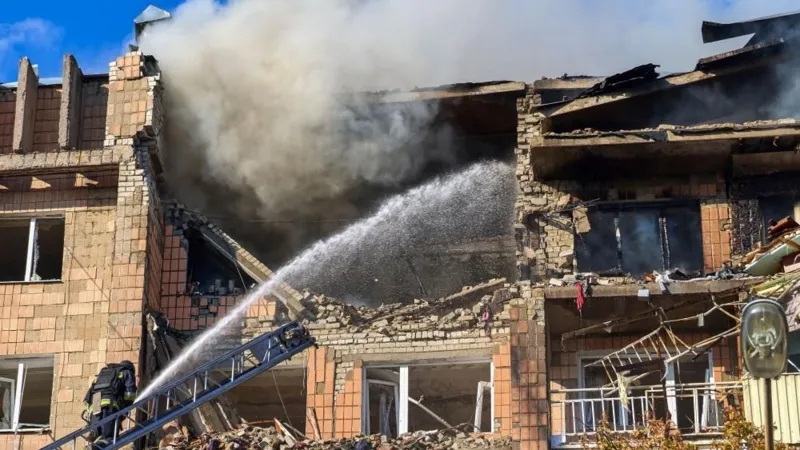
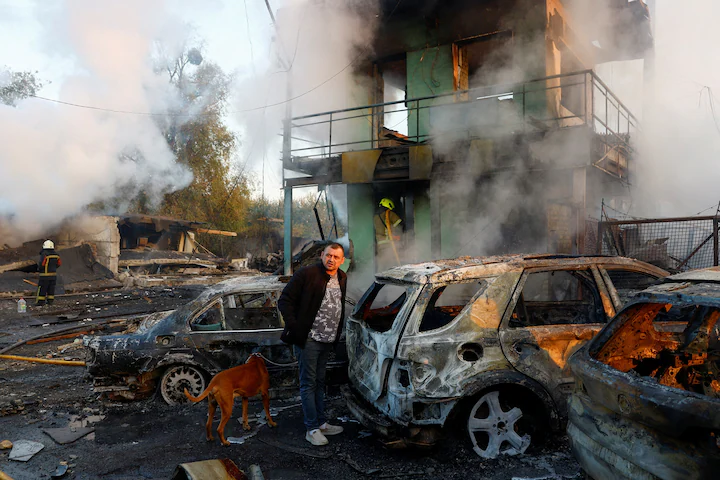
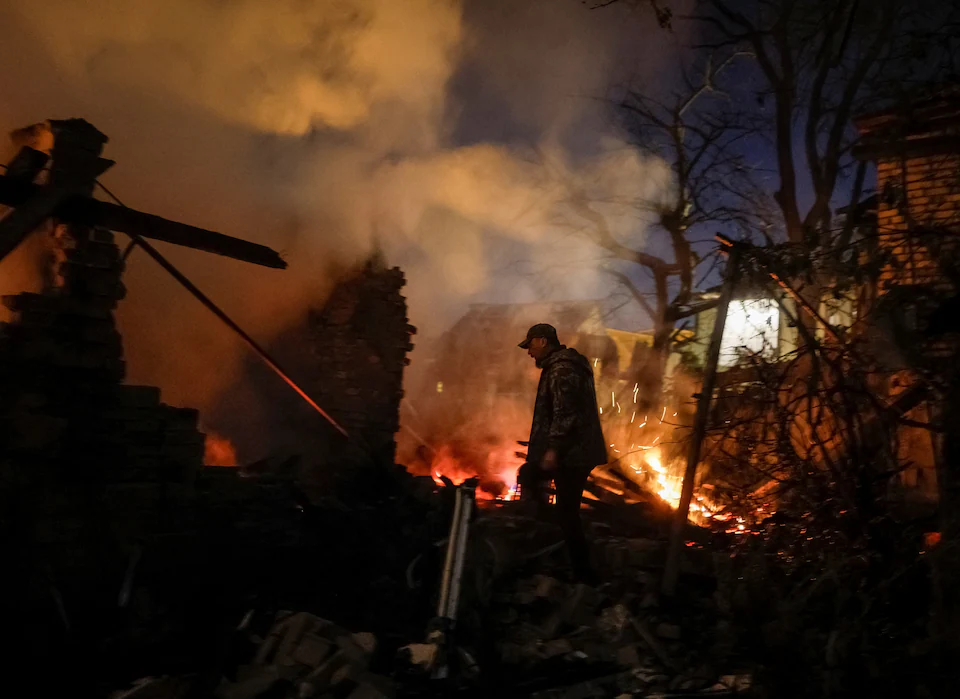
Images and videos from the scene showed extensive destruction, with several buildings reduced to rubble, leaving behind scorched ground and only fragments of walls.
Ukrainian President Volodymyr Zelensky said the Russian strike hit an ammunition storage facility that should never have been located so close to residential areas.
He said shells, mines, other munitions and drones stored at the site exploded following the strike.
“It is a horrific situation, and there has been appalling negligence by those who stored explosive materials right next to where people were living,” the Ukrainian president said.
Zelensky added that authorities had launched a criminal investigation and vowed that those responsible for the decision to store explosive materials at the location would face consequences.
Ukraine’s Prosecutor General also announced an investigation into the circumstances surrounding the blast and the conduct of officials responsible for the facility.
The prosecutor’s office said “explosive objects and materials” had been stored on the premises and that investigators would examine “the circumstances surrounding the explosion on the premises of the facility and the actions of the officials responsible.”
The latest tragedy comes only weeks after seven people were killed when another Russian strike hit an ammunition warehouse in a residential area in Vyshneve, about 20 kilometres from Saturday’s blast.
Zelensky said dozens of buildings were damaged in the latest attack, including a care home for elderly people and persons living with disabilities. More than 300 emergency personnel were deployed to the scene.
Among those killed was Taras Didych, the long-serving head of the local municipality, who had reportedly gone to the scene to assist residents.
“He always stood by his people. He did not abandon them even during the Russian occupation — he was there, offering support and assistance, and keeping the community together during one of the most terrifying periods,” Ukraine’s Minister for Recovery, Infrastructure and Transport Mykola Kalashnyk said.
Kyiv faces relentless aerial attacks
The deadly explosion came after Kyiv endured more than two days of almost continuous Russian air attacks.
A CNN tally recorded 28 air raid alerts between midnight Thursday and midday Saturday, with the warnings lasting for more than 28 hours altogether.
Kyiv Mayor Vitali Klitschko said a two-year-old girl who sustained serious injuries in one of Saturday’s attacks later died.
Five other people were injured across the capital.
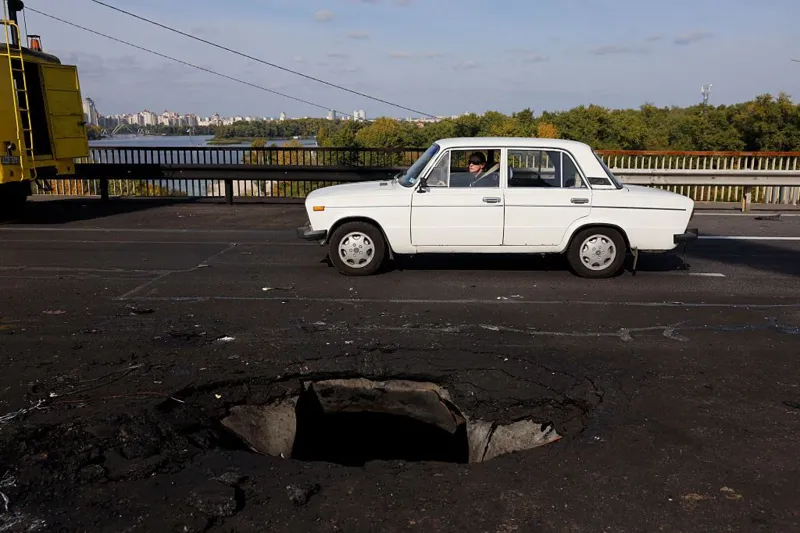
Russian strikes were also reported in Odesa, Dnipro, Zaporizhzhia, Sumy, Kherson, Kharkiv, Mykolaiv, Donetsk and Chernihiv regions.
Zelensky said more than 260 attack drones, including Banderol drones, were used in the attacks.
Ukraine has also faced an increasing number of jet-powered drones, which officials say pose a major challenge to the country’s air defences.
The drones can reportedly reach speeds of up to 500 kilometres per hour, making them difficult for Ukraine’s mobile fire units to intercept.
Ground-to-air missiles or fighter jets are generally required to bring them down, but both remain in short supply.
Pavlo Palisa, deputy head of Zelensky’s Presidential Office, said Russia had substantially increased its deployment of jet-powered unmanned aerial vehicles.
“The Russians have significantly stepped up their use of jet-powered UAVs and their numbers will continue to rise, because the Russians recognize their effectiveness,” Palisa told reporters on Saturday, stressing that Ukraine must adapt its defensive capabilities.
“This will take time. The interceptor drones we currently have, which in theory could intercept jet-powered drones, have not yet demonstrated the expected effectiveness …. we are looking for ways to resolve it.”