Venezuela’s President, Nicolás Maduro, was in a New York jail on Sunday following a dramatic U.S. operation that removed him from power, asserting Washington’s control over the oil-rich South American nation.
The U.S. military launched airstrikes on Caracas early Saturday, while commandos captured Maduro and his wife. Both were flown to New York City, where they now face drug-trafficking and weapons charges.
A video released by the White House showed the 63-year-old leftist handcuffed and in sandals as federal agents escorted him through a Manhattan U.S. Drug Enforcement Administration facility. “Good night, happy new year,” Maduro was heard saying in English.
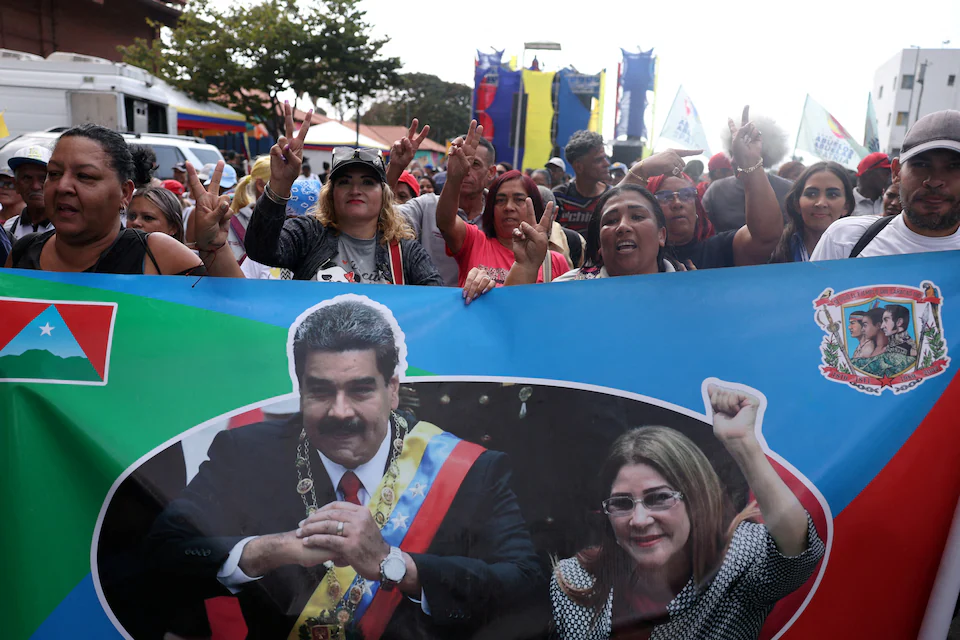
Maduro has ruled Venezuela with an iron fist for more than a decade, following elections widely regarded as rigged. He succeeded his charismatic mentor, former President Hugo Chávez.
As news of his capture spread, exiled Venezuelans waved flags and celebrated in plazas from Madrid to Santiago.
About eight million people have fled Venezuela amid grinding poverty and political repression. In Caracas, the reaction was more subdued.
“I felt the explosions lift me out of bed. In that instant I thought: ‘My God, the day has come,’ and I cried,” said Maria Eugenia Escobar, a 58-year-old Caracas resident. Despite this, the streets of the capital remained largely quiet, with many residents apprehensive about what comes next.
United States President, Donald Trump, announced he was “designating people” from his cabinet to take control but provided no further details.
He appeared to dismiss the possibility of the opposition assuming power, instead mentioning Maduro’s Vice President, Delcy Rodríguez.
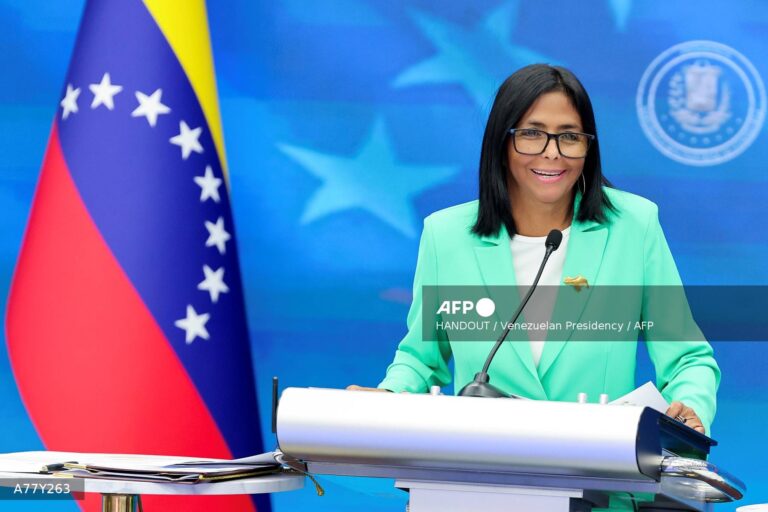
Rodríguez rejected that notion, calling for Maduro’s release and vowing to “defend” the country. Venezuela’s Supreme Court later instructed Rodríguez to assume presidential powers “in an acting capacity.”
Trump, however, suggested that U.S. involvement could be long-term. “We’re going to stay until such time as the proper transition can take place,” he said.
– Venezuela’s Oil Reserves in Focus –
Trump’s interest in Venezuela’s oil wealth became evident. “We’re going to have our very large United States oil companies… go in, spend billions of dollars, fix the badly broken infrastructure,” he said. “We’ll be selling large amounts of oil.”
Venezuela produces just under a million barrels of crude a day, much of it sold on the black market at deep discounts. Trump argued that Caracas is using oil revenue to fund “drug terrorism, human trafficking, murder and kidnapping.”
Although Venezuela holds roughly 17 percent of the world’s oil reserves, according to the International Energy Agency, years of corruption and mismanagement have prevented it from becoming a major global producer.
– Bombings and Blackouts –
Venezuelans had anticipated U.S. action, as American forces had been massing offshore for months.
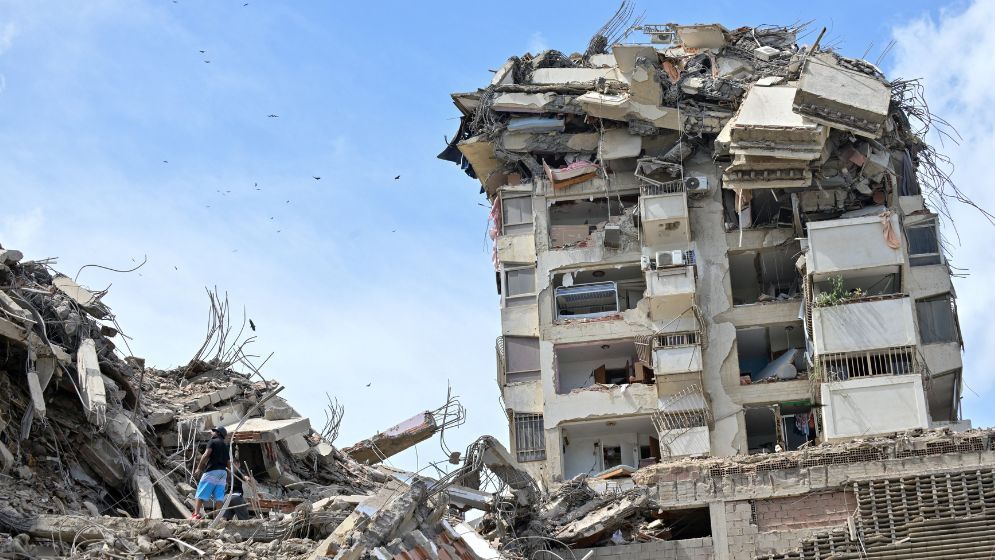
Early Saturday, Caracas residents were woken by explosions and helicopter activity. Airstrikes hit a major military base and an airbase, among other locations, lasting nearly an hour.
General Dan Caine, the top U.S. military officer, said 150 aircraft participated, supporting troops who captured Maduro with months of intelligence, down to “what he ate” and the pets he kept. Maduro and his wife reportedly “gave up” without resistance, and there were “no loss of U.S. life,” Caine added.
Venezuelan casualty figures have yet to be released, but Trump told the New York Post that “many” Cubans in Maduro’s security detail were killed.
Celebrations erupted abroad, with Venezuelans in Santiago expressing relief. “I plan to return home soon,” said Yasmery Gallardo, 61, who has lived in Chile for eight years. In Miami, revelers waved the Venezuelan flag and cheered Trump.
For some, however, uncertainty overshadowed the celebration. “I don’t trust Trump but I am very grateful,” said Eleazar Morrison, 47, a Venezuelan resident of Florida.
China, Russia, and Iran, long-time allies of Maduro, condemned the operation. Western allies, including France and the EU, also expressed concern.
China called for Maduro to be “immediately released,” while U.N. Secretary-General Antonio Guterres stated he was “deeply concerned that the rules of international law have not been respected.”
At Venezuela’s request, the U.N. Security Council will convene Monday to discuss the crisis, according to the Somali presidency of the Council.