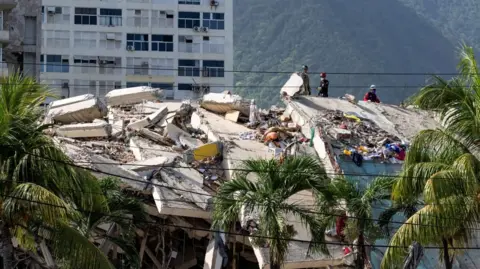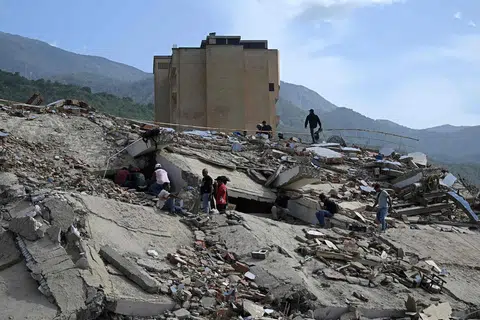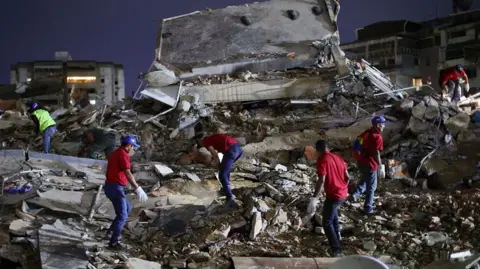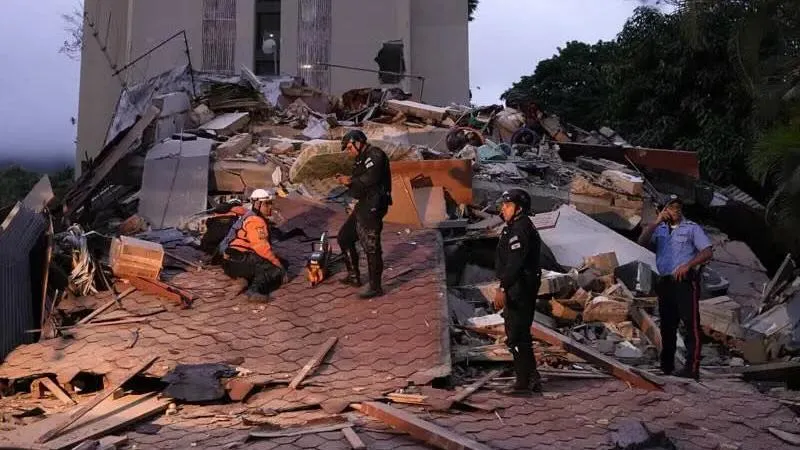
At least 235 people have been killed and more than 4,300 injured after two powerful earthquakes struck Venezuela near the capital, Caracas, leaving widespread destruction and prompting an urgent search for survivors trapped beneath collapsed buildings.
Rescue teams continued combing through debris on Thursday as desperate cries for help were heard from beneath the rubble in Caracas and the nearby coastal city of La Guaira.
Authorities fear the number of casualties could rise significantly as efforts to reach those trapped continue.
According to the US Geological Survey, the first earthquake measured 7.2 in magnitude and was followed moments later by a stronger 7.5-magnitude tremor. Both quakes occurred at relatively shallow depths, increasing their destructive impact.
The earthquakes struck at 18:04 local time (22:04 GMT) on Wednesday, which was a national holiday in Venezuela. As a result, many residents were at home when the disaster unfolded.
USGS reported that the first quake originated 20.3 kilometres beneath the surface, while the second struck at a depth of 10 kilometres.
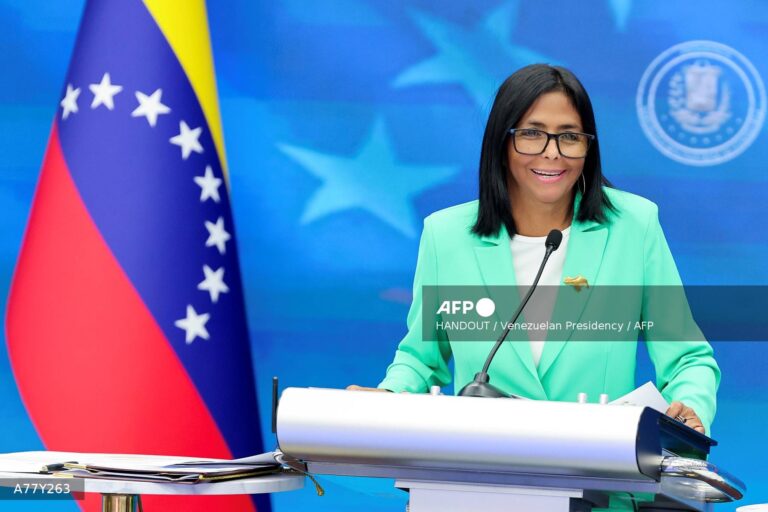
The country’s National Assembly President, Jorge Rodríguez, confirmed on Thursday that the death toll had risen. Earlier, interim President Delcy Rodríguez declared a nationwide state of emergency.
International support has begun arriving, with the United States pledging $150 million in assistance.
Washington said military transport aircraft and ships would be deployed to aid search-and-rescue missions and deliver emergency relief supplies.
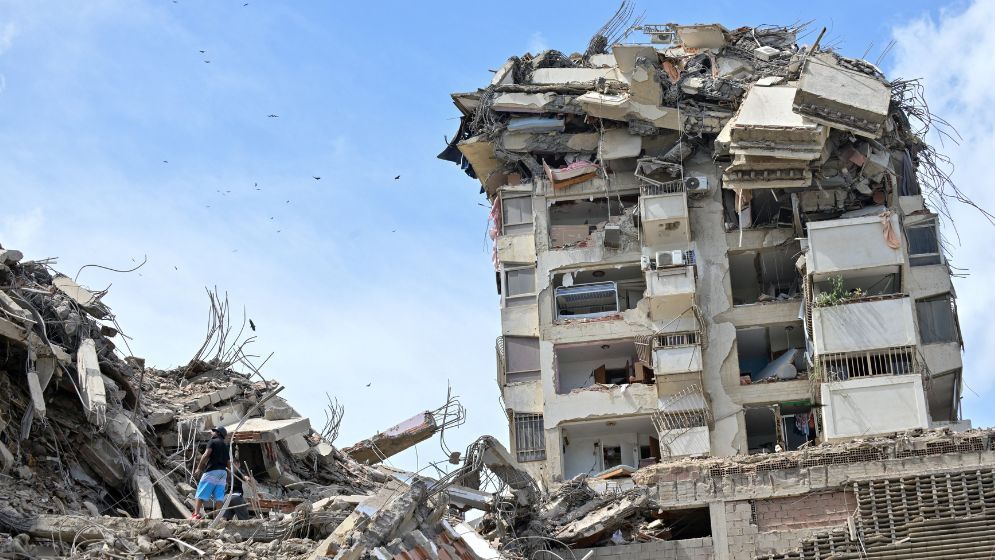
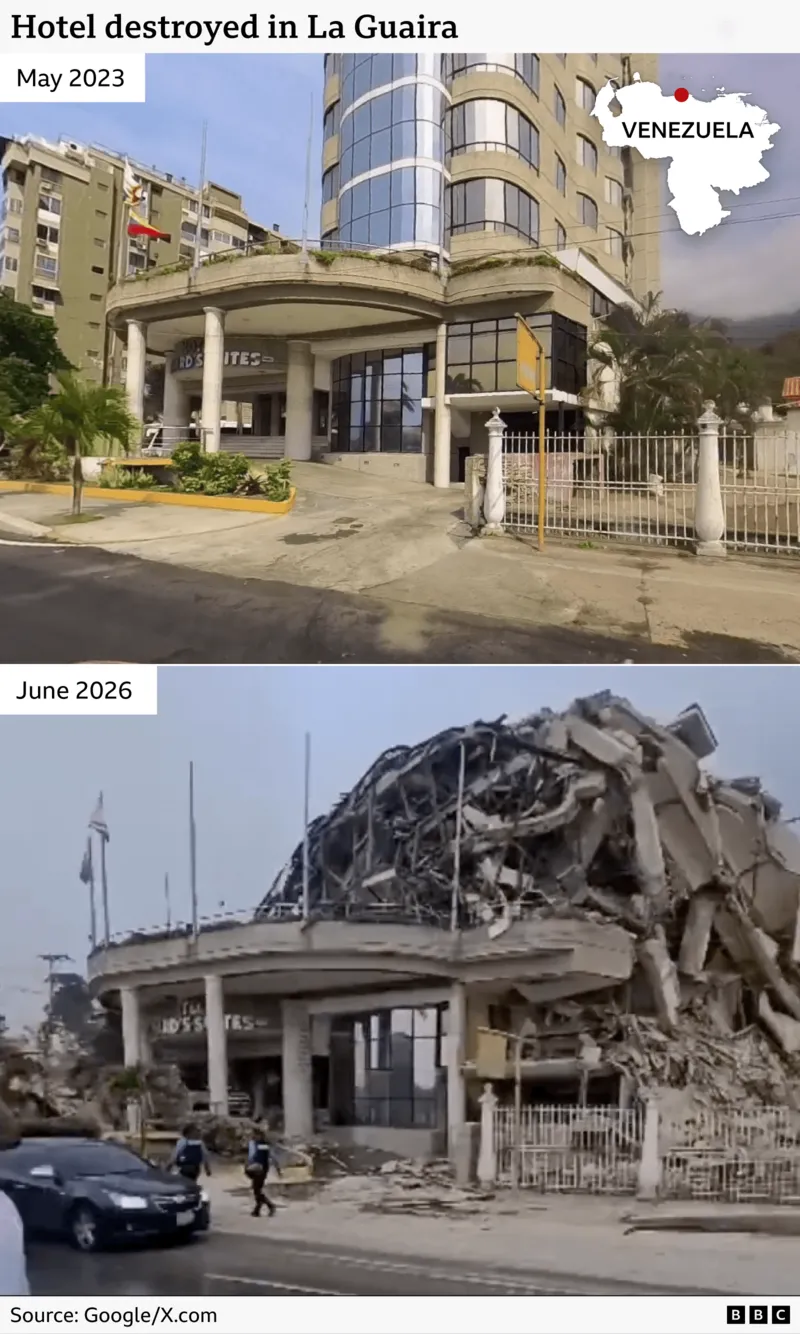
Rodríguez said around 250 buildings had either collapsed or suffered severe damage, most of them in La Guaira. Verified footage showed a 10-storey hotel reduced to rubble, while families searched desperately for missing relatives.
Juan Ortiz, a medical student in Caracas, said one of his close friends had died, another was believed to be trapped beneath debris, and about 20 people he knew in the coastal area remained unaccounted for.
“I’m in shock and confusion, and frustrated that I can’t help,” he said.
The destruction extended beyond Caracas, with Interior Minister Diosdado Cabello reporting damage in Trujillo, Yaracuy, Carabobo, Aragua and Miranda states.
In Chacao, a municipality within the Caracas metropolitan area, Mayor Gustavo Duque said 11 people had died in one collapsed building while 23 others had been rescued.
In a video posted on social media, Duque said emergency workers were clearing debris to allow specialist teams to enter.
“to reach people who are hopefully still alive”.
“We’re trying to rescue as many people alive as possible,” he said.
Meanwhile, Venezuela’s main international airport in Maiquetía was shut down after suffering significant structural damage. Footage from inside the terminal showed dust and debris falling from the ceiling.
Elsewhere, in Tucacas, about 250 kilometres northwest of Caracas, verified video footage showed the collapse of a multi-storey building reportedly operating as a hotel.
Aftershocks continued to shake the region, with Delcy Rodríguez telling state broadcaster Venezolana de Televisión that at least 30 had been recorded since the initial earthquakes.
Experts warn that the death toll is likely to climb further. The USGS stated: “High casualties and extensive damage are probable and the disaster is likely widespread.”
The agency estimated a 42 per cent chance that fatalities could exceed 10,000 and a 33 per cent chance they could surpass 100,000, based on historical earthquake data, population density and other relevant factors.
USGS stressed that the figures are intended to guide emergency response planning and do not represent precise forecasts.
Venezuela sits along the boundary of two tectonic plates, and scientists believe the earthquakes were triggered by a sudden release of accumulated pressure between them.
Caracas-based journalist Luis Hernandez said power outages and internet disruptions were hampering efforts to determine the full scale of the devastation.
“Due to the economic crisis in the country, it is very difficult for us to assess,” he said.
Cabello identified the Caracas neighbourhoods of Altamira and Los Palos Grandes as among the hardest hit areas.
Those same districts were severely affected during the devastating 1967 earthquake that killed around 200 people in the Venezuelan capital.
USGS records indicate the second quake was the strongest to strike Venezuela since 1900.
“It’s the strongest quake I’ve ever felt in my life,” said BBC Mundo’s Nicole Kolster.
Kolster, who lives on the seventh floor of an apartment building in Los Palos Grandes, added: “It was so strong that I thought the building was going to fall on top of me.”
Reports indicated the tremors were felt as far away as Bogotá, the Colombian capital, hundreds of kilometres from the epicentre.
Opposition leader María Corina Machado expressed solidarity with victims, writing on X: “My heart, my infinite embrace, and my prayers are with every Venezuelan home in these hours of anguish.”
Delcy Rodríguez said rescue operations were continuing with assistance from the United States, the Dominican Republic, El Salvador, Mexico and Qatar.
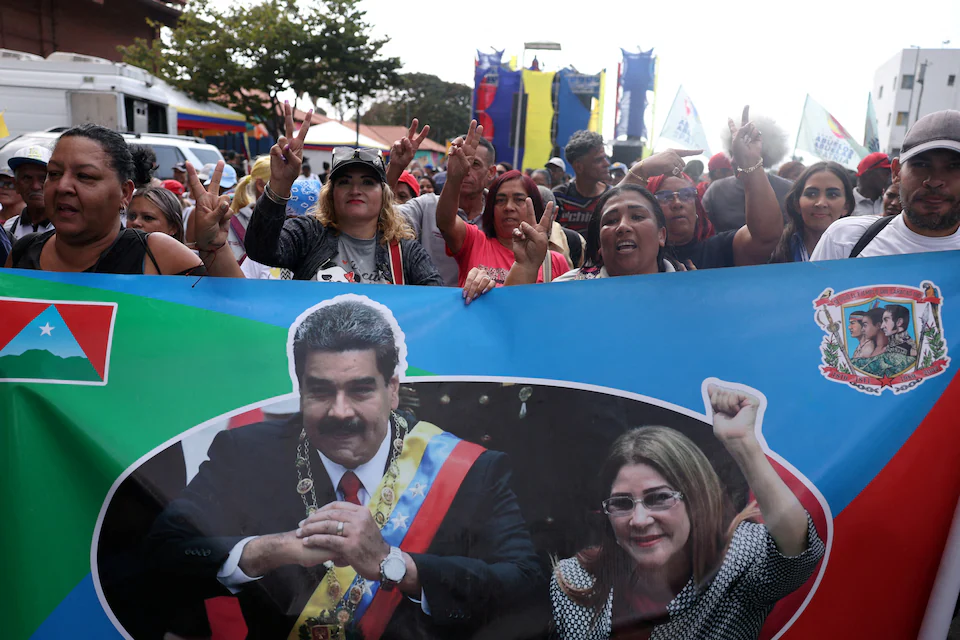
The catastrophe has also become the first major challenge in Venezuela’s evolving relationship with the United States following President Donald Trump’s order in January to capture President Nicolás Maduro.
Trump said he had directed his administration “to get ready to move quickly”.
“The two major earthquakes that just hit the great people of Venezuela are both massive in scale and have left a devastating number of deaths,” he wrote on Truth Social.
The US “stands ready, willing and able to help!” he added.
US Secretary of State Marco Rubio said Washington was “immediately deploying search and rescue teams, medical resources and humanitarian assistance”.
The Trump administration has sought to redefine ties with Venezuela since Maduro’s removal, backing his former ally Delcy Rodríguez as part of its new approach toward the South American nation.