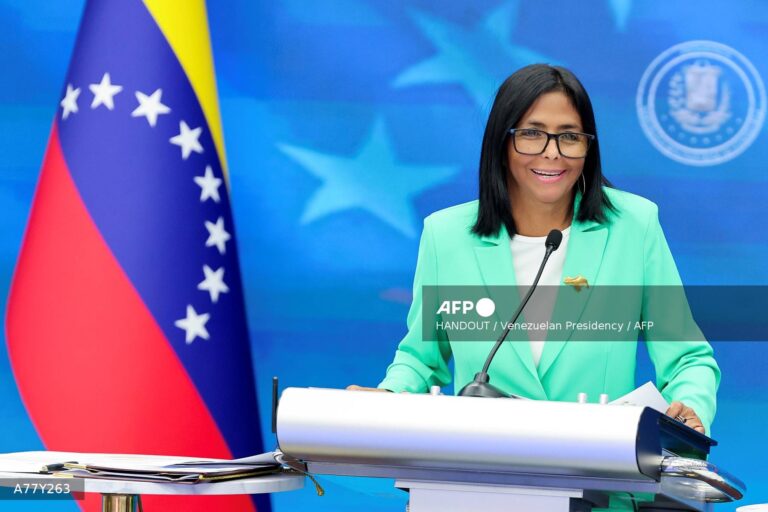
Venezuela’s interim President, Delcy Rodriguez, has assured citizens that the country remains the owner of its oil resources despite a new agreement giving the United States substantial control over its vast petroleum reserves.
Rodriguez made the clarification on Saturday while addressing the nation on state television, amid growing concerns over the terms of the agreement with Washington.
“One thing must be absolutely clear: Venezuela retains ownership and sovereignty over its resources,” Rodriguez said.
The agreement covers Venezuela’s proven oil reserves, estimated at 65 billion barrels, with US interests expected to exercise majority control.
US President Donald Trump on Friday described the arrangement as “the biggest oil deal in world history.”
According to Rodriguez, the agreement is intended to transform Venezuela’s largely untapped oil resources into a source of economic and social prosperity for its people.
Caracas estimates that the deal could attract about $100 billion in private investment to rebuild and expand the country’s struggling petroleum industry.
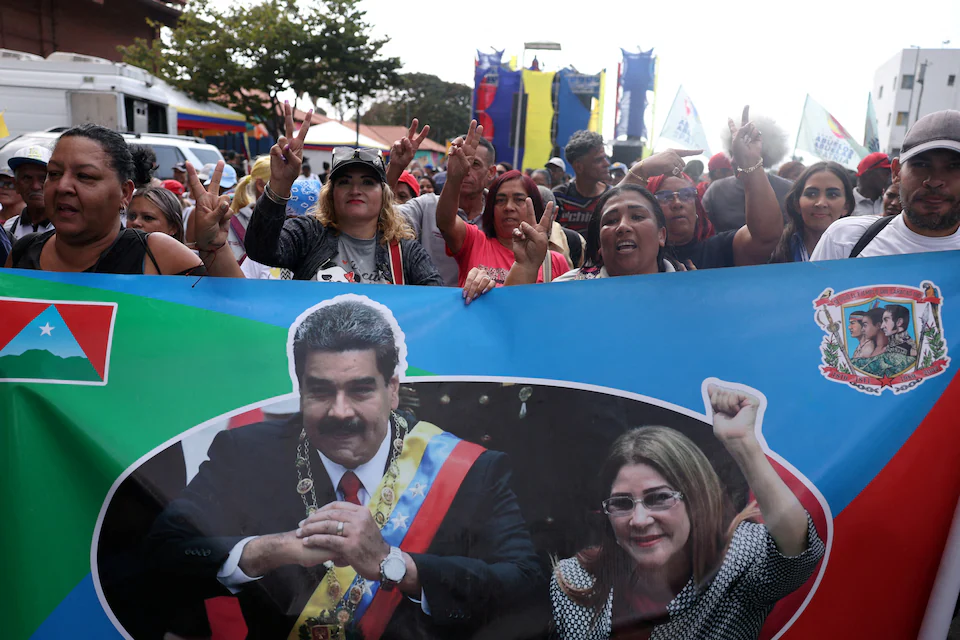
However, the agreement has triggered uncertainty among some Venezuelans, including government supporters, because of limited details about how the arrangement will operate and how its benefits will be distributed.
“We don’t know who this will benefit — whether it’s Venezuela or (the United States),” said Jesus Salazar, a 68-year-old security guard.
“I have my doubts, but we’ll have to wait and see what happens.”
The deal comes after years of economic pressure on Venezuela and heightened tensions between Caracas and Washington.
The Trump administration has eased sanctions on Venezuela’s oil sector while pushing for greater foreign participation in the industry.
Venezuela’s ruling party said on Saturday that it backed economic measures designed to protect national interests and help the country recover from years of sanctions and economic restrictions.
The government has frequently blamed US sanctions for the severe deterioration of Venezuela’s economy.
Oil production rises
Rodriguez has introduced reforms in the mining and petroleum sectors, opening industries that were previously tightly controlled by the state to private and foreign investment.
Venezuela’s oil output increased by 29.8 per cent between January and July to approximately 1.2 million barrels per day. However, production remains significantly below the three million barrels per day recorded about 25 years ago.
The new agreement seeks to eventually restore production to those levels, although industry experts say the process will take several years.
“The increase in production won’t be seen for at least three or four years,” said engineer Oswaldo Felizzola, a professor at the Institute of Higher Studies in Administration in Caracas.
Felizzola welcomed Washington’s involvement as a potential guarantor of investment, arguing that Venezuela has struggled to attract significant capital for more than a decade.
“Without this, these fields would not be developed over the next 10 or 15 years,” because state-owned Petroleos de Venezuela “does not have the financial resources to do so.”
The potential investment comes as Venezuela continues to recover from a devastating economic contraction. Between 2014 and 2021, the country’s economy shrank by about 80 per cent, pushing millions of people into poverty.
The monthly minimum wage is currently equivalent to about $0.16, although government subsidies can provide as much as $240 monthly.
This remains far below the estimated $730 required to meet the basic food needs of a family of five.
Mixed reactions
Despite the anticipated economic benefits, some Venezuelans remain sceptical about whether increased oil production will translate into better living conditions.
Carlos Baco, a 74-year-old government employee, said he was hopeful that the agreement would eventually generate more revenue but noted that ordinary citizens had yet to experience significant improvements from the recent increase in production.
“Consumer goods and food are more expensive… the dollar is rising and prices are going up,” he said. “It’s impossible here.”
Rodriguez has projected that the agreement could generate more than $204 billion in tax revenue for Venezuela, although she has not released details explaining how the figure was calculated.
Analyst Elias Ferrer of the Orinoco think tank described the deal as a positive development despite the lack of specific details.
“It’s undoubtedly better than before. Before, this oil wasn’t being extracted; if no one extracts it, no one pays royalties, and no one profits from it,” he said.
Dolores Dobarro, Venezuela’s former deputy minister of energy, also described the investment as a potential opportunity for the country.
“If everything is done correctly… this will be a great opportunity for Venezuela to see its oil sector revived,” she said.