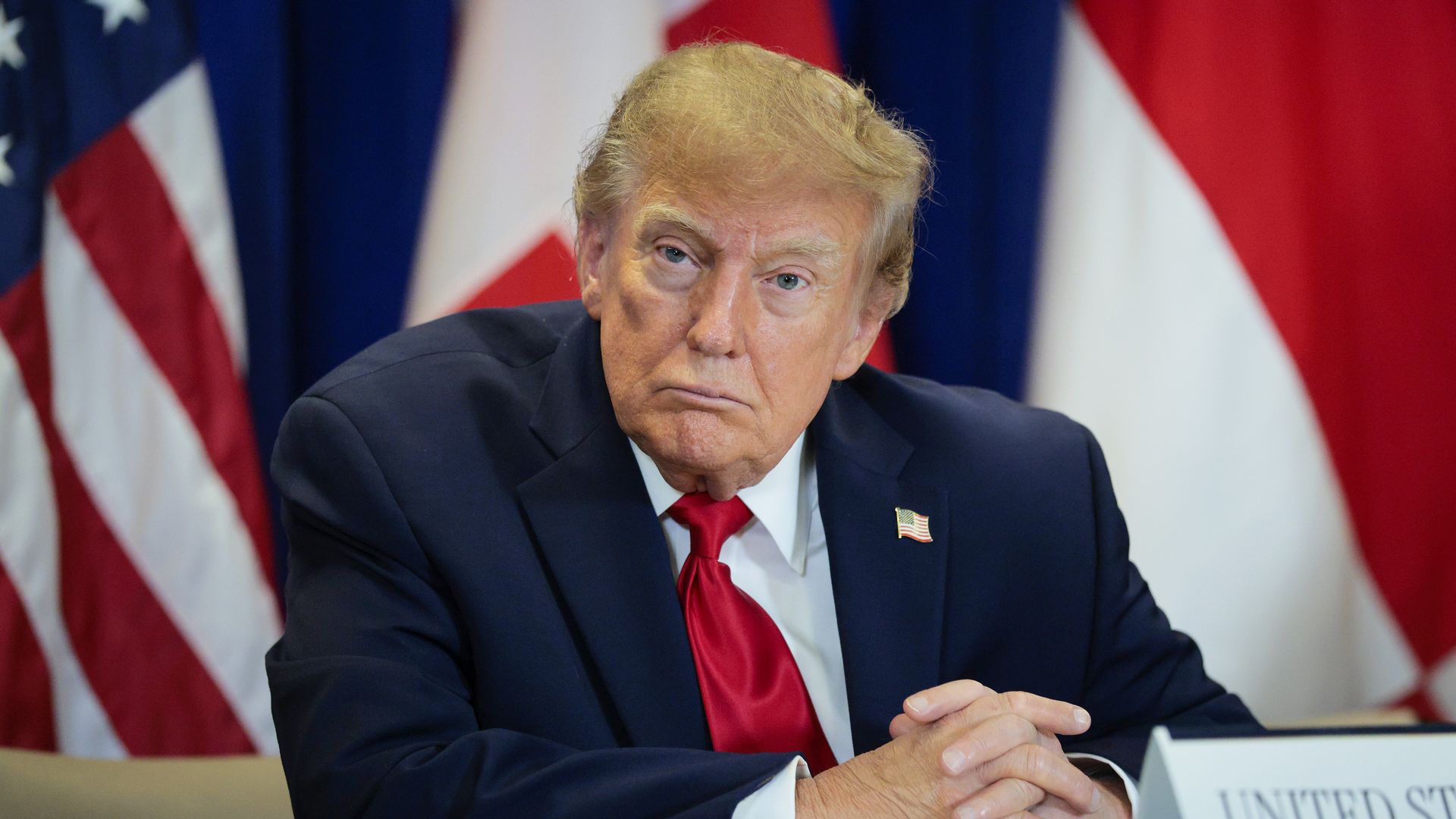
United States President, Donald Trump, said on Tuesday evening that “Project Freedom”, the US operation designed to assist stranded vessels navigating the Strait of Hormuz, would be paused for a “short period of time”, following what he described as progress toward a possible agreement with Iran.
Trump said the decision to suspend the operation was taken by “mutual agreement” after “great progress” in discussions, adding that it came at the request of Pakistan, which has been acting as an intermediary between Washington and Tehran.
He stressed, however, that the US blockade of Iranian ports would continue.
Iranian state media framed the development as a political win, claiming it showed Trump had “retreated” after “continued failures” to reopen the key maritime route for global shipping.
The announcement came shortly after US Secretary of State Marco Rubio said the initial US-Israeli military campaign in Iran — “Operation Epic Fury” — had concluded after achieving its objectives.
However, the pause in “Project Freedom” appeared to contrast with earlier statements from Rubio, Defence Secretary Pete Hegseth, and Joint Chiefs chairman Gen. Dan Caine, all of whom had insisted the mission would restore freedom of navigation and commercial traffic in the Strait of Hormuz and the wider Persian Gulf.
“We would prefer the path of peace. What the president [Donald Trump] would prefer is a deal,” Rubio told reporters on Tuesday.
Rubio also said the US and Israeli strikes had caused “generational destruction to their economy” and urged Iranian leaders to reconsider their stance, warning them to “check themselves before they wreck themselves in the direction that they’re going”.
He added that while Trump favoured diplomacy, “That is so far not the route that Iran has chosen” and noted that “What that may lead to in the future is speculative.”
Defence Secretary Pete Hegseth maintained that the ceasefire remained intact, stating: “Right now the ceasefire certainly holds, but we’re going to be watching very, very closely,” while Gen. Dan Caine said Iranian actions against US forces had so far remained “below the threshold” that would trigger renewed fighting.
Trump later told reporters that a negotiated settlement was still possible. When asked what would constitute a violation by Iran, he replied, “You’ll find out because I’ll let you know.”
He also confirmed he was in discussions with international partners, including Japan, and expected to speak with Chinese President Xi Jinping during an upcoming visit.
Tensions in the region have remained high since the US and Israel launched Operation Epic Fury on 28 February.
The strikes prompted Iran to block the Strait of Hormuz, through which around 20% of global oil and liquefied natural gas supplies normally pass, severely disrupting maritime traffic.
A ceasefire announced in early April saw Iran halt drone and missile attacks on several Gulf states, including the United Arab Emirates, but shipping through the strait has remained limited.
The US has also maintained its own blockade on Iranian ports as part of broader economic pressure.
On Tuesday, the UK Maritime Trade Operations reported that a cargo vessel had been struck “by an unknown projectile” in the Strait of Hormuz, though details remained unclear.
Earlier, the UAE said its air defences intercepted missiles and drones for a second consecutive day and accused Iran of targeting an oil facility in Fujairah. Iran denied responsibility, saying it would have “announced it firmly and clearly” if it had carried out any such attack.
Despite the rising incidents, US officials insisted the ceasefire was still in place. Hegseth said, “The ceasefire with Iran was not over,” while Gen. Caine noted that recent attacks had not yet crossed the threshold needed to restart full-scale operations.
Iranian officials, however, warned that continued disruption of shipping and energy routes would not go unanswered.
Parliamentary speaker Mohammad Ghalibaf said, “We know well that the continuation of the status quo is intolerable for America, while we are just getting started.” He added that “Shipping security and energy transit have been jeopardised by the US and its allies with the ceasefire violations and blockade. However, their evil acts will fail”.
The situation remains uncertain, with Washington signalling interest in diplomacy while continuing economic pressure and limited military operations in the region.