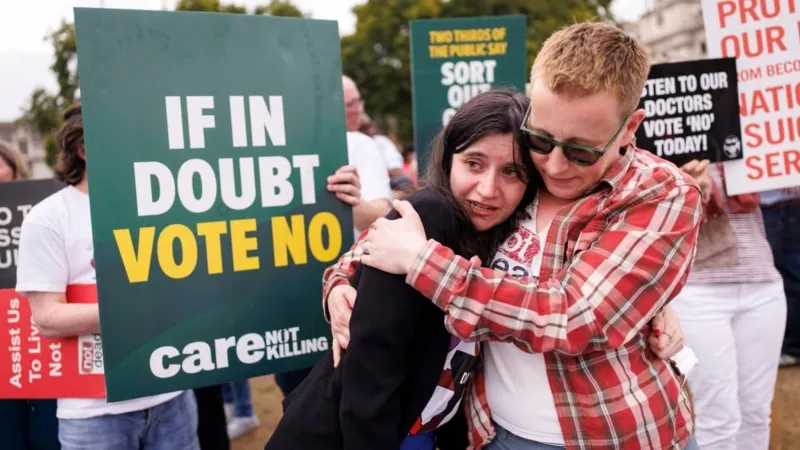
British lawmakers have rejected a fresh attempt to legalise assisted dying in England and Wales after the proposed legislation failed to secure enough support in the House of Commons.
The Terminally Ill Adults (End of Life) Bill, introduced by Labour MP Lauren Edwards, was defeated by 286 votes to 270, giving opponents a majority of 16 votes following an emotional debate in Parliament on Friday.
The proposed legislation would have allowed adults diagnosed with fewer than six months to live to apply for assistance to end their lives, subject to a number of safeguards.
Applicants would have needed approval from two doctors and an expert panel before an assisted death could take place.
Supporters argued that the law should give terminally ill adults greater control over how they die, while opponents raised concerns about the protection of vulnerable people from coercion. Critics also maintained that improving palliative and end-of-life care should take priority.
Following the vote, Edwards said, “Parliament has dropped the ball today. It will be picked up again as it must be, because the law as it stands is simply too cruel and too unjust to be allowed to stand.”
The latest defeat means there will be no immediate change to assisted-dying laws in England and Wales, although supporters could introduce another bill during the next parliamentary session.
Labour MP Kim Leadbeater, who introduced an earlier version of the legislation, said another attempt could come as soon as next year.
The previous bill passed the Commons in June 2025 by 23 votes but later stalled in the House of Lords after peers tabled more than 1,200 amendments, leaving insufficient time for it to complete the remaining parliamentary stages.
Dame Esther Rantzen, who is terminally ill with cancer, expressed disappointment over Friday’s result.
She told the BBC it was “so sad that people in this country won’t have the choice” available to terminally ill adults in some other countries.
The Childline founder added, “I am sure a change in the law will come. I am deeply sad that it won’t come soon enough for many of the people who need it, it’s a tragic day.”
Meanwhile, Labour MPs Ashley Dalton, Dame Meg Hillier and Jess Asato, who opposed the bill, said it was “unsafe and unworkable”.
They argued that medical and professional bodies had not endorsed its safety and called for improvements to the NHS, social care and palliative care before assisted dying was reconsidered.
Sarah Wootton, chief executive of Dignity in Dying, said “thousands of terminally ill people will continue to suffer against their wishes in their last days and weeks”. She added that she still believed “law change is inevitable”.
However, Care Not Killing chief executive Gordon Macdonald described the outcome as “decisive” and urged MPs to concentrate on strengthening palliative care and ensuring people across the UK can access quality end-of-life treatment.
During the debate, Labour MP Janet Daby revealed that she would vote against the bill despite previously backing the earlier legislation.
She said she had experienced “nightmares about dying and death” after her previous vote and added, “I had to wrestle with myself, knowing that I was not entirely comfortable with the decision I had made, and my conscience was not at peace, and I cannot again, in good conscience, vote for the bill.”
Other MPs gave personal accounts while making their cases for and against the proposals.
Labour MP Claire Hazelgrove spoke about her mother’s decision to end her life “on her terms” after suffering from a rare blood cancer, while Conservative MP Martin Vickers warned that legalising assisted dying would mean society had “crossed a line”.
Liberal Democrat MP Tom Gordon backed the legislation, describing it as “better than what we currently have, which offers no safeguards and no protections for people in those final moments”.
Prime Minister Andy Burnham did not vote in Friday’s division.
He has previously said he believes Parliament should decide the issue but has also argued that funding for end-of-life care should be improved before assisted dying is considered.