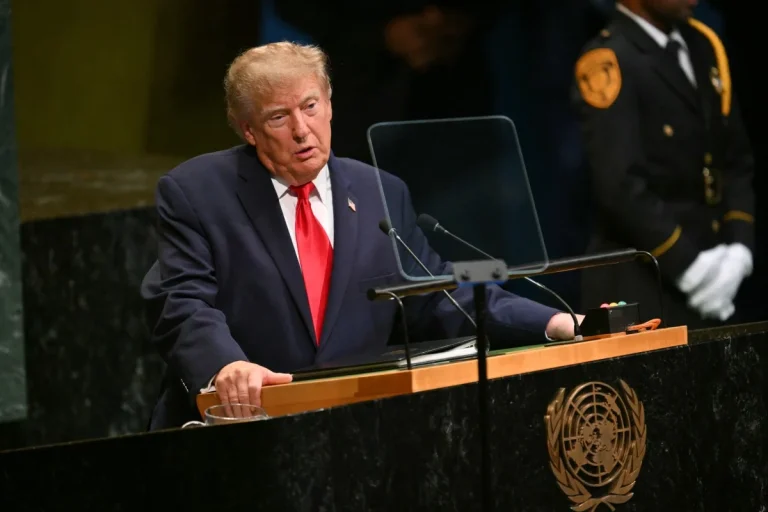
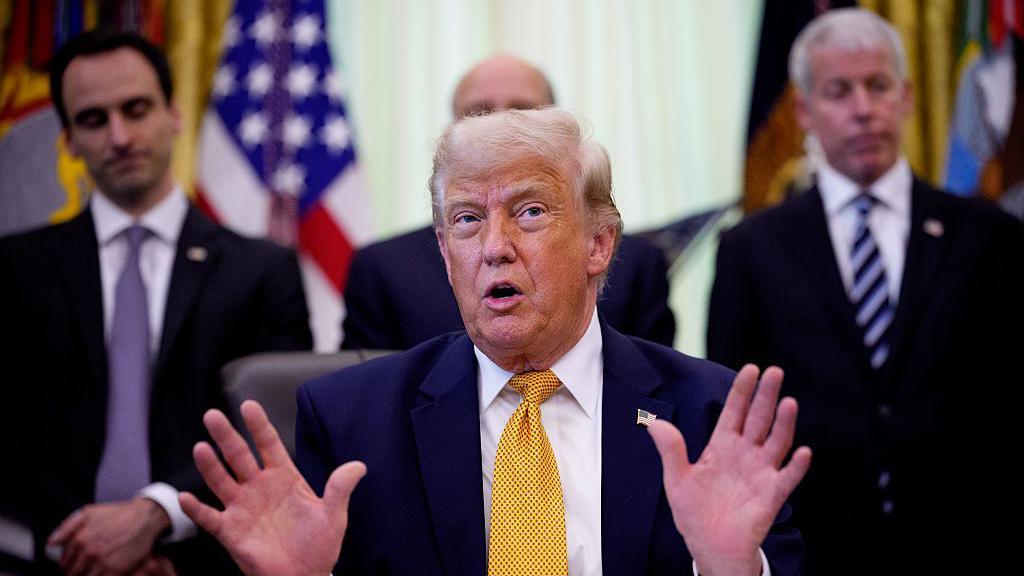
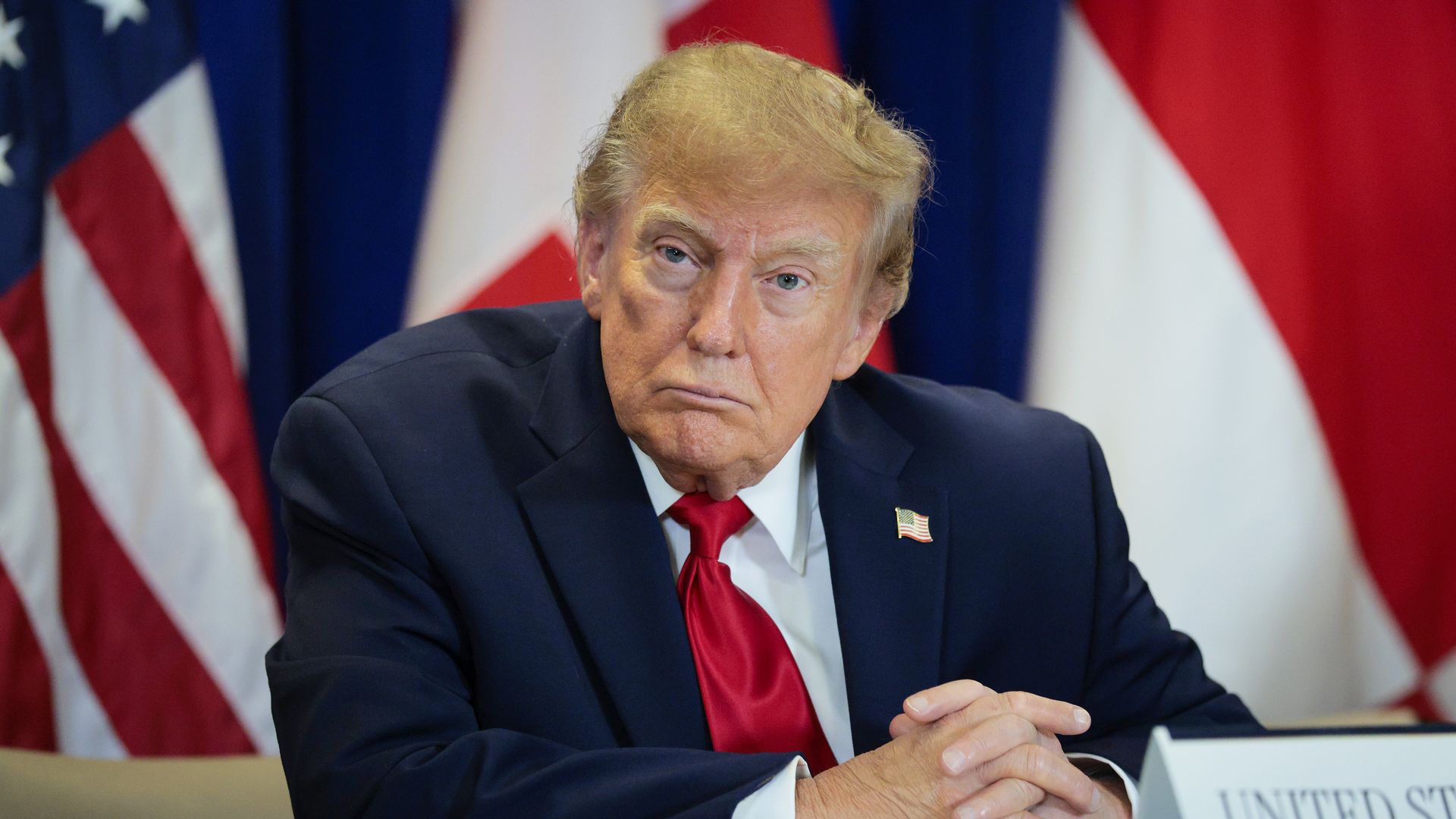
United States President, Donald Trump, has sounded the alarm over severe hunger in Gaza, describing the situation as “real starvation,” even as aid agencies attempt to speed up relief efforts during a declared Israeli “tactical pause” in hostilities.
Speaking in Scotland following his meeting with United Kingdom Prime Minister, Keir Starmer, Trump directly contradicted Israeli Prime Minister Benjamin Netanyahu, who has dismissed international concerns over famine in Gaza as false narratives driven by Hamas.
“We’re going to be getting some good strong food, we can save a lot of people. I mean, some of those kids, that’s real starvation stuff,” Trump stated during a joint press briefing with Starmer. “We have to help on a humanitarian basis before we do anything. We have to get the kids fed,” he added.
While Netanyahu had declared on Sunday during an event in Jerusalem that “there is no starvation in Gaza, no policy of starvation in Gaza,” Trump’s remarks presented a starkly different perspective. His comments reflect growing international concern about deteriorating conditions in the besieged enclave.
The United States currently supports the Gaza Humanitarian Foundation, which operates food distribution centres in the region.
However, those efforts have come under scrutiny due to repeated reports of Israeli forces targeting civilians near aid stations.
Trump announced plans to collaborate with the UK and the European Union to establish new food centres that would allow for easier access.
“Where the people can walk in, and no boundaries,” he explained. “It’s crazy what’s going on over there,” he said.
The war in Gaza, now approaching its 22nd month, has plunged the territory into a severe humanitarian disaster, exacerbated by an Israeli blockade that was in place from March until late May.
Aid deliveries began to ramp up following the relaxation of the blockade and the launch of GHF’s operations, which have been criticized for sidelining traditional UN-led humanitarian efforts.
The Israeli military’s recent announcement of daily “tactical pauses” and the opening of designated aid corridors has enabled some increased food deliveries. Still, residents like Jamil Safadi remain desperate.
“For the first time, I received about five kilos of flour, which I shared with my neighbour,” said the 37-year-old, who lives in a Tel al-Hawa tent with his family.
Others, however, have been less fortunate. Reports persist of stolen aid trucks and violence near food centres.
“I saw injured and dead people. People have no choice but to try daily to get flour. What entered from Egypt was very limited,” said Amir al-Rash, 33.
According to Israel’s civil affairs agency, COGAT, 120 aid trucks were picked up and distributed on Sunday, with more expected.
However, attacks continued in areas not covered by the pause, with Gaza’s civil defence agency reporting 54 deaths from Israeli strikes on Monday.
Several countries have attempted to address the shortfall in aid. Jordan and the UAE are airdropping packages, while Egypt has managed to get trucks into Gaza through Rafah.
The UN agency for Palestinian refugees welcomed recent developments but warned that the strip requires a minimum of 500 to 600 aid trucks daily to prevent further catastrophe.
“Opening all the crossings and flooding Gaza with assistance is the only way to avert further deepening of starvation among the people of Gaza,” UNRWA stated.
Despite Netanyahu’s rejection of starvation claims, two prominent Israeli human rights organisations, B’Tselem and Physicians for Human Rights, accused Israel of committing “genocide” on Monday, marking the first such accusation from within the country.
COGAT encouraged humanitarian agencies to maximise use of the tactical pause to deliver aid.
“More consistent collection and distribution by UN agencies and international organisations equals more aid reaching those who need it most in Gaza,” the agency said.
But observers argue the current volume of assistance remains insufficient. UN experts have stressed the need for a full ceasefire, more entry points, and a large-scale, sustained humanitarian effort.
“We’re one-and-a-half days into these new measures. Saying whether or not it is making a difference on the ground will take time,” said Olga Cherevko, a spokesperson for the UN’s humanitarian office, speaking from Gaza amid the hum of surveillance drones.
“We know it’s not perfect but we want to stay positive and we’re seeing positive steps, because, for example, even the fact that all the requests to go and collect cargo yesterday were approved is already a step in the right direction.”
Efforts to negotiate a truce between Hamas and Israel, mediated by Egypt, Qatar, and the United States, remain stalled. Netanyahu has continued to push forward with military operations aimed at dismantling Hamas and recovering hostages.
The conflict, ignited by Hamas’s October 7, 2023 assault on Israel, has led to the deaths of 1,219 people, mostly civilians, according to official Israeli figures cited by AFP.
Since then, the retaliatory Israeli campaign has killed at least 59,921 Palestinians, also mostly civilians, according to Gaza’s Hamas-run health ministry.