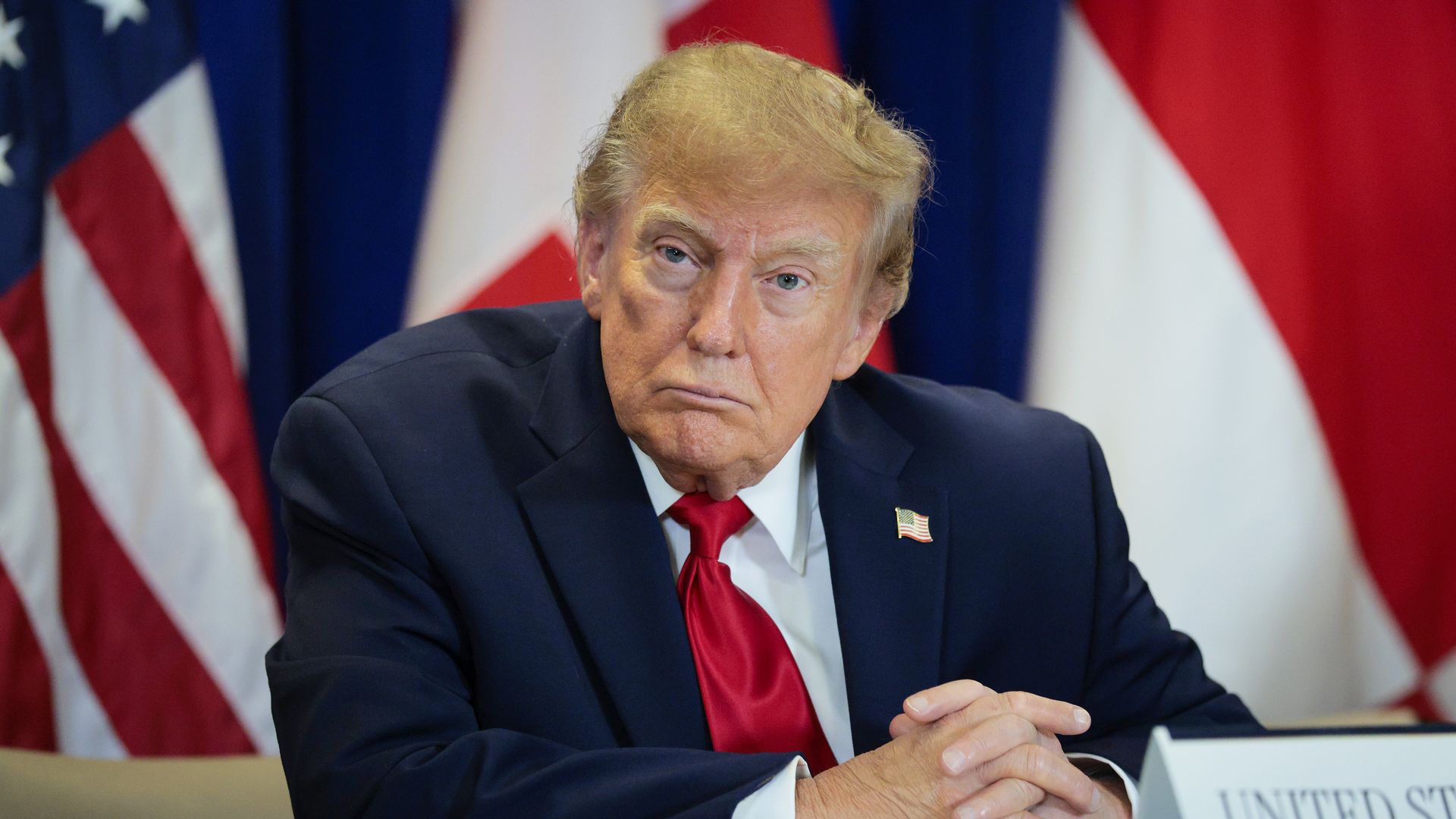
United States President, Donald Trump, is, for the second time in the still relatively young 2026 political calendar, threatening to significantly strain and potentially even withdraw the U.S. from, NATO, an alliance that remains broadly popular among Americans, over a foreign policy dispute many citizens do not support.
The latest controversy is tied to growing tensions around the Iran conflict. It follows an earlier episode involving Trump’s controversial interest in Greenland, which had already raised concerns among US allies about Washington’s commitment to long-standing international partnerships.
Trump has repeatedly criticized NATO members for what he describes as insufficient backing for the United States in relation to Iran. He has labeled NATO a “paper tiger” and suggested he was considering pulling the US out of the alliance.
Last week, he met with NATO Secretary General Mark Rutte, who told CNN that Trump was “clearly disappointed” with several alliance partners.
Following the meeting, Trump renewed his criticism on Truth Social, again referencing the earlier Greenland dispute, “NATO WASN’T THERE WHEN WE NEEDED THEM, AND THEY WON’T BE THERE IF WE NEED THEM AGAIN,” Trump wrote on his Truth Social platform. “REMEMBER GREENLAND, THAT BIG, POORLY RUN, PIECE OF ICE!!!”
Despite the heated rhetoric, a formal US exit from NATO would face major legal and political hurdles. Congress passed a provision in 2023 requiring legislative approval before any withdrawal, a measure backed in part by then-senator and now-Secretary of State Marco Rubio.
However, analysts warn that even without formal withdrawal, the administration could still weaken the alliance through policy decisions and rhetoric.
Some reports suggest discussions include reducing US troop deployments in countries seen as uncooperative on Iran-related policy or reassessing key overseas bases.
There is also speculation that the rhetoric is intended as leverage, aimed at pressuring NATO allies to take a more active role in addressing US concerns over Iran, including sensitive maritime security issues such as the Strait of Hormuz.
Yet the Greenland episode already demonstrated how even symbolic disputes can have lasting diplomatic consequences, with some allies questioning whether NATO should become less dependent on the United States.
Canadian Prime Minister Mark Carney has been among those expressing concern about the alliance’s future direction.
Public opinion in the United States remains largely supportive of NATO, though it has become increasingly politically divided.
Polling consistently shows strong approval of the alliance, even as recent events have begun to shift perceptions among some voters.
An AP-NORC survey conducted in February found that 70% of Americans said NATO membership was “very” (40%) or “somewhat” (30%) good for the United States, the highest level recorded since at least 2022.
Similarly, Gallup polling from the same period showed more than three-quarters of Americans supported either maintaining (49%) or increasing (28%) US commitment to NATO, marking the strongest combined support in decades.
However, newer data from the Pew Research Center suggests that Republican views have softened since the escalation of the Iran conflict.
The share of Republicans and GOP-leaning independents who believe NATO benefits the United States “a great deal” or “a fair amount” dropped from 49% to 38% over the past year.
Still, a majority of Americans continue to view NATO favorably, even as geopolitical tensions and domestic politics reshape attitudes.
Some observers note that NATO’s core mission is defensive in nature and does not include supporting members in offensive military operations initiated independently. They point out that Article 5, the alliance’s collective defense clause, has only been activated once, following the September 11, 2001 attacks on the United States.
Looking ahead, the concern among diplomats is not only a formal withdrawal, but also gradual erosion of trust and cooperation.
Reports indicate that internal discussions may include troop realignments or reductions in certain allied countries, a strategy previously attempted during Trump’s first term before being partially reversed by former President Joe Biden.
Critics also argue that Trump’s broader foreign policy posture, including tariffs and a more transactional approach to alliances, has already placed strain on NATO unity.
Some further contend that his warmer rhetoric toward Russian President Vladimir Putin has contributed to concerns about the weakening of the Western “rules-based order.”
For now, NATO’s future remains uncertain, shaped by escalating global tensions, shifting US domestic politics, and the continuing fallout from the Iran conflict.