United States President, Donald Trump, has signed an executive order seeking to reduce the number of vaccines routinely recommended for children and spread immunisations over a longer period.
The order, signed Monday at the White House, directs federal health officials to revise the nation’s childhood vaccination recommendations and divide vaccines into three categories based on children’s risk levels.
It also calls for the measles, mumps and rubella vaccine to be separated into three individual shots, despite broad opposition from medical experts and the lack of evidence that splitting the combined vaccine would provide any health benefit.
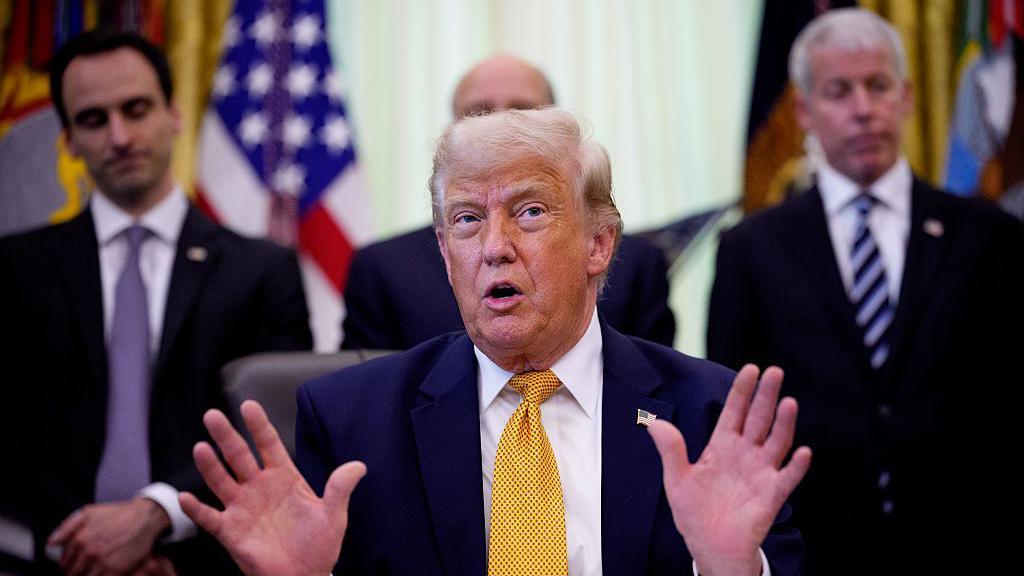
Trump, who was accompanied by US Health and Human Services Secretary Robert F. Kennedy Jr. and other senior health officials, defended the changes by arguing that children currently receive too many vaccines at once.
“We’re reducing them,” Trump said from the Oval Office. “It’s not only that you’re doing fewer vaccines, or jabs, as they say, but you’re doing them in a series of visits to the doctor.”
He also made several claims about vaccines that medical experts have disputed, including suggesting that the MMR vaccine could be dangerous.
Trump repeatedly argued, without evidence, that children were receiving more vaccines than their bodies could handle and should instead receive the shots during separate visits.
Asked why he wanted infants to receive vaccines across five different visits, Trump said he had followed the approach with his own children without encountering problems.
“Nothing bad can happen from what we’re doing,” he said.
The president also compared the amount of vaccines administered to children to the size of a bottle of soda, claiming that the current approach involved large quantities being injected into children.
“Very simply: Large amounts of vaccine, large amounts of, like vats — of vaccine are currently pumped into your child’s body,” Trump said.
“We’re doing 20% of that at each visit, and we’ll let time elapse between visits so the body can handle this massive amount of fluid being pumped in,” he added.
However, there is no scientific evidence supporting the claim that the amount of vaccine administered during routine childhood immunisation overwhelms a child’s body.
Under the new policy, all children would continue to be recommended to receive vaccines against measles, mumps, rubella, diphtheria, tetanus, pertussis, polio, Haemophilus influenzae type b, pneumococcal disease, human papillomavirus and chickenpox.
However, vaccines and preventive treatments for diseases including hepatitis A, hepatitis B, meningococcal B, meningococcal ACWY and dengue would primarily be recommended for children considered to be at higher risk.
Vaccines against rotavirus, meningococcal disease, influenza and Covid-19 would also fall under a shared decision-making approach, requiring parents to discuss vaccination with healthcare providers.
The administration said the revised schedule would give parents greater flexibility by allowing childhood vaccinations to be spread across several medical appointments.
The move has drawn criticism from medical professionals and some Republicans.
Senator Bill Cassidy, a Republican and physician who previously expressed reservations about Kennedy’s appointment because of his views on vaccines and autism, criticised the executive order.
“This executive order is wrong. The President does not have the expertise to make these changes.
Vaccines are overwhelmingly safe. Vaccines are effective. Vaccines DO NOT cause autism,” Cassidy wrote on X.
“Breaking up vaccines will mean children have to get more shots to get the same protection, not fewer shots. It will increase hesitancy and make children less safe.”
The latest move follows a broader effort by Kennedy’s HHS to reduce the number of vaccines included in the federal childhood immunisation schedule.
Medical organisations previously challenged an earlier revision of the schedule in court, with a judge ruling against the administration and citing what he described as “glaring gaps” in the expertise of members appointed by Kennedy to the federal vaccine advisory panel.
White House adviser Heidi Overton said the administration would work with individual states to implement the new recommendations rather than wait for the ongoing legal dispute to be resolved.
“We are doing it right away so that parents get the benefit from state laws changing,” Overton said.
The administration’s decision has also raised questions about the proposed separation of the MMR vaccine because individual measles, mumps and rubella vaccines are not currently sold separately in the US market.
HHS is expected to work with pharmaceutical companies to make separate vaccines available, with Kennedy reportedly expected to produce a plan within 90 days.
“The president has long held that the MMR vaccine should be separated and wants that available as an option,” a White House official said.
Another administration official defended the changes, saying the policy was based on an earlier HHS scientific assessment rather than Trump personally determining vaccine policy.
The revised recommendations have also sparked concerns among paediatricians over possible financial consequences for parents who want their children to receive vaccines no longer included in the routine recommendations.
US insurers are legally required to cover vaccines recommended by the Centers for Disease Control and Prevention’s Advisory Committee on Immunization Practices.
Despite the controversy, the White House said it expects vaccines removed from routine recommendations to remain available to parents who choose to have their children vaccinated.