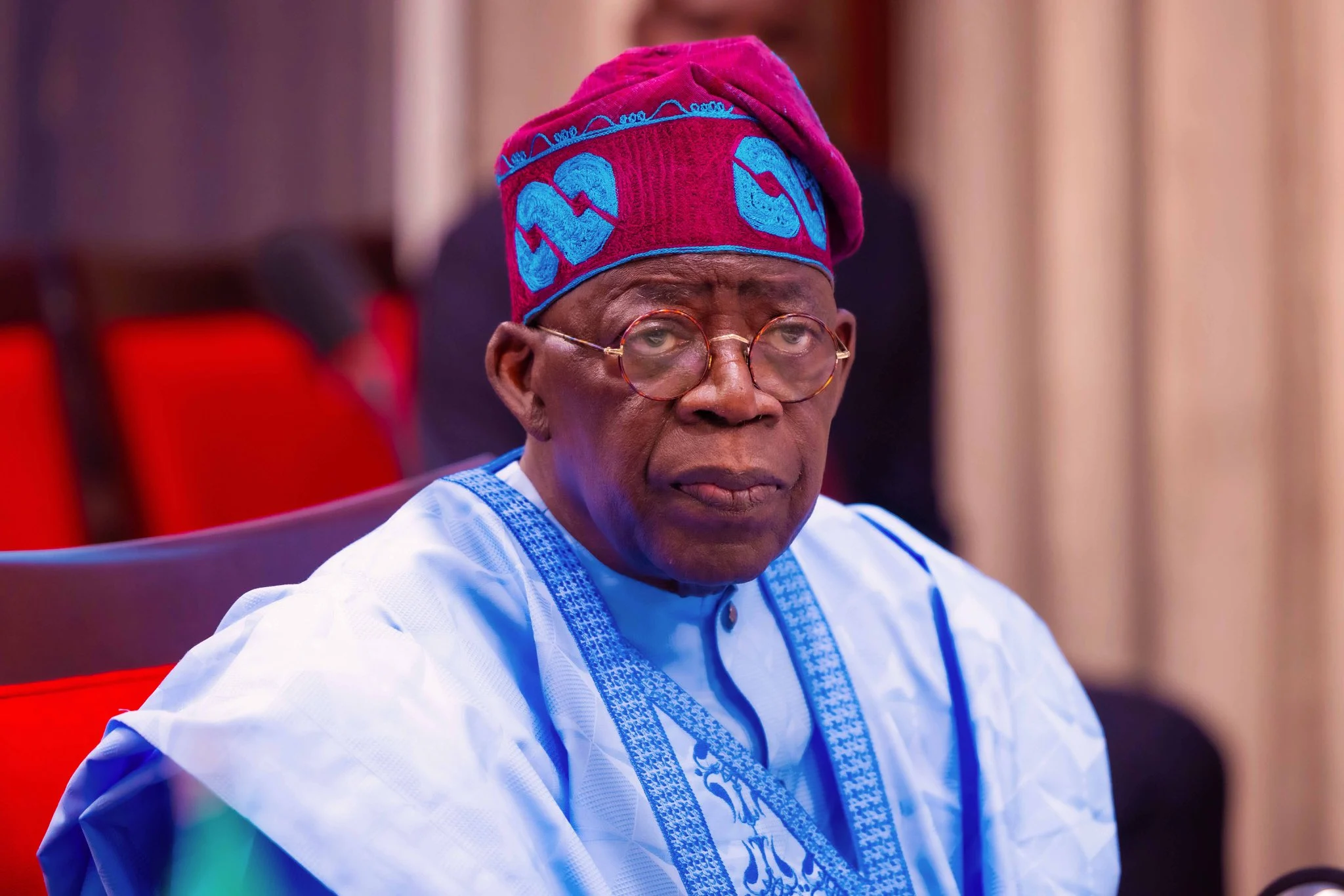
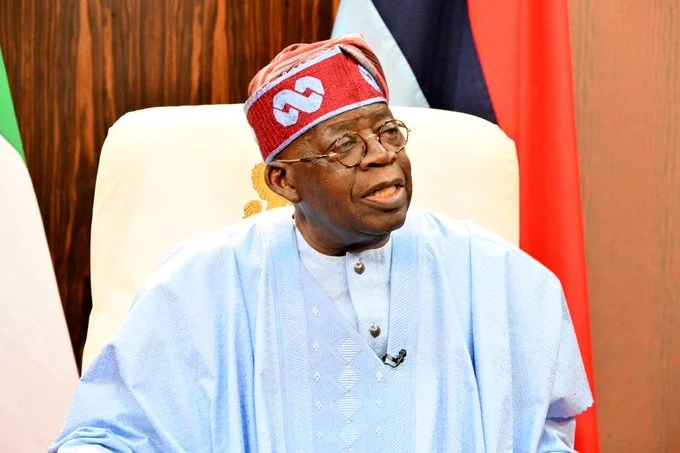
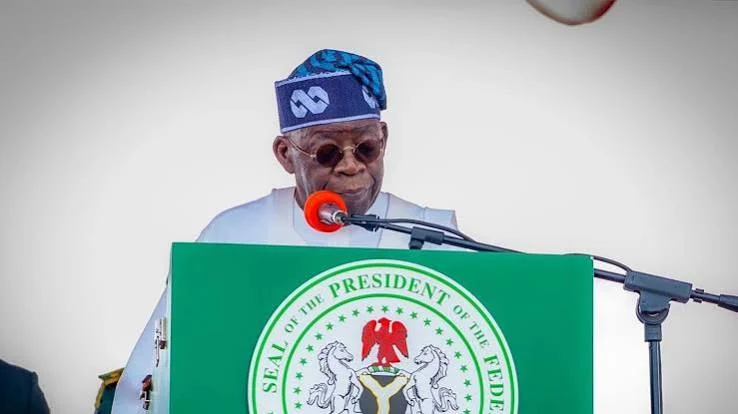
President Bola Tinubu on Monday firmly opposed the growing use of private military and security contractors in African conflict zones, warning that such reliance undermines national sovereignty and complicates efforts to combat terrorism across the continent.
Speaking at the first plenary session on Peace, Security, Governance and Multilateralism during the 7th African Union–European Union Summit in Luanda, Angola, the President—represented by Vice President Kashim Shettima—said African nations must take ownership of their peace and security initiatives instead of outsourcing critical responsibilities to foreign private actors.
“We stand resolutely against the use of private military and security companies in African conflicts, as their presence often complicates resolution efforts and undermines state sovereignty,” Shettima stated on behalf of the President.
“Africa’s security challenges require coordinated, state-driven responses, not parallel forces with unclear mandates.”
Tinubu said Nigeria’s position aligns with its longstanding approach to regional peace missions under ECOWAS and the African Union, both of which place emphasis on government-led interventions.
The President also expressed concern over what he described as a global decline in multilateral cooperation.
He noted that despite this trend, the European Union remains one of the few blocs maintaining “continent-to-continent engagement anchored on mutual respect and shared aspirations.”
Reaffirming Nigeria’s dedication to strengthening peace and democratic governance across Africa, Tinubu said the country is “more prepared than ever to work with the EU to build a stable, just and prosperous world.”
Tinubu intensified Nigeria’s campaign for Africa to secure permanent membership—complete with veto powers—on the United Nations Security Council, insisting that comprehensive reform of global governance is overdue.
“It is time for Africa to occupy permanent seats on the UN Security Council, with all attendant privileges,” he said.
“We expect EU Member States to support Africa’s legitimate and longstanding demand.”
The President highlighted recent gains in Nigeria’s counter-terrorism operations, disclosing that more than 250,000 individuals linked to Boko Haram had surrendered early in 2025 as a result of combined kinetic and non-kinetic strategies.
“As of early 2025, over 120,000 Boko Haram-affiliated individuals, including family members, have surrendered,” he said in reference to a core component of the government’s approach.
He added that the Multinational Joint Task Force in the Lake Chad Basin remained an effective model of African-led security cooperation.
Tinubu also cited improved maritime security through a recent Sea-Lift Agreement between the Nigerian Navy and the AU Standby Force, aimed at enhancing Africa’s rapid deployment capacity for peacekeeping and humanitarian missions.
The President urged the EU to prioritise peace and security initiatives rooted in African-led frameworks and regional ownership.
“Externally driven initiatives, however well-intentioned, cannot succeed without strong regional ownership and a grounded understanding of local dynamics,” he said.
He also cautioned against criminalising migration, noting that irregular mobility is often driven by deep-seated economic and demographic pressures.
He proposed structured labour pathways, such as Nigeria’s Technical Aid Corps and Business Process Outsourcing, to provide safe and productive alternatives.
“Our joint task is to convert mobility into safe, orderly and productive pathways that benefit both continents,” he added.
Meanwhile, Professor Bolaji Akinyemi, Chairman of the Governing Council of the Nigerian Institute of International Affairs, urged President Tinubu to declare a nationwide state of emergency on security following a series of high-profile attacks.
Akinyemi cited the killing of Brigadier General Musa Uba, the abduction of more than 300 students in Niger and Kebbi states, and the kidnapping of 38 worshippers in Kwara State as evidence of rising insecurity.
“We need decisive, coordinated and courageous steps,” Akinyemi said in a statement.
“The President should suspend the Armed Forces Act retirement provisions and recall experienced officers who can strengthen our military presence nationwide.”
He argued that similar measures were taken during the Second World War and Nigeria’s Civil War, stressing that exceptional times require exceptional decisions.
Akinyemi also recommended a nationwide recruitment drive, suspension of constitutional immunity for governors in states where terrorists operate freely, and the creation of a military tribunal empowered to impose the maximum penalty on convicted terrorists.
“Nigeria must not tolerate a situation where members of terrorist groups appear at social gatherings armed and unchallenged,” he said. “Our nation’s security requires bold and immediate actions.”
The AU–EU summit, co-chaired by Angola’s President João Lourenço and the European Council President António Costa, brought African and European leaders together to discuss security, trade, governance and migration.