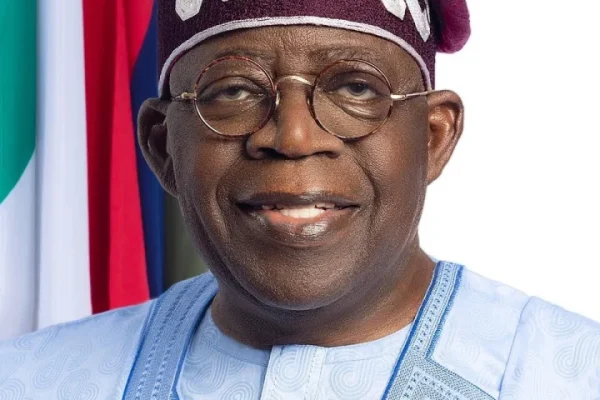
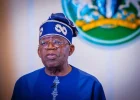
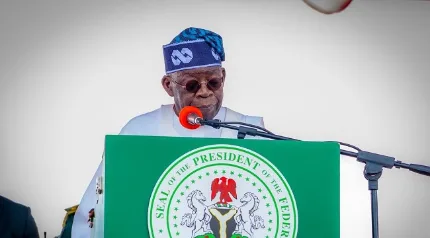
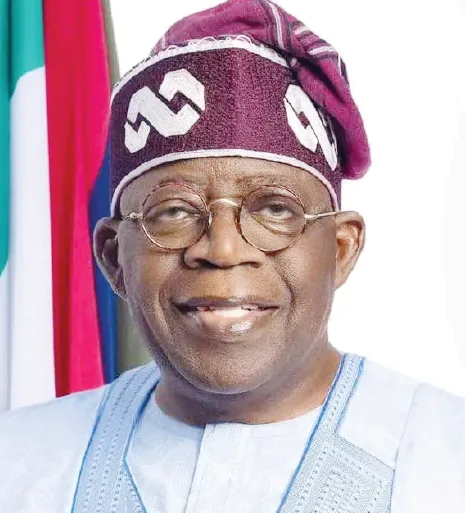
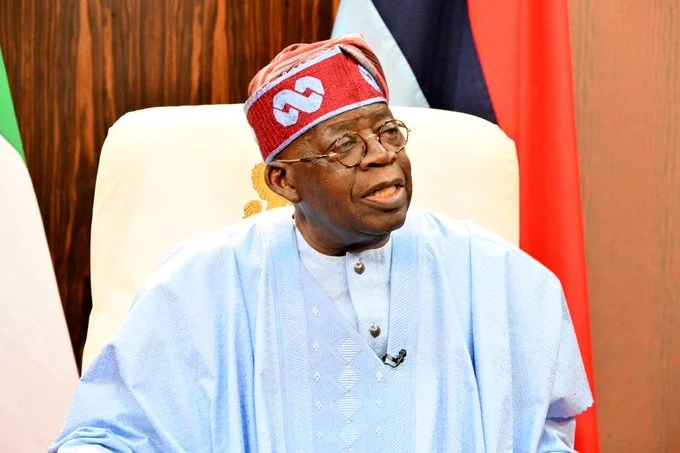
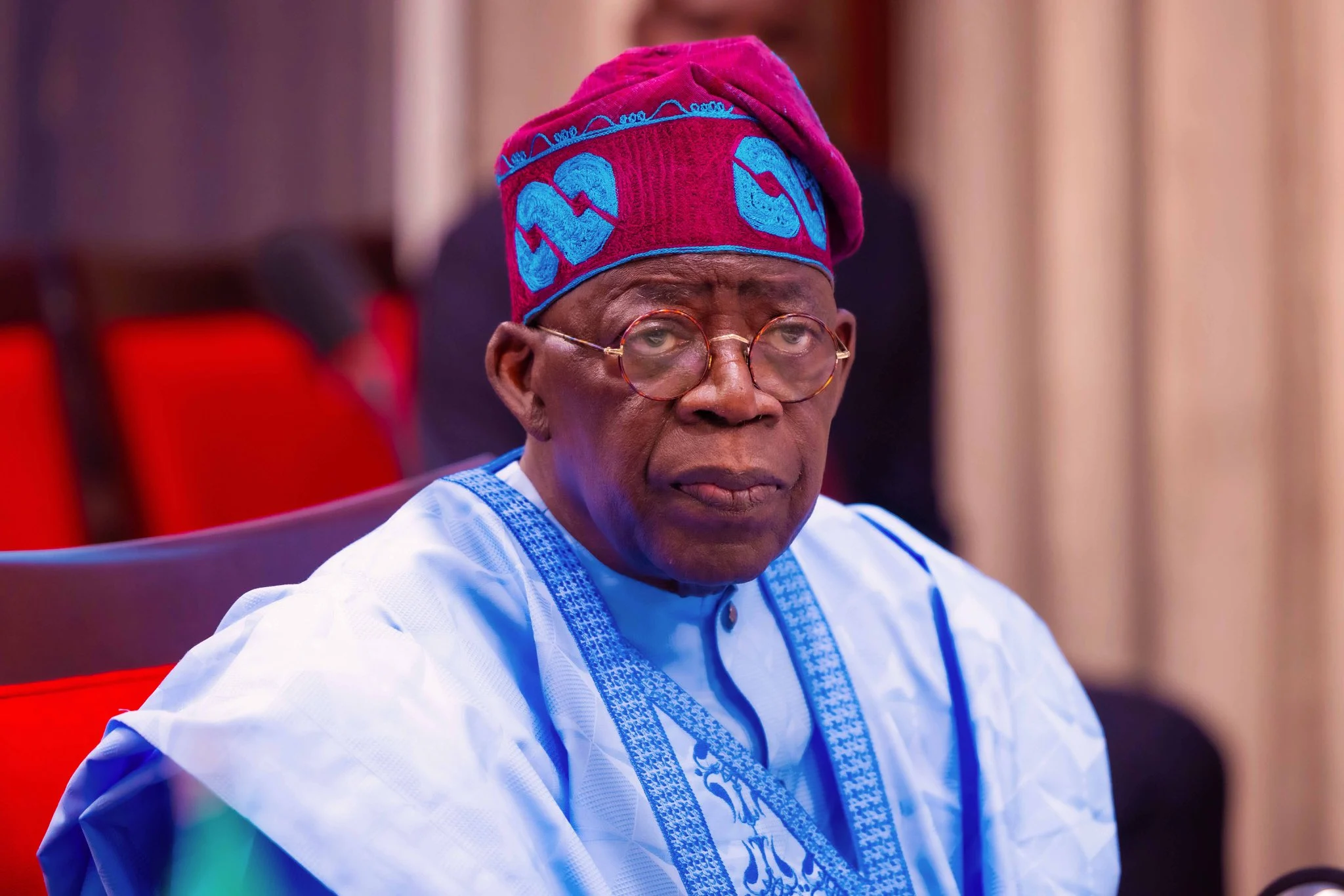
President Bola Tinubu on Friday declared insecurity and poverty as national emergencies, warning that both challenges pose serious risks to jobs, productivity, and national stability as Nigeria marked the 2026 Workers’ Day.
Organised Labour, however, pushed back strongly, insisting the country is sliding toward a dangerous tipping point marked by economic collapse, rising insecurity, and a weakening social contract that could soon disrupt nationwide work activity.
Speaking through the Secretary to the Government of the Federation, Senator George Akume, at the May Day celebration held at Eagle Square, Abuja, President Tinubu said his administration was treating the situation with urgency and coordinated policy measures.
“There cannot be decent work where workers fear for their lives, where wages cannot feed a family, or where insecurity disrupts farms, factories, markets and other economic activities. These hydra-headed challenges, the government notes, have been treated as a national emergency due to their impact on productivity, livelihoods, and the confidence of both workers and employers,” Tinubu said.
Aligning Nigeria’s response with the International Labour Organization’s Decent Work Agenda, the President acknowledged that insecurity and poverty remain major barriers to achieving a stable and productive society.
On security, he highlighted the establishment of the Community Protection Guards Initiative, which he said has recruited 45,000 young Nigerians to strengthen local security while also creating employment opportunities.
He also commended security agencies for their sacrifices in protecting economic life across the country, paying tribute to officers who lost their lives in service.
On the economy, Tinubu pointed to interventions under the Renewed Hope Agenda, including expanded cash transfer programmes reaching 15 million vulnerable households, which he said have helped lift about 7.5 million Nigerians out of poverty.
He added that major infrastructure projects such as the Lagos-Calabar Coastal Highway and the Ajaokuta-Kaduna-Kano Gas Pipeline have generated over 600,000 jobs.
“To you, our dear workers, I say this clearly; your welfare remains a priority. We are committed to improving working conditions, promoting fair wages, and ensuring that every Nigerian worker enjoys dignity, safety and equal opportunity in the workplace; hence, the recent reactivation of the payment of gratuity to Nigerian workers with effect from January 2026,” the president said.
He further explained that his administration’s anti-poverty strategy is built on job creation, diversification, and social protection.
“Through targeted interventions in agriculture, small and medium enterprises, infrastructure development, and skill acquisition, we are laying a solid foundation for inclusive growth. These are evident in the government’s key 2024-2026 interventions and initiatives, namely the National Agricultural Growth Scheme-Agro-pocket (NAGS-AP), the Dry Season Farming Schemes, the Mechanisation Drives, the Post-Harvest Management, the Financial Inclusion and support, anchored in the Bank of Agriculture, the Security for Farmers through the Nigeria Security and Civil Defence Corps (NSCDC) deployment of 10,000 Agro-Rangers to 19 states to protect farmers and farm produce from banditry, among others,” he said.
President Tinubu also urged the Nigeria Labour Congress and the Trade Union Congress to prioritise dialogue over confrontation.
“Strike should be the last resort, not the first,” he said.
He reaffirmed that his government remained committed to defeating insecurity and reducing poverty, insisting that decent work must become a reality for all Nigerians.
Labour issues strong warning
In a joint address, NLC President Joe Ajaero and TUC President Festus Osifo delivered a stark assessment of Nigeria’s condition, warning that the country is approaching a breaking point.
They described worsening poverty, insecurity, and economic hardship as evidence of a failing system and an increasingly fragile nation.
Workers, they said, remain central to national development but are being left behind in the distribution of wealth.
They said, “Workers remain at the very heart of every industry, every economy, and every success story known to humanity. Without workers, no wheel can turn; without workers, no nation can be built.”
Yet they lamented that workers are underpaid and overburdened despite generating national wealth.
They added: “Yet, they lamented, those same workers “create immense wealth yet receive only a fraction of it,” enduring exploitation while “poverty tightens its grip around them.”
Describing daily life for Nigerian workers, they said, “They described Nigerian workers as people who “rise before dawn and return home at dusk, exhausted yet unbroken,” but increasingly unable to meet basic needs despite their efforts.”
Dispute over economic reality
Labour leaders rejected government claims of progress, arguing that official figures do not reflect real conditions.
They said, “We are told that GDP growth may reach about 3.6%… yet poverty continues to rise. We hear official inflation figures… but these numbers do not reflect the reality experienced daily by workers.”
They added that economic reforms are failing to deliver relief.
“Paper growth without jobs, stability without prosperity, and reform without relief.”
According to them, the system only benefits a small elite, “An economy that serves only the top 1% while leaving the 99% behind cannot be sustainable. Perhaps, it is working for the ultra-few 1% and not the 99% majority.”
They further warned that about 65% of Nigerians now live in poverty, with thousands falling into hardship daily.
“Approximately 10,000 people are pushed into poverty every day,” they said.
They also raised alarm over worsening humanitarian conditions, noting, “In these camps and communities, diseases such as Kwashiorkor, Craw-craw, and Marasmus are re-emerging,” they noted, calling it “a grim picture of a nation under severe strain.”
Hard line on wages and insecurity
Labour announced that talks on a new minimum wage will begin in July 2026, but demanded urgent short-term relief.
“We will commence the process early to avoid the painful delays of the past,” they said.
They added, “We demand that from July of this year, every worker be paid 100% of his basic salary… to cushion the effects of the renewed crisis of survival. We demand a living wage, not a minimum wage.”
On insecurity, they issued one of their strongest warnings yet, “The scale of violence, the frequency of attacks, and the mounting loss of lives… place Nigeria among the most dangerous places to live on earth,” they said.
They further declared, “It is not. It is a war against our people.”
They warned that workers may stop reporting to work if conditions persist, “Nigerian workers may no longer continue going to work with this level of insecurity. We may be forced to advise our members… to stay at home to avoid being kidnapped, abducted or killed.”
And added, “The safety of workers is non-negotiable.”
Systemic failures and political warning
Labour also criticised the power and oil sectors, governance failures, and corruption, describing them as structural problems draining national resources.
“This is not mere corruption; it is a system… one that bleeds the nation continuously,” they said.
Looking ahead to the 2027 elections, they warned, “2027 will be different. No more will we be voting fodder,” they warned.
They concluded with a message of unity and resistance, “You are not victims. You are the engine of this nation. And engines do not beg; they move.”
They added, “Let this May Day mark the turning point, where Nigerian workers stopped asking and started demanding… Our nation can be saved! But only by us! Only together! Only now!”