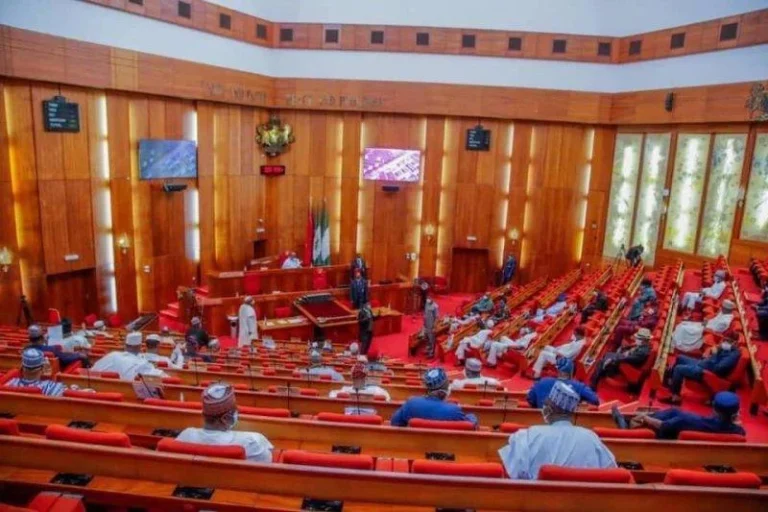
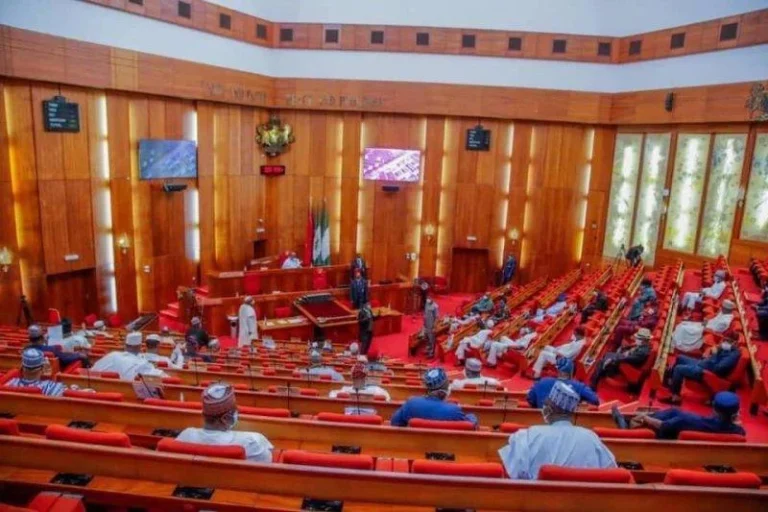
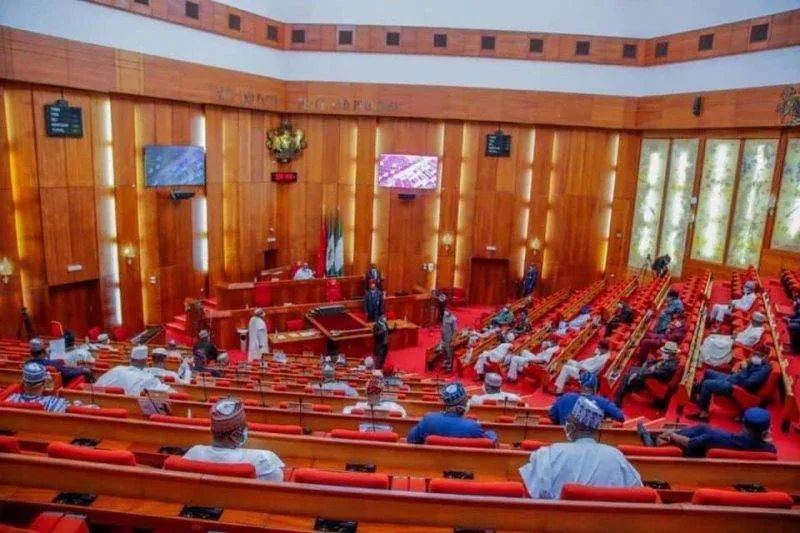
The Senate on Tuesday constituted a 12-member conference committee to reconcile differences between its version of the Electoral Act (Amendment) Bill and that passed by the House of Representatives, following intense public criticism over recent changes to the law.
The decision was taken during an emergency plenary session at the National Assembly in Abuja.
Announcing the development, Senate President Godswill Akpabio said the size of the committee was increased to reflect the importance and urgency of the assignment.
“After consultation with the leadership, we agreed to expand the committee from nine to 12 members,” Akpabio said. “I will now read out the names of the senators nominated to serve on the conference committee.”
The committee is chaired by Senator Simon Bako Lalong, with Senators Mohammed Tahir Monguno, Adamu Aliero, Orji Uzor Kalu, Abba Moro, Asuquo Ekpenyong, Aminu Iya Abbas, Tokunbo Abiru, Niyi Adegbonmire (SAN), Jibrin Isah, Ipalibo Banigo, and Onyekachi Nwebonyi as members.
Akpabio urged the lawmakers to work swiftly, noting that the outcome would determine how soon the amended bill could be transmitted to President Bola Tinubu for assent.
“This is a matter of urgency,” he said. “If the committee concludes its work within the next few days or, at most, one week, I believe the President will be able to sign the amended Electoral Act into law before the end of February.”
The emergency session was marked by heated exchanges and intermittent disruptions as senators debated a proposal to revisit Clause 60(3) of the Electoral Act (Repeal and Enactment) Bill, 2026, which addresses the transmission of election results.
The controversy stems from the Senate’s earlier decision to remove the phrase “real-time” from provisions on electronic transmission, retaining the 2022 Electoral Act clause that gives the Independent National Electoral Commission discretion to determine the mode of result transmission.
During the debate, Akpabio aligned with a proposal recognising electronic transmission as the primary method for result collation, while allowing manual submission through Form EC8A only in cases of technical failure.
The move triggered strong reactions from some lawmakers. Senator Enyinnaya Abaribe called for individual voting on the matter, although he later withdrew the request.
Outside the chamber, the amendment has sparked widespread protests, including demonstrations at the National Assembly by civil society groups, opposition parties, and prominent figures such as Peter Obi, who have demanded mandatory real-time electronic transmission to improve electoral transparency.
Responding to the criticism, Akpabio insisted that the Senate had not rejected electronic transmission.
“We did not throw away electronic transmission,” he said. “The removal of the phrase ‘real time’ was deliberate, to avoid legal complications that could arise from network failures and to give INEC the flexibility to operate effectively.”
While critics argue that the amendment weakens electoral transparency, several senators maintain that the disagreement is over wording rather than principle, insisting that the majority of the chamber supports electronic transmission of election results.
The conference committee is expected to meet with its House of Representatives counterpart in the coming days to harmonise the bill and resolve outstanding differences.