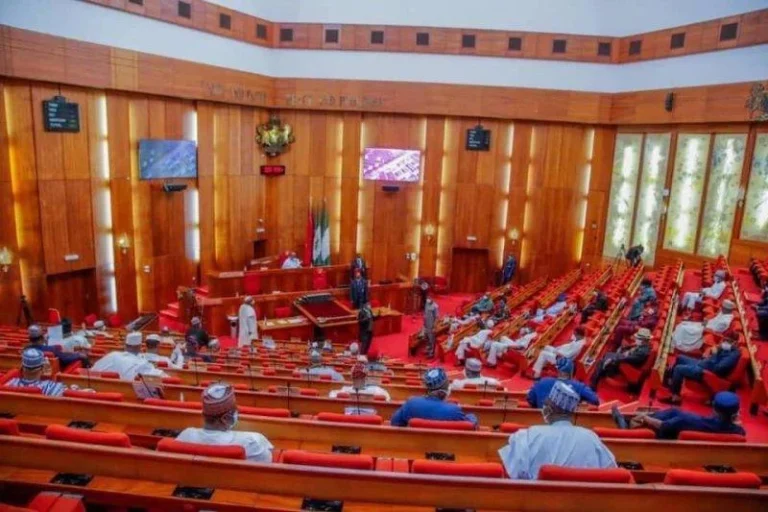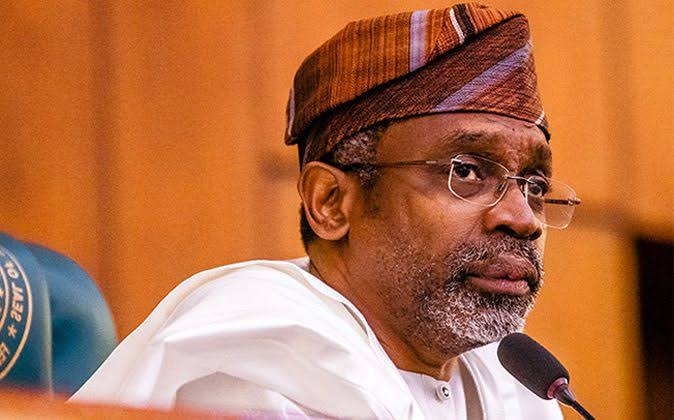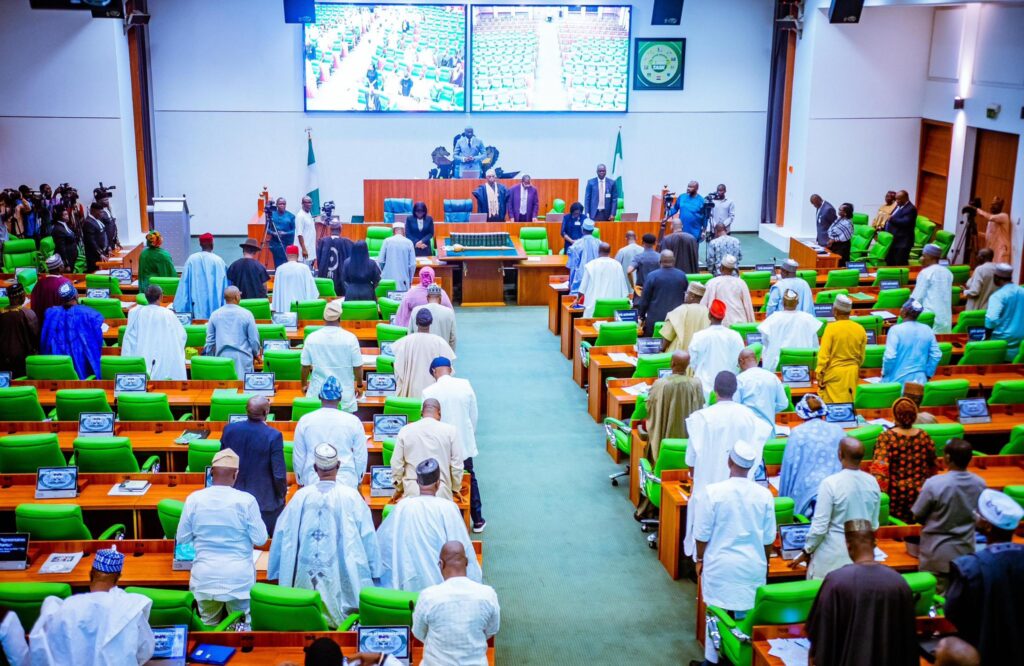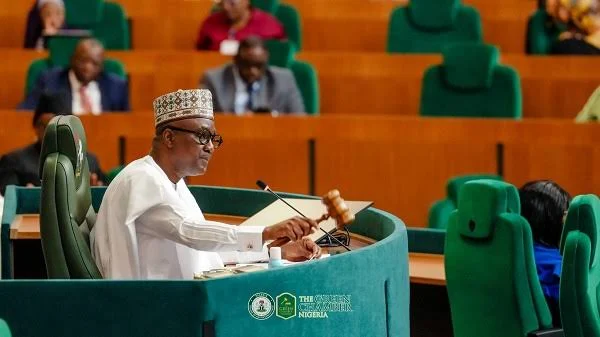
The House of Representatives has decided to withdraw its previously passed State Police Bill and instead consider the Executive Bill submitted by President Bola Tinubu, marking a significant change in the National Assembly’s constitutional amendment process on one of Nigeria’s most debated security reforms.
According to The Punch, speaker of the House, Tajudeen Abbas, announced the decision on Tuesday while declaring open the 2026 National Assembly Open Week in Abuja.
He explained that the President’s proposal was broader and more comprehensive than the version earlier approved by the House.
The move means lawmakers will no longer proceed with harmonising the House and Senate versions of the earlier state police proposals. Instead, legislative attention will shift to the Executive Bill.
Abbas said the President’s draft incorporated additional safeguards developed by a presidential committee chaired by the Chief of Staff to the President and former Speaker of the House, Femi Gbajabiamila.
“The deeper lesson of Oyo is that a nation of this magnitude cannot be policed in perpetuity from a single command in Abuja. On this question, this House has already acted.
“In the course of the constitutional reform ably led by our Deputy Speaker, this House passed a State Police Bill and placed the matter squarely before the nation. Tomorrow’s roundtable carries that work forward, in the open and before you.
“I am, indeed, able to share a development that speaks to the seriousness with which this administration regards the safety of Nigerians.
“His Excellency the President has now transmitted to the National Assembly an executive version of the state police bill, one that is more robust and more comprehensive than the version this House earlier passed.
“That bill is the product of a dedicated committee inaugurated by the President and chaired by a distinguished former Speaker of this House, Rt Hon Femi Gbajabiamila,” he said.
The Speaker assured Nigerians that the House would prioritise consideration of the new proposal.
“The House will therefore recall the version it earlier passed, and accord the executive bill the expedited consideration that a matter of this urgency deserves,” he said.
Abbas also rejected claims that lawmakers intended to rush the legislation without adequate public engagement, insisting that the bill would undergo the full legislative process, including public hearings.
“To the thoughtful citizens and to the members who have observed that they are yet to see the draft bills and who fear that this matter is being settled beyond public view, I offer this reassurance: nothing here is concealed. The bill will pass through a public hearing and open scrutiny.
“And I give this assurance to every Nigerian: the framework will carry robust safeguards. A state must satisfy clear and demanding standards and safeguards before it may be entrusted with a police service.
“There will be accountability, the protection of fundamental human rights, and firm boundaries between federal and state authority, so that no state police force may ever be reduced to the private instrument of a governor,” he assured.
According to Abbas, lawmakers were conscious of the dangers associated with unchecked authority and were determined to avoid creating a policing structure vulnerable to political abuse.
“This roundtable is our invitation to examine the draft and to submit your memoranda before it becomes law. Your security is far too grave a matter to be designed behind closed doors.”
President Tinubu had forwarded the Constitution of the Federal Republic of Nigeria (Alteration) (State Police) Bill, 2026, to the House through a letter dated June 15, urging legislators to give it accelerated consideration as part of efforts to reform the country’s security framework.
In the letter, the President said the proposed legislation would establish “a constitutional pathway for the establishment of State Police Services” to complement the Nigeria Police Force in tackling Nigeria’s growing security challenges.
“This bill builds on the significant work already done in this regard by the House of Representatives and incorporates additional safeguards to ensure that the creation of a dual policing structure to address our nation’s evolving national security challenges can be achieved quickly and effectively to the benefit of all Nigerians,” Tinubu wrote.
He added, “The proposed legislation is a critical component of our administration’s strategy to reorganise Nigeria’s security architecture to better protect our citizens, and I am confident that the House of Representatives will act quickly to consider and pass this bill.”
Before the President submitted the Executive Bill, both chambers of the National Assembly had independently progressed constitutional amendment bills proposing the establishment of state police.
The House proposal, championed by the Constitution Review Committee led by Deputy Speaker Benjamin Kalu, sought constitutional recognition for state police while retaining the Nigeria Police Force as the country’s federal policing institution.
Its provisions included empowering state governments to establish State Police Services, creating State Police Service Commissions to oversee recruitment, promotions and discipline, and defining the constitutional responsibilities of both federal and state policing authorities.
It also proposed collaboration between the two levels of policing while preserving the Federal Government’s exclusive responsibility for national security, defence, border protection, terrorism and other crimes with nationwide implications.
The Senate’s version equally supported the creation of state police but introduced additional safeguards aimed at preventing abuse.
These included restrictions on deploying state police officers beyond their jurisdictions, stronger oversight by State Police Service Commissions, federal intervention where constitutional order is threatened, and detailed provisions covering funding, recruitment, discipline and operational accountability.
Both chambers agreed on the need for effective coordination and intelligence sharing between federal and state policing institutions to minimise jurisdictional conflicts.
The Executive Bill is expected to merge these proposals while incorporating further constitutional safeguards recommended by the presidential committee established to review the framework for decentralised policing.
Although the full contents of the bill have not yet been released, Abbas disclosed that it contains stronger accountability provisions and stricter conditions that states must meet before establishing their own police services.
If eventually enacted, the legislation would represent Nigeria’s most significant policing reform since the return to democratic rule in 1999.
Nigeria currently operates a centralised policing system under the Nigeria Police Force, with operational control vested in the Federal Government.
For years, governors, security experts, constitutional lawyers and civil society organisations have argued that the existing arrangement is overstretched in addressing terrorism, banditry, kidnapping, communal violence and other security threats.
The campaign for state police gained momentum following the establishment of regional security outfits such as Amotekun in the South-West, Ebube Agu in parts of the South-East and several state-backed vigilante groups established to support federal security agencies.
Supporters maintain that decentralised policing would improve intelligence gathering, strengthen community policing, enhance rapid response and promote local participation in security management.
Opponents, however, have repeatedly warned that state police could be misused by governors against political opponents, during elections and in ways that threaten civil liberties unless firmly protected by constitutional safeguards.
Under Section 9 of the 1999 Constitution, the amendment must secure the support of at least two-thirds of members of both the Senate and the House of Representatives before proceeding to the 36 State Houses of Assembly. It must then be approved by no fewer than 24 state legislatures before it can become part of the Constitution.
With the House now backing the Executive Bill, the next phase of the process is expected to focus on public hearings and stakeholder consultations as lawmakers consider what could become the most extensive reform of Nigeria’s internal security structure in more than two decades.