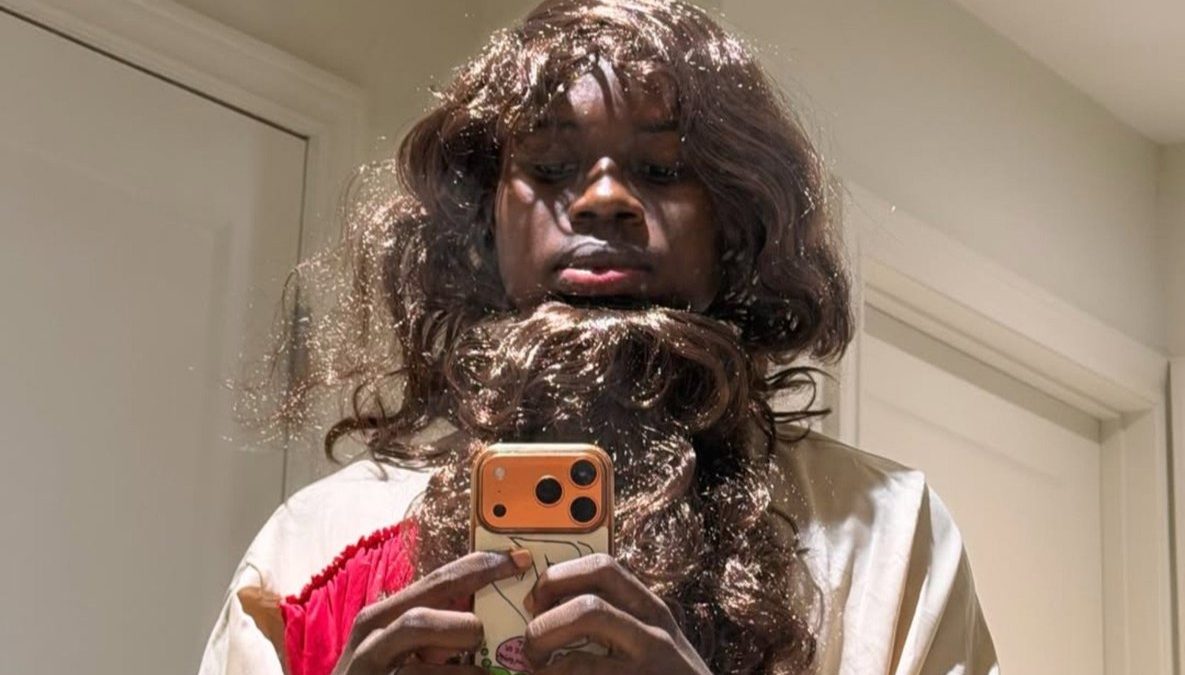
Nigerian TikTok streamer, Habeeb Hamzat, popularly known as Peller, has apologised to Christians after sparking outrage for dressing like Jesus Christ during a livestream with foreign content creators and asking participants to address him by the religious figure’s name.
The controversy erupted during a TikTok Live session involving Peller and two international content creators.
The streamer appeared in an outfit resembling traditional depictions of Jesus Christ and reportedly instructed one of the participants to call him Jesus Christ.
A video of the encounter subsequently circulated on social media on Monday, attracting criticism from viewers who accused him of making fun of Christianity and disrespecting a figure central to the faith.
One of the foreign content creators also reportedly challenged Peller over his conduct, cautioning against making light of religious beliefs.
The exchange added to the attention surrounding the livestream, with the incident generating discussions about the boundaries between online entertainment and religious sensitivity.
Following the backlash, Peller issued an apology to Christians, admitting that he did not anticipate that his choice of outfit would offend people.
Explaining himself during another livestream, the content creator said he had no intention of assuming the position of Jesus Christ or disrespecting the Christian faith.
“Listen to me, look, see, listen. God see, you hear me? God, creator, you know what we be for inside our heart, you know what they think. So me, I won’t collect position for, guys, I’m very sorry here, not first for that Jesus Christ something. I don’t know say problem I go wear guy, won’t kill for top… top red, white clothes. I don’t know,” he said.
Peller also addressed questions about his religious identity, claiming that he was a Christian and attended the Christ Apostolic Church.
“Yeah, I’m a Christian too, yeah, I go to Christ Apostolic Church. Yeah, I’m a Muslim also in one side,” he added.
Before the livestream apology, Peller had also shared a brief message on his social media page seeking forgiveness from anyone he might have offended.
“If I have offended you before please forgive me. I promise to be on my best…” he wrote.
His apology, however, did not stop the incident from generating further reactions online, with social media users expressing different opinions about his conduct.
Some commenters welcomed his decision to apologise, describing it as a necessary response after offending members of the Christian community.
Others maintained that religious figures and symbols should not be used as props for entertainment, particularly by influencers with large audiences.
Some users questioned whether Peller understood the significance of Jesus Christ to Christians, arguing that the livestream went beyond ordinary comedy.
Others criticised what they described as an attempt to attract attention through religious controversy, urging content creators to exercise greater restraint when producing online entertainment.
There were also commenters who defended Peller, arguing that he might not have intended to insult Christians and should be allowed to learn from the controversy.
Another section of social media users urged him to be more mindful of his actions in future, saying his apology should be accompanied by greater sensitivity towards people’s religious beliefs.
Peller rose to prominence around 2023 through his humorous videos, energetic livestreams and interactions with other social media personalities.
His unconventional style and ability to attract large audiences have helped establish him as one of Nigeria’s recognisable TikTok personalities.
The latest controversy has also drawn attention to his religious background.
In July 2025, Peller publicly disclosed that he had converted from Islam to Christianity, explaining that unpleasant childhood experiences at a Quranic school influenced his decision.
His disclosure generated reactions online, with discussions focusing on his personal religious journey and the circumstances surrounding his conversion.
The incident has renewed conversations about religious sensitivity and the responsibilities of social media influencers, particularly those with large followings, when creating entertainment content involving religious figures and beliefs.
Christianity has a significant following in Nigeria, where religious beliefs and symbols hold considerable importance for millions of people.
Jesus Christ occupies a central position in Christian worship, making portrayals perceived as disrespectful particularly sensitive among believers.