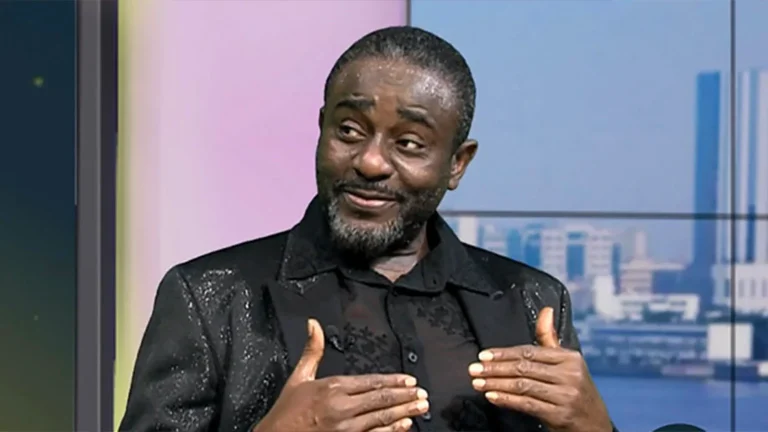
The Federal High Court in Abuja has dismissed a N10bn fundamental rights suit filed by Nollywood actor Emeka Ike against Lere Olayinka, a senior aide to the Minister of the Federal Capital Territory, Nyesom Wike, and the Independent National Electoral Commission.
Justice Salim Ibrahim dismissed the suit on Wednesday after upholding preliminary objections raised by the respondents over the competence and proper constitution of the case.
The judge also rejected the substantive suit, citing a lack of proof.
Ike had approached the court, alleging that Olayinka violated his right to privacy by publishing his voter registration details on his X account in May.
The actor said the publication exposed his personal information, including details of the transfer of his voter registration from Imo State to the Federal Capital Territory.
Through his lawyer, L.T. Adeh, Ike filed the suit, marked FHC/ABJ/CS/1272/2026, seeking N10bn in aggravated and general damages against Olayinka and INEC.
The actor, who sought to represent the AMAC/Bwari Federal Constituency in the House of Representatives in the 2027 general elections under the Nigerian Democratic Congress, lost the party’s primary election.
In his application, Ike asked the court to declare that publishing his voter registration details without his consent “amounts to gross breach and violation of the applicant’s fundamental right to privacy and the protection of personal data”.
He cited Section 37 of the 1999 Constitution, Article 12 of the Universal Declaration of Human Rights, and Sections 24 and 39 of the Nigeria Data Protection Act, 2023, in support of his argument.
He also urged the court to declare that INEC had a “statutory duty of care” to protect the personal information of registered voters from unauthorised access.
Additionally, Ike challenged INEC’s June 2 statement issued in response to the circulation of his voter information on social media, asking the court to rule that it amounted to a tacit admission of guilt and liability.
The actor further sought an order compelling Olayinka to delete the disputed post from his X account, #OlayinkaLere, and issue a written apology for the alleged violation of his rights.
However, INEC and Olayinka opposed the suit, arguing that the publication did not infringe on Ike’s fundamental rights.
In its counter-affidavit, INEC maintained that the information in question was neither classified, sensitive nor confidential.
The commission argued that the law permitted it to make certain voter information available to the public.
The response, deposed to by Anthonia Makwe, an assistant director and data protection officer in INEC’s Legal Drafting and Clearance Department, stated that the commission had the “statutory and constitutional power to make available information of its voters to the general public without the consent of any registered voter”.
INEC explained that its responsibilities included compiling, maintaining, displaying, publishing, certifying and managing the voters’ register in line with the Constitution, the Electoral Act, 2026, and the Nigeria Data Protection Act, 2023.
The electoral body also denied that the information allegedly shared by Olayinka originated from its database, insisting that it had not breached its obligation to protect voters’ personal information stored on its secured portal and restricted database.
Olayinka, in his counter-affidavit, equally denied any wrongdoing.
He maintained that the document he published contained only Ike’s name and passport photograph, which he claimed were already publicly available.
The FCT minister’s aide argued that he did not obtain the information unlawfully and owed the actor no duty of confidentiality that required him to seek consent before publishing it.
He also contended that Ike, as a public figure who had indicated an intention to contest an election, could not claim to have suffered trauma from the circulation of his name and photograph.
Olayinka further alleged that the publication followed an incident in which Ike led a group of hoodlums to INEC’s office to disrupt its activities after declaring his political ambition.
According to the aide, his intention was to remind the actor that he had recently transferred his voter registration area and draw public attention to the relevant electoral provisions.
He cited Section 19(1) of the Electoral Act, 2026, arguing that INEC was required to publish the voters’ register within the period stipulated by law ahead of a general election.
Olayinka also relied on INEC’s June 2 statement, which he said confirmed that the commission had not suffered an external breach of its continuous voter registration database, a hacking incident or unauthorised access to its information technology infrastructure.
The statement, as quoted in his counter-affidavit, said, “There was no external breach of its CVR database, no hacking incident and no unauthorised external access to the commission’s ICT infrastructure.”
He further argued that he was not a data controller under the Nigeria Data Protection Act, 2023, and therefore had no statutory obligation to protect Ike’s information in the manner alleged.
Rejecting the actor’s demand for damages, Olayinka described the N10bn claim as being made in bad faith, calling it “an indication that the applicant is a gold digger who wants to reap where he did not sow”.
He maintained that he should not be held liable for publishing information he claimed was already accessible to the public and urged the court to dismiss the case in the interest of justice.