A chartered Korean Air flight will leave Georgia on Thursday afternoon, carrying more than 300 South Korean workers who were detained by US immigration officials last week, according to a Korean government source.
The aircraft, which arrived in Atlanta from Seoul on Wednesday, is scheduled to return the citizens to Incheon International Airport by Friday afternoon. Officials confirmed the workers “won’t be wearing handcuffs or other physical restraints.”
While their return home is imminent, analysts warn that the diplomatic and economic fallout from the detentions could linger, potentially straining the close ties between Washington and Seoul.
South Korean Foreign Minister Cho Hyun, who held talks with US Secretary of State Marco Rubio on Wednesday, urged Washington’s cooperation to ensure the workers’ swift departure and emphasized that they “receive no disadvantages for future visits to the US, since they are not criminals,” according to the ministry’s statement.
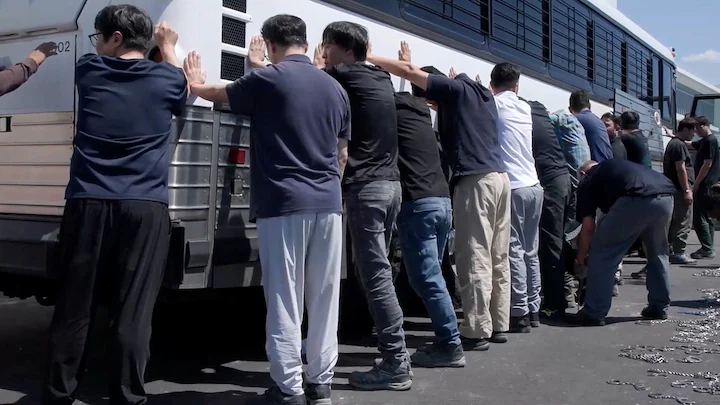
Images shared by ICE showing the workers chained together have already sparked outrage in South Korea, where both the public and political circles view the incident as an affront to a trusted ally.
South Korea, which earlier this year pledged to channel billions of dollars into the US economy, has reacted with anger.
“It’s really no way to treat your friends,” said Cho Hee-kyoung, a law professor at Seoul’s Hongik University, describing the factory raid by the Trump administration as a “surprise.”
Seoul announced on Sunday that it had struck a deal with US authorities to secure the workers’ release, though the fine print of the arrangement has yet to be revealed.
The US State Department’s summary of Rubio’s meeting with Cho made no reference to the detentions but reiterated Washington’s appreciation of Korean investments and interest in expanding cooperation.
The workers were picked up during an ICE sweep at a Hyundai-LG Energy Solution battery plant under construction in Ellabell, near Savannah.
Both companies are key players in South Korea’s industrial sector and have poured significant capital into US projects.
South Korea, America’s sixth-largest trading partner, now faces rising concerns that such detentions could discourage further business ventures.
Protests in Seoul have been modest, but newspapers and online commentary reflect widespread indignation.
The conservative daily Chosun Ilbo reported that Korean business leaders want their government to negotiate permanent visa quotas for skilled workers.
Hankook Ilbo highlighted the growing perception of a “Trump risk” for Korean investors, while the left-leaning Hankyoreh condemned Washington’s “double-dealing” behavior, writing that it was “extremely regrettable.”
“It was like ‘a slap in the face’ moment,” former First Vice Foreign Minister Choi Jong Kun told CNN, noting that the factories were located in the US at Washington’s request. “And yet to say Korean workers must be replaced with American workers for facility construction – I see that as completely out of touch with reality.”
Choi stressed that the workers had no plans to remain in the US, explaining that their role was strictly temporary. Cho, the law professor, added that similar work arrangements had long been tolerated despite visa technicalities, largely due to the scarcity of H1 visas.
Immigration lawyer Charles Kuck, representing two of the detained engineers, argued that his clients were legally employed under a visa waiver.
He said both had specific tasks and were scheduled to return home shortly after completion of their work.
Some US lawmakers have acknowledged the visa shortage. Representative Young Kim introduced the “Partner with Korea Act” in July, proposing 15,000 E-4 visas annually for skilled Korean workers.
The bill, however, remains stalled in the Judiciary Committee.
Meanwhile, broader trade negotiations remain unresolved. President Donald Trump announced in July a massive investment deal worth $350 billion with South Korea, aimed at creating American jobs.
Yet experts caution that such projects often require foreign specialists to set up equipment and train local workers.
Chang Sang-sik of the Korea International Trade Association criticized Washington’s approach as “two-faced,” accusing the US of demanding investment while criminalizing the very workers who make those investments possible.
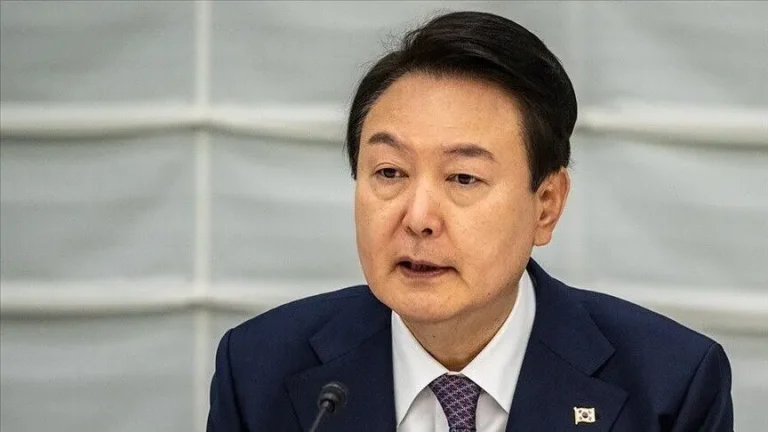
On Tuesday, President Lee Jae Myung called the Georgia detentions “unjust infringements on the activities of our people and businesses” and urged that such incidents never recur.
For now, Seoul is treading carefully, balancing its outrage with the reality of America’s 28,500-strong military presence in South Korea, a cornerstone of its defense against North Korea.