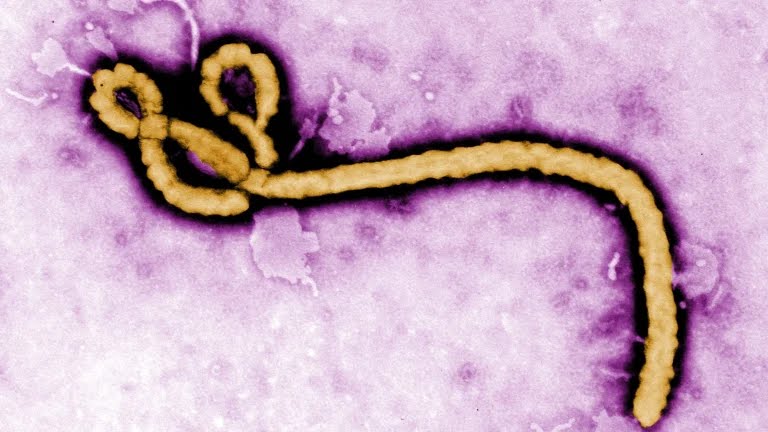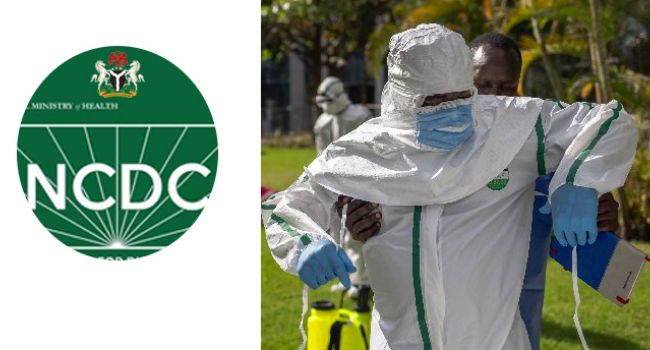
The Nigeria Centre for Disease Control and Prevention has confirmed that none of the 62 people exposed to the imported case of the Bundibugyo strain of Ebola Virus Disease in the country contracted the infection after completing the mandatory 21-day monitoring period.
The agency announced this on Friday following the discharge of the last person under surveillance, confirming that no secondary transmission was recorded since the imported case was detected in the Federal Capital Territory on October 20, 2026.
The NCDC Director-General, Dr Jide Idris, disclosed this during a briefing on the country’s response to the outbreak, noting that 13 of the 62 contacts developed fever or other symptoms while under observation. However, laboratory tests returned negative results for all of them.
Idris also revealed that the agency investigated seven suspected Ebola cases reported in Adamawa, Rivers, Borno, Lagos and Ekiti states within the last three weeks. All seven cases were subsequently confirmed negative.
Despite the development, the NCDC chief warned Nigerians against assuming that the country had been officially declared free of Ebola, stressing that the completion of contact monitoring did not amount to such a declaration.
He explained that the World Health Organisation was responsible for declaring a country Ebola-free based on established protocols.
“Interestingly too, for any country to declare Ebola-free, that would be done by the World Health Organisation based on its own protocols,” he said.
Idris said Nigeria would sustain heightened surveillance and preparedness measures, particularly as Ebola infections continued to be reported in the Democratic Republic of Congo.
He explained that the imported case was initially detected after healthcare workers raised an alert through the NCDC’s event-based surveillance system, leading to an investigation involving the FCT health authorities and other relevant institutions.
Following confirmation of the infection, the National Emergency Operations Centre was activated, while an Incident Management System was established to coordinate the national response.
According to him, the intervention included contact tracing, monitoring of exposed individuals, improved infection prevention and control measures in healthcare facilities, training of health workers and distribution of protective equipment and emergency supplies.
The agency also intensified public awareness campaigns and engagement with community leaders to tackle misinformation and encourage cooperation with health authorities.
Patient Recovers After Treatment In Switzerland
Providing an update on the infected patient, Idris said she initially received medical attention at a Nigerian hospital before being evacuated to Switzerland on October 26 for further treatment.
He disclosed that tests conducted after her arrival in Switzerland confirmed that she was still positive for the virus. However, she subsequently recovered, tested negative and was discharged from the hospital.
The NCDC director-general also dismissed suggestions that her evacuation indicated a lack of confidence in Nigeria’s healthcare system.
He maintained that the private hospital where she was initially treated handled her condition appropriately before the decision to transfer her abroad.
“It is not a matter of trust issues. The hospital here managed the case properly and as best as it could do,” he said.
NCDC Retains Highest Response Level
Despite the successful completion of contact monitoring, Idris said the agency’s Emergency Operations Centre remained activated, with the Incident Management System operating at Level 3, the highest response level for Ebola.
He disclosed that all 36 states and the FCT had been incorporated into the national preparedness framework, although their levels of readiness varied.
According to him, 10 states with international airports and borders were initially identified as high-risk locations, while preparedness guidelines had also been extended to other states.
“All the states are queued in. They may be at different stages of preparedness, but that is what we are urging them to do,” he said.
Idris added that the NCDC would continue supporting state governments through training, emergency supplies and other interventions aimed at strengthening their capacity to identify and respond to infectious disease threats.
He said surveillance would also be maintained at international entry points in collaboration with Port Health Services.
NCDC Cautions Against Treating Every Fever As Malaria
With the December festive season approaching, the NCDC director-general urged Nigerians and international visitors to seek medical attention whenever they developed symptoms of illness, particularly if they had recently travelled or might have been exposed to an infectious disease.
He warned against automatically assuming that every fever was malaria, advising patients to provide healthcare workers with accurate information about their travel history and possible exposure to infections.
Idris also called on organisers of religious programmes, political rallies, concerts, festivals and sporting events to provide adequate sanitation, safe drinking water and medical services at their gatherings.
He urged them to ensure that suspected illnesses were promptly reported to the relevant health authorities, adding that the agency had developed public health guidelines for mass gatherings.
The NCDC chief further reminded international travellers arriving in Nigeria to complete the Nigeria Health Declaration Form before arrival and provide accurate details about their health and travel history.
“There is no reason for panic. What is required is continued vigilance, early reporting and cooperation with public health authorities,” he said.
Earlier, the Mandate Secretary of the FCT Health Services and Environment Secretariat, Adedolapo Fasawe, said the initial alert was raised by a private health facility after its medical team reviewed the patient’s travel history and suspected an Ebola infection.
She said the FCT Rapid Response Team was immediately deployed to the hospital, adding that members of the team also completed a three-week isolation period and remained healthy.
Fasawe praised the hospital for promptly reporting the suspected infection and urged other private healthcare facilities to immediately notify the NCDC or FCT health authorities whenever they encountered suspected cases.
She attributed the successful management of the incident to collaboration among the NCDC, the Federal Ministry of Health and Social Welfare, development partners and the FCT authorities.