The United States National Aeronautics and Space Administration’s Swift satellite telescope has burned up in the Earth’s atmosphere over Indonesia, ending its 22-year mission to study some of the universe’s most powerful energy explosions.
The Neil Gehrels Swift Observatory re-entered the atmosphere on Wednesday, November 4, after spending more than two decades observing gamma-ray bursts, supernova explosions and other cosmic phenomena. The satellite weighed approximately 1,452 kilogrammes.
According to NASA, the US Space Force confirmed that the spacecraft re-entered the atmosphere at 7:39 am Eastern Standard Time, equivalent to 12:39 pm GMT, over North Sumatra province in Indonesia, about 322 kilometres north of the equator.
The agency had anticipated that intense frictional heat generated during the satellite’s descent would destroy most of the spacecraft before it reached the Earth’s surface.
However, some fragments were expected to survive, although no damage or injuries were reported following the re-entry.
Aerospace engineer Dean Sladen, who works for British industrial parts supplier Accu Components, said before the satellite’s descent that only a few small fragments were likely to reach the ground.
“Satellites this size re-enter the atmosphere regularly, and in nearly 70 years of spaceflight no one has ever been killed by falling debris,” Sladen said in an email.
He also warned that the risk associated with falling satellite debris could increase over time, stressing the importance of designing spacecraft to ensure safe atmospheric re-entry.
The $500m Swift observatory was launched in 2004 with a two-year operational lifespan but continued functioning for more than two decades.
Its three-telescope system was designed primarily to detect gamma-ray bursts, regarded as the most intense energy explosions in the universe.
During its operational years, the satellite also investigated hundreds of supernovae, black holes tearing apart stars, stellar X-ray flares, asteroids and comets.
Its observations contributed to approximately 7,000 scientific publications before it ceased operations on October 20.
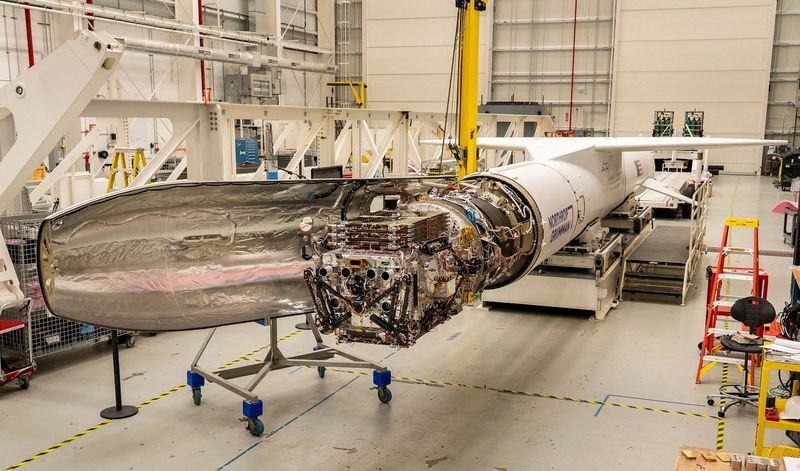
Swift’s descent followed the failure of a rescue mission launched in July by NASA and Arizona-based space startup Katalyst Space.
The mission involved a specially designed spacecraft, LINK, intended to attach itself to the observatory and move it into a higher orbit to prolong its operational life.
However, LINK began spinning uncontrollably shortly after reaching space, forcing mission managers to abandon the rescue attempt in August. Swift, which had no propulsion system of its own, was subsequently left to descend naturally towards Earth.