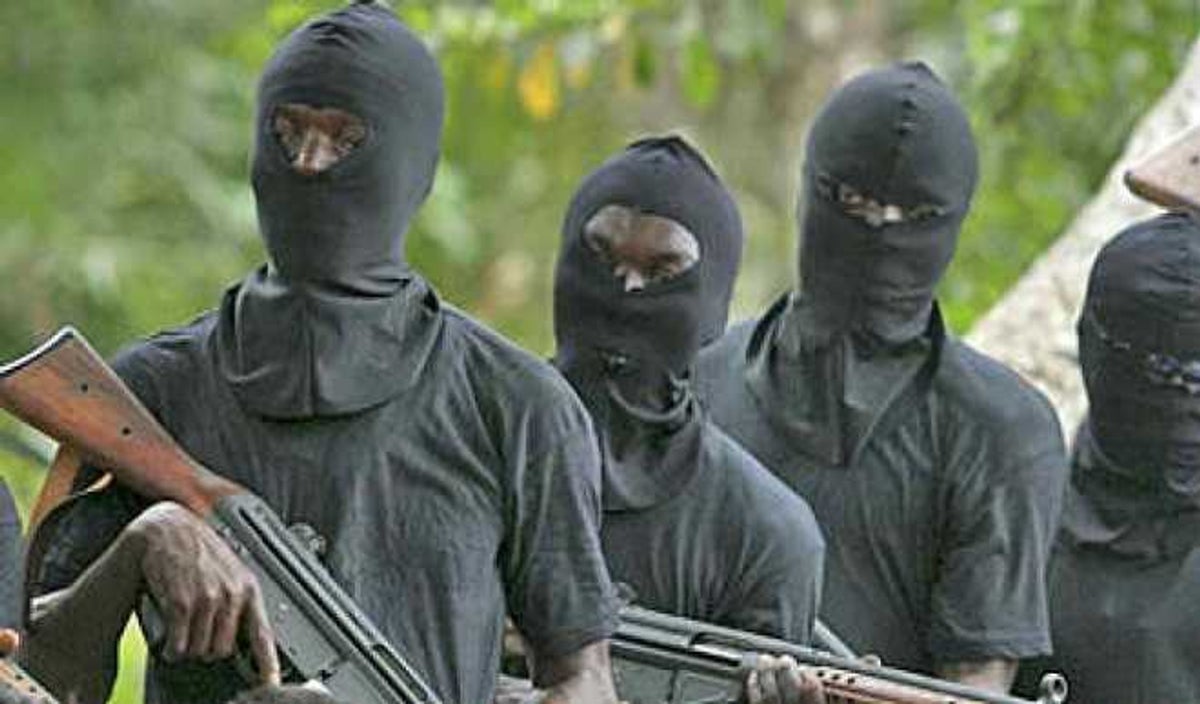
The United Nations has warned that weapons looted during Libya’s 2011 conflict have spread across the Sahel region and are now being used by extremist groups in Nigeria and neighbouring countries.
The UN Under-Secretary-General and High Representative for Disarmament Affairs, Izumi Nakamitsu, raised the concern at the UN Headquarters in New York on Tuesday during a global discussion on the proliferation of illicit small arms and light weapons.
According to her, the collapse of Libya’s government following the overthrow of former leader Muammar Gaddafi triggered a long-term flow of unsecured weapons beyond the country’s borders.
“Libya, where weapons looted or diverted during and after the 2011 conflict, which ended the rule of Muammar Gaddafi, later surfaced across the wider Sahel region, including in Niger, Burkina Faso, and Nigeria,” Nakamitsu said.
She warned that the circulation of such arms continues long after conflicts officially end, intensifying insecurity in already fragile regions.
“Some were subsequently found in the hands of extremist groups, illustrating how arms from one conflict can destabilise neighbouring countries years later,” she added.
The UN official stressed that the continued movement of illicit weapons fuels violence, crime, and human rights abuses, including sexual and gender-based violence.
“The end of the conflict does not mean the end of the circulation of those weapons; it stays, and it continues to harm people,” she said.
Nakamitsu also noted that even communities that retain weapons for self-defence contribute to ongoing instability, while emerging technologies such as 3D-printed firearms and “ghost guns” are making it harder for authorities to track illegal arms flows.
“It is not just a security issue. It is also about peacebuilding. It is about human rights. It is also about development,” she said.
She explained that illicit weapons often continue to move across borders years after wars fade from global attention, sustaining criminal networks and insurgent activity.
“Wars end, but unfortunately, the weapons that are used in that particular conflict would not be under full control,” she said.
“They continue to circulate. They are sometimes hidden. They are brought across borders,” she added.
The UN highlighted ongoing global efforts to tackle arms trafficking, including the 2001 Programme of Action on Small Arms and the 2005 International Tracing Instrument, which guide countries on marking, tracking, and controlling weapons to prevent diversion into illegal markets.
UN officials said these frameworks are being supported through technical assistance and capacity-building programmes aimed at improving border security, stockpile management, and international cooperation.