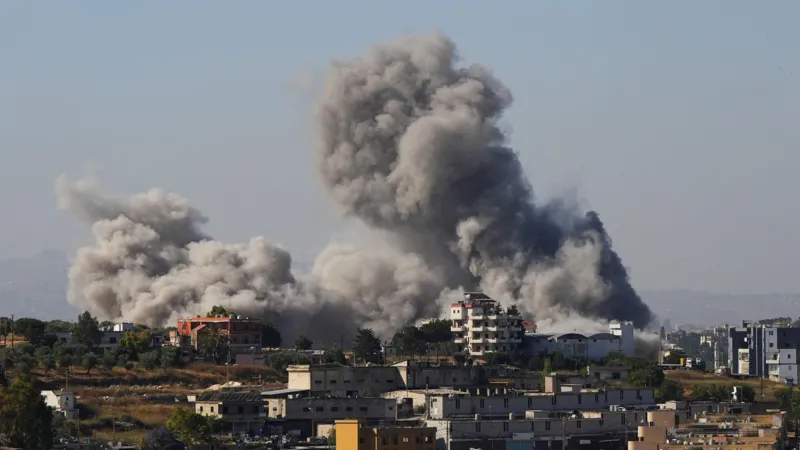
Israeli Prime Minister, Israel Benjamin, Netanyahu has directed the Israeli military to strike the southern suburbs of Beirut, escalating tensions as the confrontation with the Iran-backed Hezbollah intensifies.
Netanyahu said “terror targets” in the Hezbollah-dominated district of Dahieh would be hit in retaliation for rocket and drone attacks on Israeli civilians and what he described as breaches of a ceasefire declared in April that has failed to end hostilities.
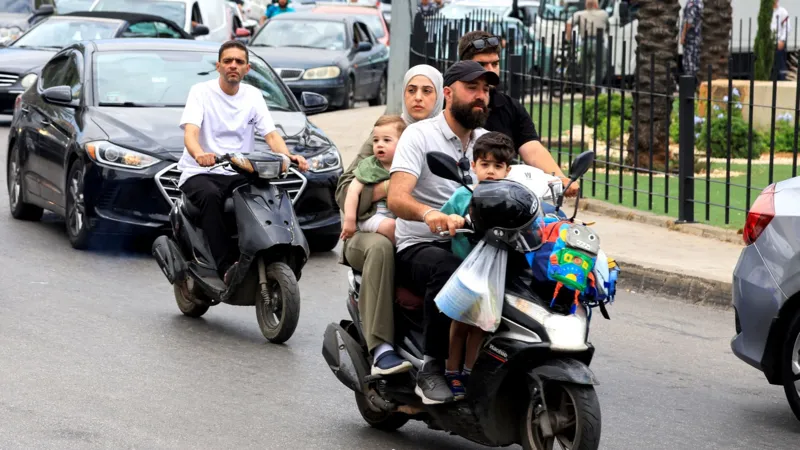
Shortly after the announcement, major traffic build-ups were reported as residents of the southern suburbs attempted to evacuate, with families fleeing in large numbers amid growing fear of imminent strikes.
A senior Lebanese government official said Beirut was depending on US diplomatic efforts to pressure Israel into halting its operations and to reduce civilian harm.
On Sunday, US Secretary of State Marco Rubio reportedly presented a proposal for “gradual de-escalation” to Netanyahu and Lebanon’s president, according to a US official.
In a joint statement released Monday morning, Netanyahu and the Israeli defence minister said they had instructed the military to carry out strikes on Dahieh “following the Hezbollah terrorist organisation’s repeated and ongoing violations of the ceasefire in Lebanon and its attacks against our civilians and cities”.
No additional operational details were provided, and the Israeli military did not issue evacuation warnings beforehand, a step it typically takes before air raids.
Despite this, residents, packed into vehicles with belongings, mattresses, and luggage, fled in large numbers toward safer areas, creating severe congestion on exit routes.
Some vehicles carried entire extended families, including infants and elderly relatives, all squeezed together in slow-moving traffic.
Few motorists stopped to speak, with most focused on escaping the expected escalation.
Those who did briefly engage said they were prepared to support Hezbollah but were equally intent on protecting their families from further Israeli strikes.
The Israeli military has carried out strikes on Beirut twice since the ceasefire came into effect on 16 April, most recently on Thursday.
However, this marks a significant reduction compared with earlier phases of the conflict.
Reports suggest Washington has been pressing Israel to limit its strikes in Beirut to avoid undermining broader diplomatic efforts aimed at ending the wider regional war involving the United States, Israel, and Iran.
Iran, a long-standing backer of Hezbollah, has insisted that any agreement must also secure stability in Lebanon.
The conflict widened on 2 March after Hezbollah launched rockets into Israel in response to an Israeli strike that killed Iran’s supreme leader.
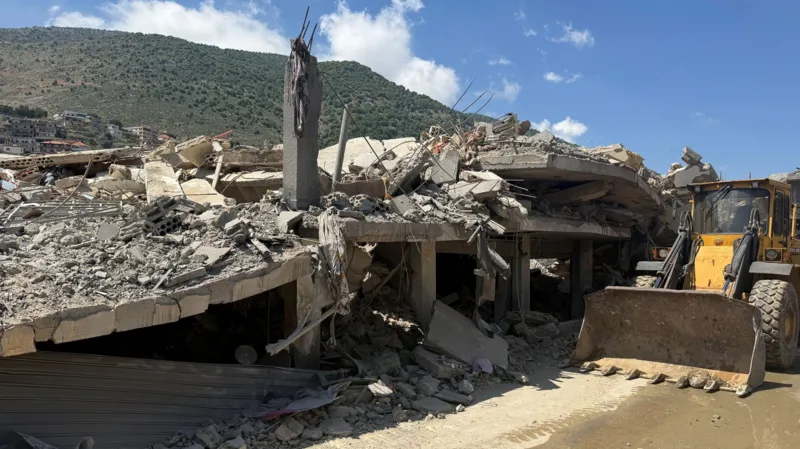
Israel responded with a sustained air campaign across Lebanon and a ground offensive in the south, which has expanded in recent weeks even as strikes on Beirut have become less frequent.
Lebanon’s health ministry says at least 3,412 people have been killed since the war began, without distinguishing between civilians and combatants. Israel reports that 24 soldiers and four civilians have been killed on its side over the same period.
The Israeli military recently seized Beaufort Castle, a 900-year-old fortress, after crossing the Litani River.
Israeli officials have described the move as both symbolic and strategic, saying it provides a commanding vantage point over southern Lebanon and Israel’s Galilee region.
However, Hezbollah continues to fire rockets and drones across the border despite Israel’s territorial gains.
Israeli officials say their campaign is aimed at degrading Hezbollah’s military capacity, though the group has continued to withdraw tactically while maintaining cross-border attacks.
Diplomatic efforts to halt the fighting have so far achieved limited progress.
A US official said Rubio had discussed the situation with Netanyahu and Lebanese President Joseph Aoun, focusing on increasing pressure on Hezbollah.
The proposal reportedly suggested that Lebanese authorities push Hezbollah to halt attacks on Israel, after which Israel would restrain its operations in Beirut.
According to the official, this would allow for “gradual de-escalation and an effective cessation of hostilities,” adding that President Aoun had tried to advance the plan, but Lebanese Parliament Speaker Nabih Berri said he could “guarantee” Hezbollah’s commitment while arguing that Israel must stop firing first.
A senior Lebanese official said Beirut remained reliant on US mediation to curb Israeli strikes and prevent further civilian casualties.
“we are trying our best, just to stop the killing of people,” the official said, describing the daily strikes and limited leverage on the ground.
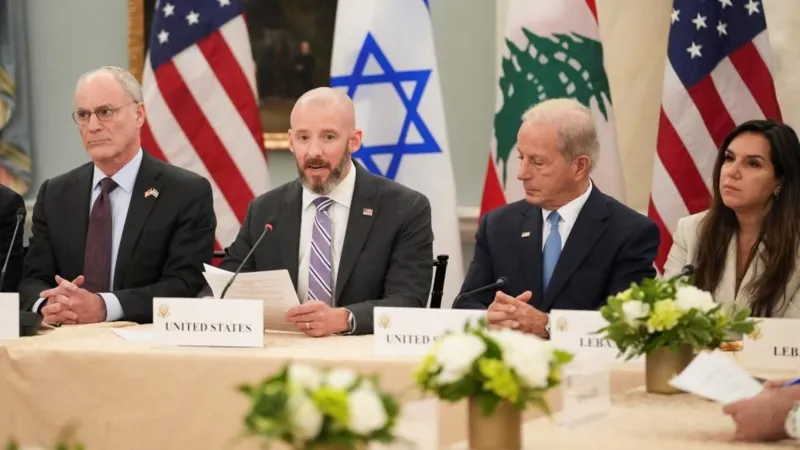
The official also confirmed that talks between Lebanon and Israel were expected in Washington this week.
“We don’t have another choice.” the official said. “We have to go to the negotiation and put on the table that we want a ceasefire.”
While Hezbollah retains support in its strongholds in southern Beirut, wider public sentiment across Lebanon reflects growing fatigue with the conflict and criticism that the group’s actions helped pull the country back into war.
At the same time, anger is rising over Israel’s expanding military campaign, including airstrikes, territorial advances in the south, mass displacement, and increasing civilian casualties.
Lebanese Prime Minister Nawaf Salam has accused Israel of escalating the war and pursuing a “scorched-earth” policy.
With diplomacy stalled, fears are growing in Lebanon that Israel believes it holds the upper hand militarily and may further widen its offensive in the days ahead.