

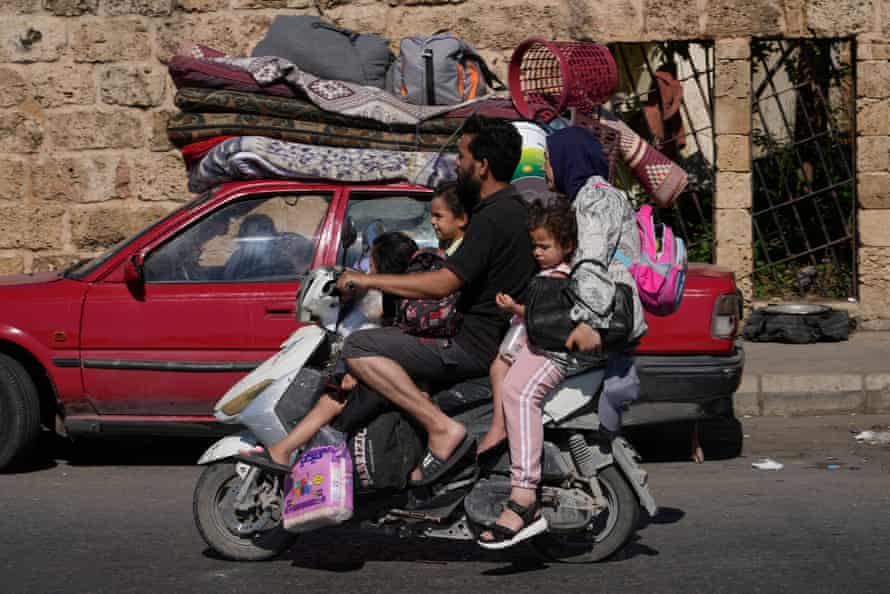
Israel and the Lebanese armed group Hezbollah have agreed to a ceasefire following a sharp escalation in fighting in Lebanon on Friday, in a development that threatened to disrupt ongoing Washington–Tehran peace efforts being discussed in Switzerland.
U.S. President Donald Trump confirmed in a phone interview with NBC News on Friday afternoon that he had spoken with Israeli officials and urged them to accept the ceasefire.
“It’s a positive,” he said, adding: “It’s a little icing on the cake.” He declined to specify whether he had talked to Israeli Prime Minister Benjamin Netanyahu directly.
According to a Hezbollah source cited by NBC News, the group has accepted the ceasefire agreement, though it accused Israel of continuing military activity. “the Israelis are still firing and trying to move deeper into Lebanese territory,” the source said.
Israel’s Ambassador to the United States, Yechiel Leiter, said Israel remained “firmly committed to an immediate ceasefire” and had halted offensive operations.
The flare-up came shortly after an interim U.S.–Iran agreement was signed, requiring an immediate halt to hostilities across all fronts, including Lebanon.
However, U.S. intelligence assessments suggest Israel may continue strikes against Hezbollah positions, raising concerns that the fragile arrangement could collapse, according to a source familiar with the intelligence.
Those assessments also point to a widening disagreement between the Trump administration and Israeli Prime Minister Benjamin Netanyahu’s government over a memorandum of understanding announced this week aimed at ending the broader conflict involving the United States and Iran.
Israeli officials have reportedly rejected the agreement, insisting that Israel is not bound by the memorandum.
The intelligence further indicates that Netanyahu’s approach is driven by his assessment of Hezbollah as a continuing threat, even if sustained military action risks undermining the diplomatic deal.
U.S. Secretary of State Marco Rubio, in a call with Lebanese President Joseph Aoun, stressed the importance of disarming Hezbollah, according to State Department spokesman Tommy Pigott.
The two also discussed upcoming Israel–Lebanon talks scheduled in Washington next week.
Meanwhile, planned negotiations between Washington and Tehran in Switzerland were disrupted by the renewed violence. Vice President JD Vance cancelled his trip to the talks, which were expected to take place at the Bürgenstock resort in the Swiss Alps.
“It’s 60 days, they have to make a deal. Otherwise, we, we will do things that won’t make them happy, but I don’t think it’s going to get to that,” Trump told reporters.
A regional diplomat said Tehran requested guarantees that fighting in Lebanon would cease under the agreement, with mediators attempting to resolve the dispute.
Switzerland’s foreign ministry later confirmed the talks would not proceed as scheduled, though it said it remained ready to support future discussions.
“Switzerland remains ready to facilitate these talks,” it said in a statement, adding that “relevant preparatory work” in Bürgenstock is continuing.
Iran’s Foreign Ministry spokesman Esmail Baghaei said the meeting was no longer urgent since an agreement had already been reached, though further talks were still expected soon.
Trump also suggested Vice President Vance could rejoin the diplomatic process later, saying, “I think he’s going to end up going back,” and noting that “Steve Witkoff is going separately. I think JD’s going a little bit later.”
At the White House, Vance defended the agreement and urged Israel to respect the diplomatic process.
“Donald J. Trump is the only head of state in the entire world who is sympathetic to the nation of Israel at this moment in time,” Vance said. “If I was in the Cabinet of the Israeli government, I might not be attacking the only powerful ally that I have anywhere left in the entire world.”
He also warned against further escalation, saying the U.S. expected Israel not to “be going wild in Lebanon,” and that any renewed violence should be handled through diplomatic channels.
Despite the ceasefire announcement, fighting continued to intensify. Israel reported that four of its soldiers were killed in southern Lebanon, marking its first losses since the U.S.–Iran agreement was signed. Lebanese authorities said at least 47 people were killed in Israeli strikes since midnight.
Israel said it struck Hezbollah positions across southern Lebanon overnight and into Friday. Netanyahu ordered intensified military action following the deaths of the soldiers, calling it “a blatant violation of the ceasefire.”
Israel’s military said it remained committed to maintaining a security zone in southern Lebanon to protect northern communities. It also reported carrying out more than 150 strikes since midnight, while insisting its forces had “full operational freedom.”
Hezbollah, in turn, accused Israel of failing to uphold ceasefire commitments, including the agreement backed by Washington.
Iran also warned it might withdraw from the agreement if Israel continued operations in Lebanon.
A spokesperson for Iran’s national security commission said Iran must not allow “the resistant people of southern Lebanon to be massacred,” while Iran’s military warned it had its hand “on the trigger” in case of further violations.
On Thursday, Israel released a map showing an expanded military control zone in southern Lebanon and indicated it could carry out further operations beyond it.
The U.S.–Iran memorandum reportedly calls for an immediate halt to military operations across all fronts, respect for Lebanon’s sovereignty, and the reopening of the Strait of Hormuz after months of disruption.
Oil markets reacted cautiously, with Brent crude steadying but still heading for a weekly decline of more than 8%.
Meanwhile, shipping through the Strait of Hormuz showed limited movement, as vessels cautiously resumed transit under new Iranian guidelines issued during the 60-day negotiation period.




