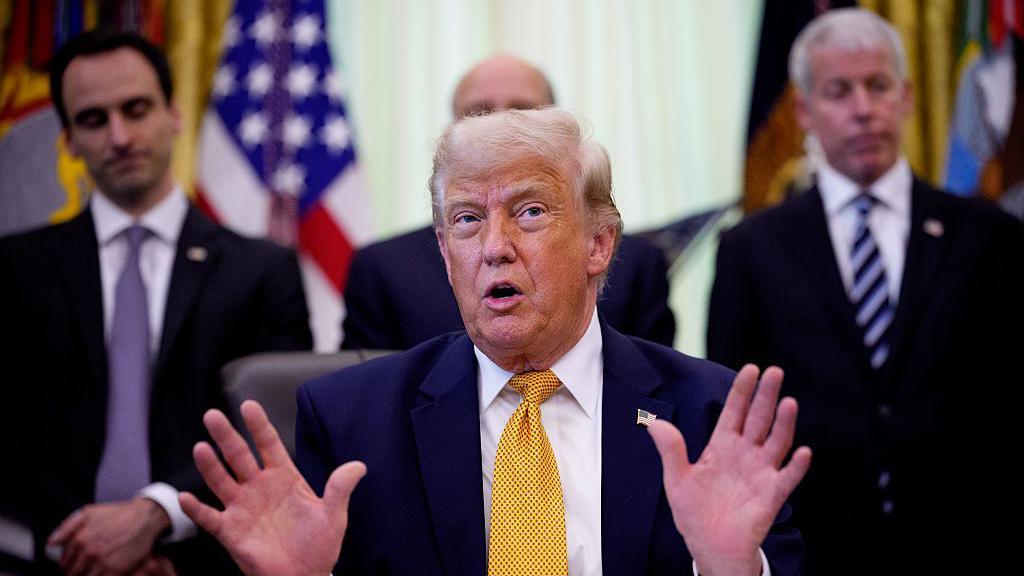
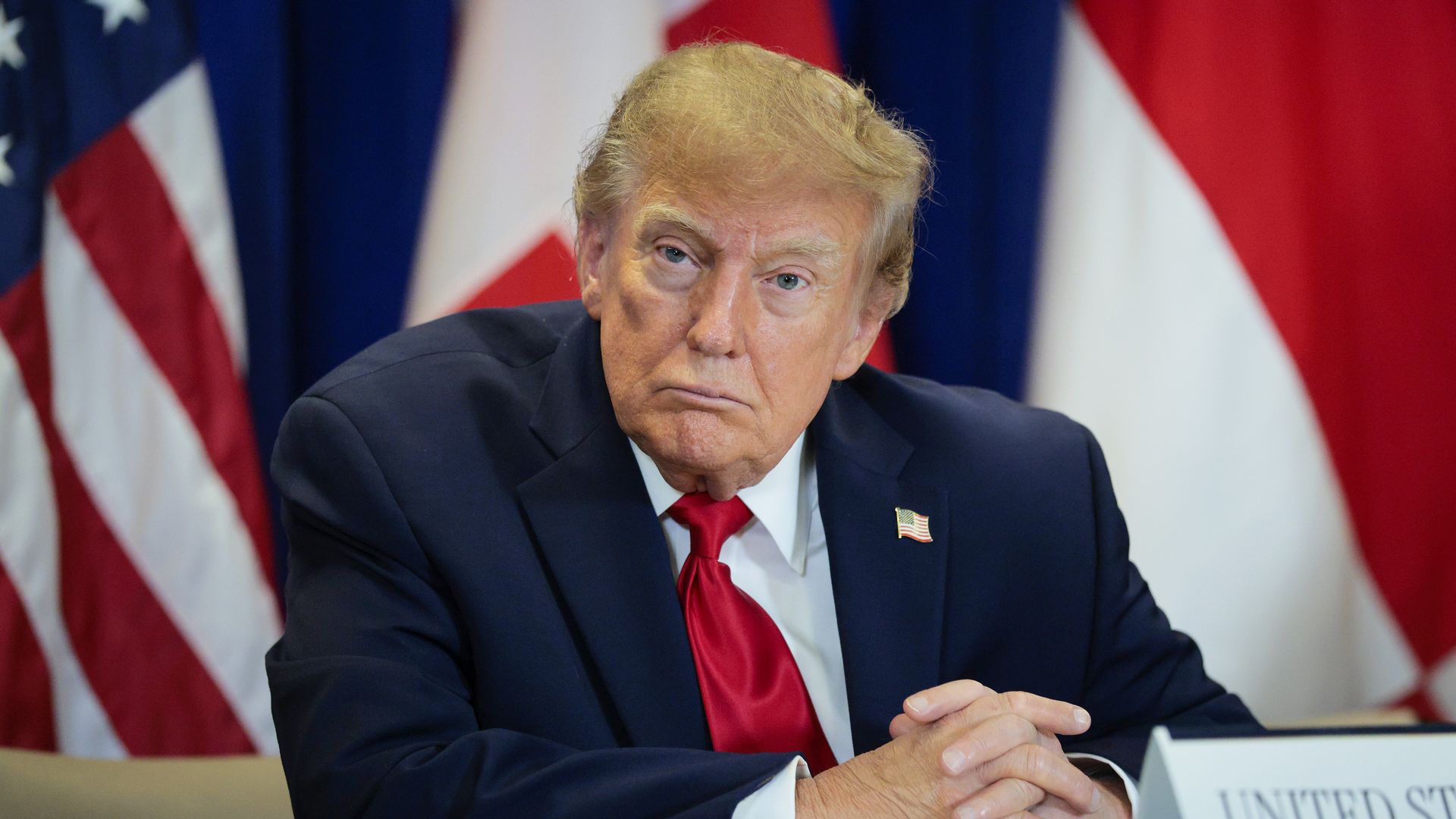
United States President, Donald Trump on Thursday said that he would suspend migration from “third world countries”, a day after an Afghan national allegedly shot two National Guard soldiers in Washington, killing one.
His enraged post, which also threatened to reverse “millions” of admissions granted under his predecessor, Joe Biden, marked a new escalation in the anti-migration stance of a second term that has been dominated by Trump’s mass deportation campaign.
Trump had earlier announced that Sarah Beckstrom, a 20-year-old West Virginia National Guard member deployed in Washington as part of his crackdown on crime, had died from her wounds.
The FBI however launched an international terror investigation with new details emerging about the alleged gunman, a 29-year-old Afghan national who had served with US troops in Afghanistan.
The shooting on Wednesday, which officials described as an “ambush-style” attack, brings together three politically explosive issues: Trump’s controversial use of the military at home, immigration, and the legacy of the US war in Afghanistan.
“I will permanently pause migration from all Third World Countries to allow the US system to fully recover,” Trump wrote on social media.
Who is the 29-year-old Afghan national who shot the US guardsmen?
The US has identified the suspect, 29-year-old Afghan national, as Rahmanullah Lakanwal. According to Attorney for DC, Jeanine Pirro, Lakanwal shot at the guardsmen identified as Sarah Beckstrom, 20, and Andrew Wolfe, 24 on Wednesday in an attack whose motive though unverified looks like terrorism.
The suspect was a beneficiary of former American President, Joe Biden’s refugee programme that has benefited more than 190,000 Afghans.
It was also revealed that the suspect worked with the CIA in Afghanistan and helped guard US forces at Kabul airport as thousands tried to flee the country before it fell to the Taliban.
For his own protection, he had been brought to the US under a special immigration scheme, says the CIA Director John Ratcliffe while speaking with CBS.
Third World Countries? What is the uniqueness of it and what does it entail?
According to the World Population Review, the term Third World Countries generally refers to countries facing significant economic, social, political, and environmental challenges, such as high poverty levels, unstable economies, and limited access to essential resources.
These nations often lag behind more developed countries in infrastructure, healthcare, and industrial capacity.
Originally introduced in 1952 by French historian Alfred Sauvy, the term was part of a Cold War classification system describing global political alliances.
“First World” referred to democratic, NATO-aligned nations; “Second World” to Communist Bloc states; and “Third World” to countries neutral in the geopolitical divide. Over time, the term shifted from political alignment to describing nations that are economically poor or still developing.
Full list of the Third World Countries as of 2025
According to the classification issued by the United Nations Economic and Social Council (ECOSOC), there are about 44 countries in the world that are considered third-world countries or least developed countries.
The list said there are 32 countries in this classification and they include Angola, Benin, Burkina Faso, Burundi, Central African Republic, Chad, Comoros, Democratic Republic of the Congo, Djibouti, Eritrea, Ethiopia, Gambia, Guinea, Guinea-Bissau, Lesotho, Liberia, Madagascar, Malawi, Mali, Mauritania, Mozambique, Niger, Rwanda, Senegal, Sierra Leone, Somalia, South Sudan, Sudan, Togo, Uganda, United Republic of Tanzania, and Zambia.
There are about eight of them in Asia. And they are Afghanistan, Bangladesh, Cambodia, Lao People’s Democratic Republic, Myanmar, Nepal, Timor-Leste, and Yemen. Only Haiti in the Carribbean. While Kiribati, Solomon Islands, and Tuvalu make the list in the Pacific region.
This designation grants these countries access to preferential market opportunities, aid, specialised technical assistance, and capacity-building in technology, among other concessions.
What is the impact of Trump’s threat on these countries?
Examining Trump’s crackdown on immigration since his re-emergence as US President, these countries are likely to suffer a heavy blow on their status in the American community.
Most of the schemes that helped to get stay in America would be critically reviewed, one of such is the green card. The US is already planning to reexamine all green cards issued to people from 19 countries “of concern” at President Donald Trump’s direction.
Will new Green Card crackdown impact Nigerians ?
Nigerians living in the United States will not be impacted by this crackdown on Green Card holders, as Nigeria is not on the list of countries of concern.
However, the Trump administration has not specifically named the countries which will be impacted by the latest stringent measures.
Although, the US Citizenship and Immigration Services (USCIS) Director Joseph Edlow said he has ordered a comprehensive and thorough review of all Green Card applications from individuals from countries of concern, following a directive from US President Donald Trump.
USCIS, when pressed for clarification on what those “countries of concern” were, directed CNN to a list included in a presidential proclamation from June.
The countries affected are Afghanistan, Burma, Chad, Reublic of the Congo, Equatorial Guinea, Eritrea, Haiti, Iran, Libya, Somalia, Sudan, Yemen, Burundi, Cuba, Laos, Sierra Leone, Togo, Turkmenistan, and Venezuela.