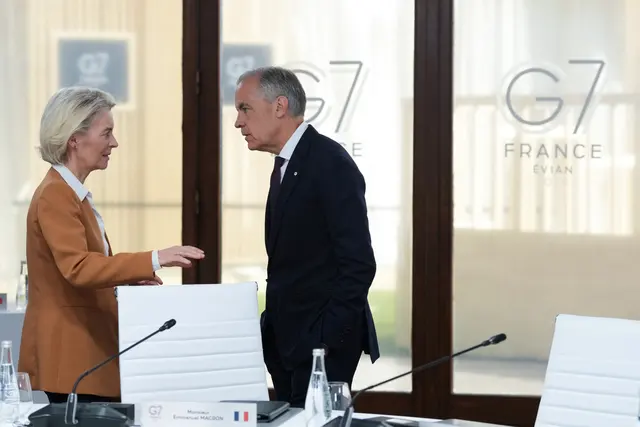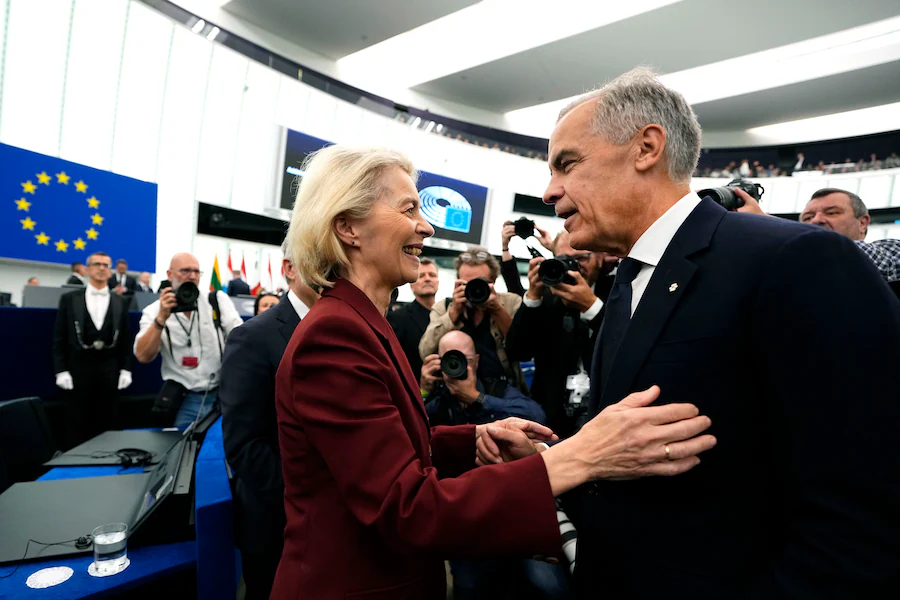
Canada and the European Union have dropped the proposal to make Canada an associate member of the bloc from a joint declaration ahead of a summit in Montreal, as both sides seek to strengthen their economic and security ties.
The declaration, seen by Reuters on Wednesday, said both parties had agreed to pursue an “ever closer association”, with discussions on defining their future relationship expected to continue until another summit next year.
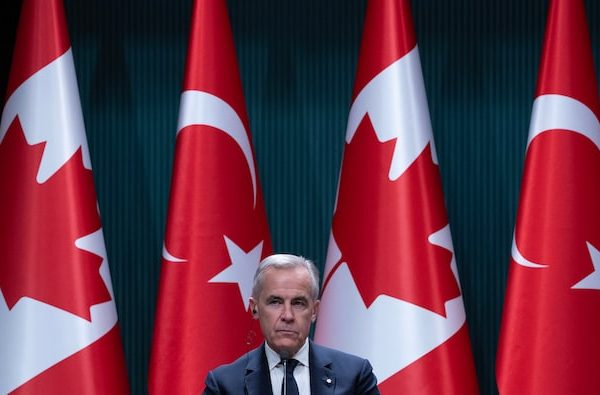
Canadian Prime Minister Mark Carney is hosting the summit, which begins on Thursday.
Officials are expected to make the joint declaration public on Friday.
The proposal for associate membership, raised by European Commission President Ursula von der Leyen about six weeks ago, had sparked divisions among EU member states.
Diplomats said Germany led opposition to the idea, arguing that the concept lacked legal status and had not been clearly defined.
The development comes as Carney seeks to reduce Canada’s economic and security dependence on the United States following President Donald Trump’s decision to impose tariffs on Canadian goods.
However, closer relations with the EU could complicate Canada’s ongoing trade negotiations with Washington.
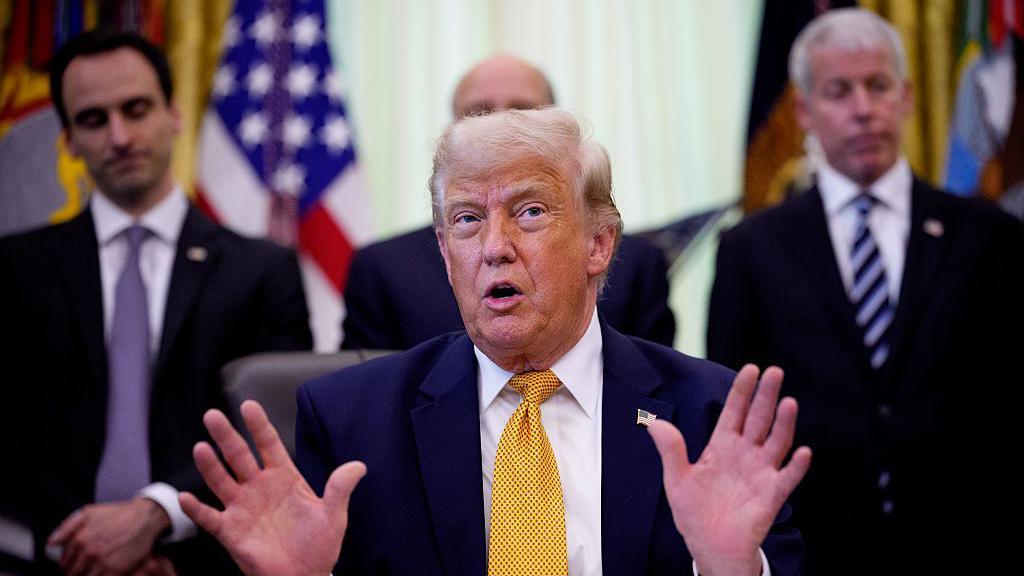
Trump had previously described the proposal to make Canada an associate member of the EU as “laughable”.
He also warned that if he considered the move a “hostile act,” the United States might stop trading with Europe “on many things.”
Carney told reporters on Tuesday that the summit would mark the beginning of further formal negotiations expected to last another year.
“The good news is it doesn’t matter about specific names or nomenclature,” Carney said. “What matters is the difference it will make to the lives of Canadians.”
An earlier draft of the declaration reportedly referred to Canada as an associate member at least twice, including a provision acknowledging that defining the arrangement would take another year.
The agreement also outlines plans to improve international connectivity between Europe, Canada and Asia through new subsea cable infrastructure.
In addition, both sides intend to conduct a joint feasibility study on Canadian liquefied natural gas exports to Europe and create opportunities for young Canadians and Europeans to work across the Atlantic.
However, some analysts have questioned whether the proposed partnership would deliver significant economic benefits to Canada.
Julian Karaguesian, a former adviser at Canada’s Finance Ministry, described the summit as “a bit of a show.”
He argued that Canada’s efforts to strengthen its relationship with the EU remained poorly defined and might not achieve Carney’s broader objective of diversifying the country’s international relationships.
Canada sends nearly 70 per cent of its exports to the United States, while the EU accounts for about nine per cent of its total trade.
Carney’s office declined to comment on the declaration.
Statement May Anger Washington
The joint statement also reaffirms Canada’s and Europe’s commitment to a rules-based international order and expresses regret over US sanctions imposed on the Netherlands-based International Criminal Court.
Barry Appleton, an international trade lawyer and fellow at the Balsillie School of International Affairs in Waterloo, Ontario, said the language could provoke a negative reaction from Trump.
“All that talk of multilateralism and support for international law is basically like sticking a finger into President Trump’s eye,” Appleton said.
He added that closer cooperation between Canada and the EU on economic security could also irritate Washington, particularly as the United States views European-style digital regulations as barriers to trade.
According to Appleton, the declaration commits Canada to aligning its artificial intelligence and digital rules with Europe’s regulatory framework, a move that could further strain relations with the US.
“This is a highly provocative statement from the EU and Canada,” Appleton said.
The White House, responding to a request for comment, said US and Canadian trade officials were holding discussions.
Meanwhile, EU officials described the summit as a “historic milestone” during a briefing on Tuesday, saying it would renew the bloc’s commitment to Canada and establish an ambitious new phase in their partnership.
They also maintained that all EU member states supported building the closest possible relationship with Canada.