Residents in eastern Democratic Republic of the Congo have reportedly set parts of an Ebola isolation unit on fire after hospital authorities refused to release the body of a man suspected to have died from the virus for burial.
According to a BBC report, the incident occurred at Rwampara General Hospital near Bunia in Ituri province, the centre of the outbreak. Relatives and supporters of the deceased had attempted to retrieve the body, but health officials denied access due to strict Ebola protocols.
Tensions escalated at the facility, with police reportedly firing warning shots as clashes broke out and the situation deteriorated into violence.
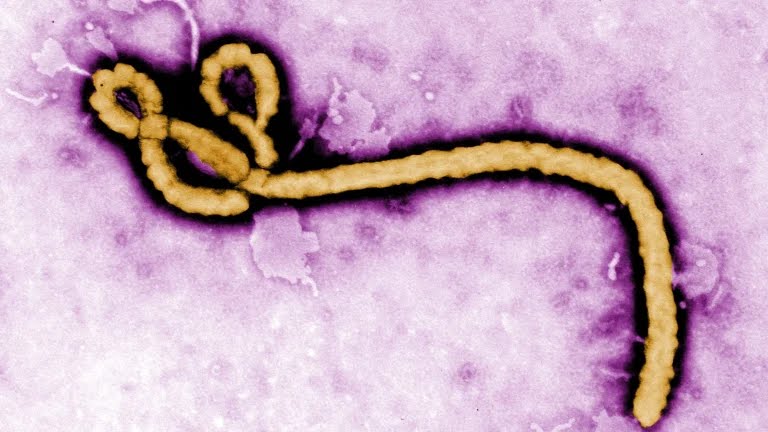
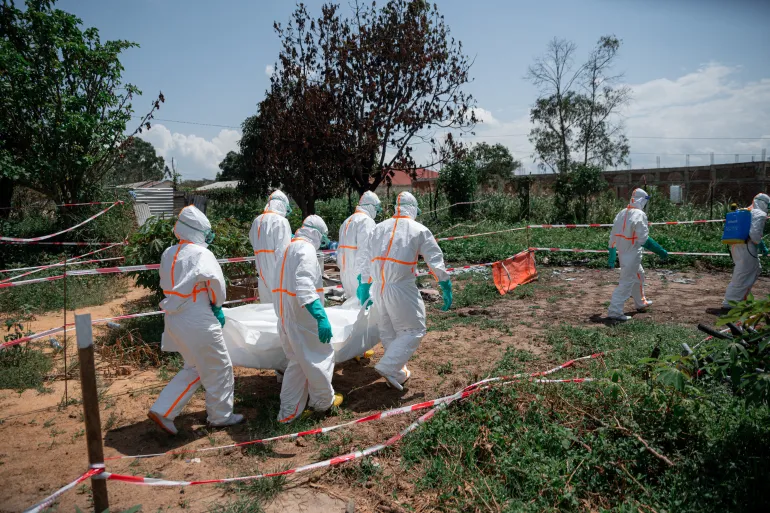
Health authorities maintain that victims of Ebola must be buried under controlled conditions because the virus remains highly infectious in the bodies of those who have died, posing a continued risk of transmission.
Following the attack, medical staff at the hospital were placed under military protection, while security forces moved in to restore order in the area.
Jean Claude Mukendi, coordinator of the Ebola security response in Ituri, said many residents were still struggling to accept the outbreak’s reality.
The deceased, described as a local footballer who had played for several community teams, was reportedly believed by his mother not to have died from Ebola.
She insisted instead that he had died of typhoid fever.
Local politician Luc Malembe Malembe blamed misinformation and poor awareness for the unrest, saying, “People are not properly informed or sensitised about what is happening. For a certain segment of the population, especially in remote areas, Ebola is an invention by outsiders — it does not exist,” he said.
“They believe NGOs and hospitals created this to make money, and this is tragic.”
He added that two isolation tents, including one containing a body awaiting burial, were destroyed in the fire.
Thérèse Kayikwamba Wagner described the situation as “very frightening” for affected communities, noting that authorities were stepping up efforts to ensure residents feel “safe, understood and heard”.
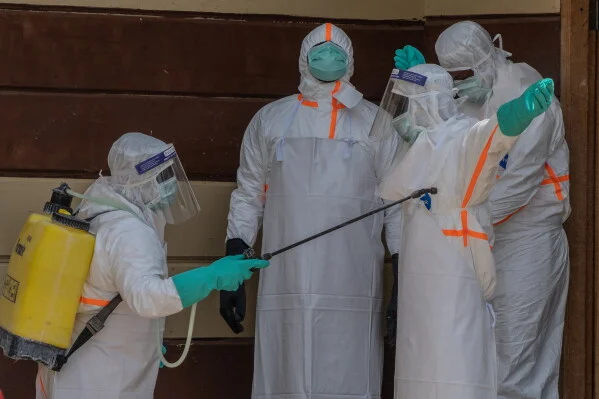
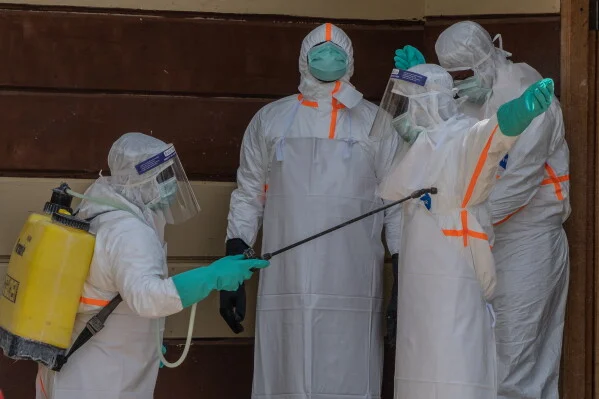
The World Health Organization has urged “safe and dignified burials” for Ebola victims, with specially trained teams handling remains in protective equipment to prevent further infections.
On Friday, WHO Director-General Tedros Adhanom Ghebreyesus said the outbreak risk in DR Congo had been raised to “very high” at the national level, adding that the country has recorded about 750 suspected cases and 177 suspected deaths linked to the disease.