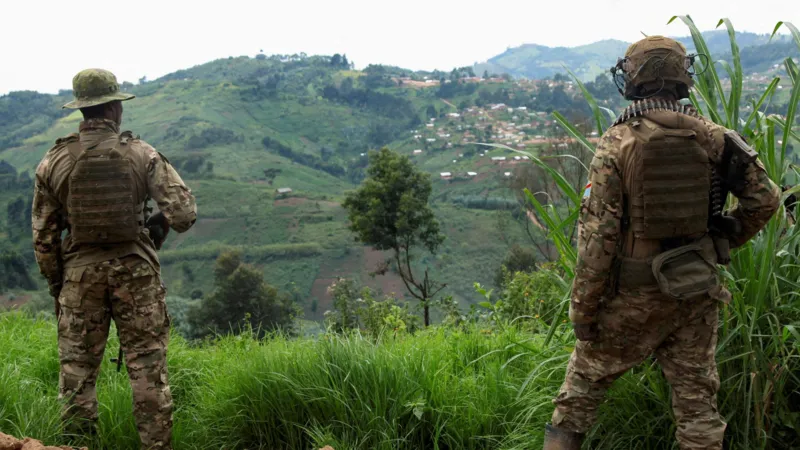
The Democratic Republic of Congo has sentenced 66 soldiers to death over allegations of cowardice, mutiny and disobedience to military orders, following a trial in the country’s eastern region.
The soldiers were among 71 military personnel tried before a military court in Walikale, North Kivu province.
Four were acquitted, while another was handed a 10-year prison sentence, according to local media reports.
The Congolese army said the trial was aimed at strengthening discipline among its personnel as government forces continue to battle armed groups in the conflict-ridden eastern part of the country.
The soldiers were reportedly arrested on October 20 in Walikale after allegedly abandoning their positions and fleeing during clashes with fighters from the Front for the Refoundation of the Nation, a rebel coalition that includes the M23 group.
The army has struggled with indiscipline and disorganisation within its ranks despite its prolonged campaign against armed groups in the region.
Soldiers have also raised concerns about poor salaries and inadequate military equipment, while the military continues to face criticism over its professionalism.
Last month, 27 other soldiers were sentenced to death for similar offences after reportedly retreating from frontline positions during fighting with rebel forces.
In March 2024, the Congolese government lifted a 20-year moratorium on the death penalty, saying the decision was necessary to eliminate “traitors” within the military.
The government also announced that capital punishment would apply to individuals involved in armed groups, insurrection, treason and war crimes.
The decision attracted widespread condemnation from human rights organisations.
However, no formal executions have been carried out since the government reinstated the death penalty.
Figures compiled by French broadcaster RFI indicate that at least 507 soldiers have been convicted since the beginning of 2025, with 381 of them receiving death sentences.
Meanwhile, former Congolese President Joseph Kabila was sentenced to death in absentia in October 2025 over charges including treason and war crimes.
Kabila, who denied the allegations, was not present in court to defend himself and has since been identified as the leader of the FRN rebel coalition.
The conflict in eastern DR Congo has persisted for decades, with government troops fighting several armed groups, including M23.
The Congolese government has repeatedly accused neighbouring Rwanda of backing the rebels, an allegation denied by Kigali and the rebel group.