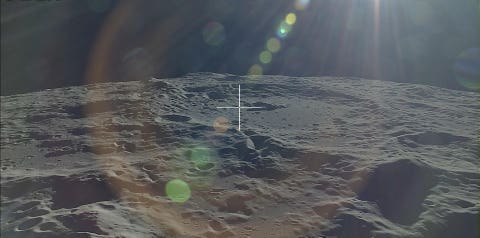
A discarded SpaceX Falcon 9 upper stage slammed into the Moon early Wednesday, leaving a fresh impact crater and drawing renewed attention to the growing problem of human-made debris on the lunar surface.
The 45-foot (13.8-metre) rocket stage struck the Moon at approximately 2:35 a.m. EDT (0635 GMT) on Wednesday, August 5, travelling at about 5,400 mph (8,700 km/h) after drifting through space for nearly seven months.
The impact occurred near Einstein Crater on the Moon’s far side, where it was daytime at the time of the collision, making the event impossible to observe from Earth.
While the crash posed no threat to people or spacecraft, it has intensified concerns over the increasing accumulation of space debris beyond Earth’s orbit as lunar exploration accelerates.
The Falcon 9 upper stage was launched on January 15, 2025, carrying Firefly Aerospace’s Blue Ghost Mission 1 and ispace’s Resilience lunar lander.
Blue Ghost successfully touched down on the Moon on March 2, 2025, but Resilience crashed during its landing attempt on June 4, 2025.
Following the completion of its mission, the rocket stage remained in space instead of re-entering Earth’s atmosphere.
Astronomers tracked its trajectory for months and accurately predicted its eventual impact with the lunar surface.
The incident comes at a time when governments and private companies are preparing for an expanded human presence on the Moon.
With NASA, China and commercial operators advancing plans for future lunar missions, including NASA’s proposed moonbase, experts say greater attention must be given to the safe disposal of spacecraft once their missions end.
Scientists are expected to analyse data from the impact to better understand the Moon’s surface, while space experts continue to call for stronger international guidelines on tracking and managing space debris to reduce risks to future lunar missions and protect historically significant landing sites.