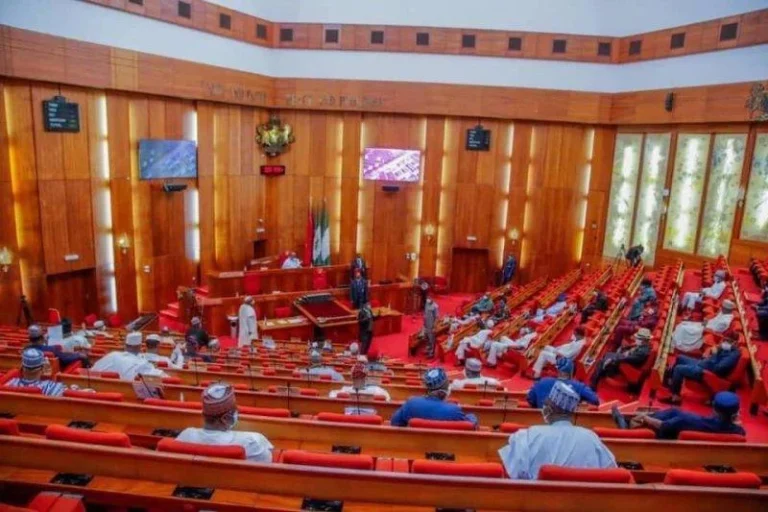
The National Assembly has forwarded the 2026 Constitution alteration bill to the 36 state Houses of Assembly for consideration, with the lawmakers expected to communicate their decisions within 30 days.
The Clerk to the National Assembly, Kamoru Ogunlana, announced the transmission on Wednesday, saying it followed the approval of the leadership of the federal legislature.
According to Ogunlana, the exercise is the next stage in the constitutional amendment process and was carried out in line with Section 9 of the 1999 Constitution, as amended.
He said the proposed amendments must receive the support of at least two-thirds of the state Houses of Assembly before the process can move forward.
“Section 9 of the Constitution provides, among other requirements, that either House of the National Assembly shall not pass a Bill for the purpose of altering the provisions of the Constitution unless it is approved by resolution of not less than two-thirds of the Houses of Assembly of the 36 States of the Federation,” Ogunlana stated.
This means at least 24 of the 36 state legislatures must approve the proposed alterations.
The state assemblies will now subject the bill to their respective legislative procedures before sending their resolutions back to the National Assembly.
Although the federal legislature has asked the states to respond within 30 days, the Clerk clarified that the timeframe is not a constitutional requirement.
He explained that the 30-day period was set as an administrative target to ensure the amendment exercise progresses in an organised and timely manner.
“The Constitution does not prescribe a specific period within which the state Houses of Assembly are required to communicate their resolutions on a constitutional alteration Bill,” Ogunlana said.
He added that the 30-day period “is an expected administrative timeframe and does not constitute a constitutional deadline.”
The National Assembly also said the transmission of the bill was not intended to influence the decisions of the state legislatures.
Ogunlana stressed that the state assemblies retained their constitutional independence and would determine how to consider the proposals.
He said, “The National Assembly recognises the constitutional responsibility vested in the state Houses of Assembly and respects their independence in the consideration of the Bill.”
The latest development follows the passage of the proposed constitutional alterations by both the Senate and the House of Representatives.
Under Section 9, constitutional amendments require approval by at least two-thirds of the members of each chamber of the National Assembly, followed by endorsement from not less than two-thirds of the state Houses of Assembly.
The process is taking place ahead of the expiration of the 10th National Assembly in June 2027.
Concerns had been raised that preparations for the 2027 general elections could slow down the constitutional review process.
However, the Chairman of the Senate Committee on Media and Publicity, Yemi Adaramodu, said the Senate was determined to complete the exercise within the lifespan of the current Assembly.
“The proposed constitution amendments, already started by the 10th National Assembly, shall be passed in the life of this current Assembly,” Adaramodu said.
He also clarified that the 10th National Assembly would not expire in January 2027, noting that its tenure runs until June 2027.
The Senate President, Godswill Akpabio, has similarly expressed confidence that lawmakers can handle electoral preparations while continuing with their legislative responsibilities.
The proposed constitutional review covers several areas of Nigeria’s governance and political structure. Its success, however, will depend on securing the required level of support from the state legislatures.
With the bill now before the 36 Houses of Assembly, attention has shifted to the state lawmakers and whether the required 24 states will endorse the proposed amendments.