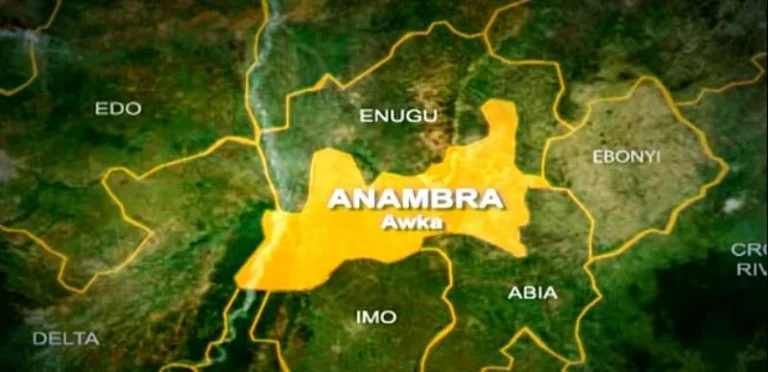
The Anambra State Internal Revenue Service has commenced enforcement against individuals and organisations that have failed to meet their tax obligations in the state.
The Executive Chairman of AIRS, Ikeazor Okonkwo, announced this on Tuesday during a briefing at the agency’s headquarters in Awka.
Okonkwo said the enforcement followed the September 5 expiration of the Voluntary Assets and Income Declaration and Tax Regularisation Scheme, which had allowed taxpayers to resolve outstanding liabilities and benefit from applicable concessions.
He said, “With the expiration of the scheme, the window for voluntary tax regularisation has closed. AIRS has accordingly commenced full statutory compliance monitoring and enforcement actions against non-compliant taxpayers in accordance with applicable tax laws.”
According to him, the enforcement will affect taxpayers who failed to regularise their liabilities under the scheme, as well as those who received Best of Judgment assessments but neither challenged nor settled them within the stipulated period.
He added that individuals and businesses found to have underpaid, under-remitted or otherwise breached their tax obligations would also be subject to enforcement.
Okonkwo warned that defaulters could face penalties prescribed by law, including final demand notices, sealing of premises, recovery of outstanding liabilities and prosecution where tax offences are established.
He said, “Non-compliant taxpayers may be subject to enforcement measures prescribed by law, including issuance and service of final statutory Demand Notices and sealing, where applicable, recovery of outstanding tax liabilities through lawful enforcement measures, and prosecution and commencement of court proceedings in respect of established tax offences.”
The AIRS chairman urged taxpayers with outstanding obligations to take immediate steps to regularise their records.
“All affected taxpayers are therefore advised to take immediate steps to regularise their outstanding tax obligations and ensure full compliance with the applicable tax laws,” he added.
Okonkwo disclosed that about 500,000 taxpayers had so far been captured in the state’s database, while AIRS was targeting another 500,000 to bring its registered taxpayer population to one million.
He said the agency would rely heavily on digital processes during the enforcement exercise to reduce physical interactions between tax officials and taxpayers.
The chairman said AIRS had spent considerable time educating the public before commencing enforcement, using media campaigns, jingles, announcements in churches and markets and public address systems.
He also announced plans to establish an alternative dispute resolution mechanism for taxpayers who have genuine objections to their assessments.
“We are also setting up an alternative dispute resolution mechanism so that if there are any genuine objections that any taxpayer has, he can come up and the issue will be addressed,” he said.
Okonkwo stressed that the agency would pursue unpaid taxes within the limits of the law, while urging compliant taxpayers to continue meeting their obligations.
“But one thing that is clear is that AIRS under the leadership, is going through a process where we will lawfully go after all the people who have not regularised their tax affairs. Those who are already compliant, they should keep it up,” he said.
He explained that taxpayers who had received assessments or demand notices could still present legitimate objections, while those without valid grounds for disputing their liabilities were expected to pay.
He said the agency had identified taxpayers who failed to comply and was consulting its legal advisers on the appropriate steps to take against them.
Okonkwo outlined four broad categories of taxpayers: those already compliant who should maintain their status; those with genuine objections who could present them for review; those without valid objections who should make the required payments; and taxpayers with other outstanding obligations who should regularise their affairs.
He said the overall objective was to improve tax compliance and change the attitude of residents towards fulfilling their statutory obligations.
“Essentially, what we are trying to do is change the culture of tax compliance. A culture that has taken several years to develop will take some time to dismantle, if I may use that word. Every citizen is expected to file tax returns,” Okonkwo said.
He explained that residents were expected to declare income from sources such as employment, rent, investments and businesses before paying the appropriate taxes.
The chairman said AIRS had initially focused on taxpayer education and engagement during its first six months, while data analysis was used to identify areas with significant levels of non-compliance.
“As a tax authority, our first six months were focused on education, engagement and helping taxpayers understand the process. We also used certain data points to identify significant areas of non-compliance and people who had blatantly refused to pay their taxes,” he added.
Taxpayers seeking clarification or verification were advised to use the agency’s official channels for enquiries and regularisation.