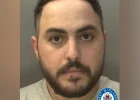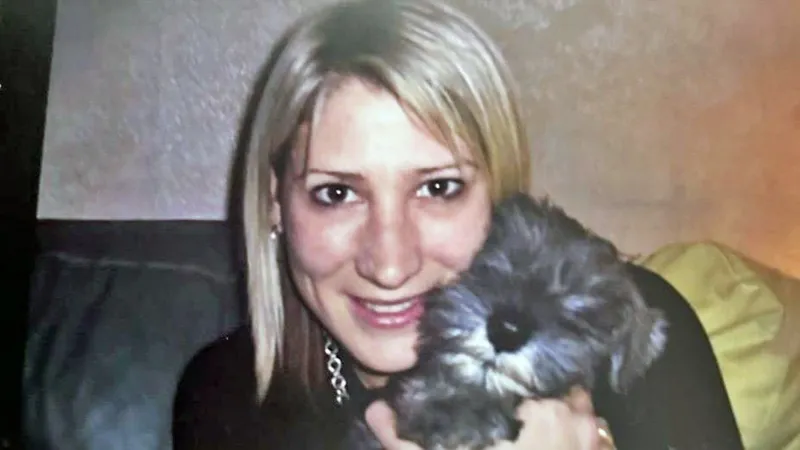
A former Metropolitan Police detective inspector, who was investigated for allegedly sexually exploiting vulnerable crime victims, gave conflicting accounts of his wife’s death in a Barbados hotel room, the BBC has reported.
Warren Arter, 54, allegedly subjected his wife, Rebekah Arter, to more than a decade of domestic and sexual abuse, coercive control and drugging after meeting her when she reported domestic abuse to the police in 2006.
Rebekah, 47, died in a hotel in Barbados in June 2024, but the circumstances surrounding her death remain unresolved.
An investigation by BBC Panorama revealed alleged failures by Barbadian authorities to preserve evidence and question hotel staff about Arter’s suspicious conduct before and after his wife’s death.
The Metropolitan Police also declined to send detectives to the Caribbean island despite requests from Rebekah’s family for assistance.
According to the report, Arter provided different explanations for his wife’s death to hotel staff, relatives and others.
He reportedly claimed that she had choked, fallen and hit her head, or that he had woken up to find her dead.
Hotel security guard Andrew, who was among those who entered the room after Arter reported that his wife had collapsed, said the former detective behaved suspiciously.
He also alleged that Arter attempted to leave for a nearby street party before emergency services arrived.
“So I’m asking him, why do you need to go when you have a bigger issue here?”
Andrew said Arter replied: “Oh, I just need to clear my head.”
The security guard further alleged that Arter later performed CPR on his wife despite her apparent condition, describing his tears as “crocodile tears”.
He said the former detective’s explanations kept changing, adding that he was “just trying to find the right story that fits and none of them added up”.
Arter also reportedly sent a video of the hotel room to family members and friends in the UK, in which he could be heard saying, “It looks like chocolate but it’s blood.”
Rebekah’s daughter-in-law, Lacey, said Arter told her that he and his wife had slept for 18 hours and that he had woken up to find her dead.
“He was outright lying. He was forgetting what he was telling people,” she said.
Other hotel workers told the BBC that Arter appeared controlling during their stay, with security supervisor Kenneth alleging that he “didn’t allow Rebekah to do anything on her own”.
A hotel front desk worker also said staff suspected that Arter was drugging his wife.
The BBC investigation further revealed that Rebekah’s family discovered drugs, hidden CCTV cameras and photographs of her naked and bruised in the home she shared with Arter after her death.
Some of the photographs reportedly appeared to have been taken without her consent.
Four days after Rebekah’s death, her son, Elliot, and Lacey visited Bexleyheath Police Station in the UK to report the incident and raise concerns about Arter’s possible involvement.
Elliot said the police initially dismissed the matter because the death occurred in Barbados.
“The front office staff said, ‘Oh well it’s happened in Barbados, it’s a Barbados issue’ – and tried to brush it off at first,” he said.
Lacey added, “The moment I gave Warren’s name, it was like chaos – we had sergeants coming down to the front desk.”
She also alleged that the police response focused more on Arter than on Rebekah’s death.
“But it really wasn’t about Rebekah, it was more about Warren,” she said.
The Metropolitan Police reportedly briefed a senior Gold Commander on the incident that evening but did not send officers to Barbados.
The force told the BBC that it made immediate efforts to obtain information before deciding that deploying detectives would not be appropriate in the absence of an allegation of criminality.
A UK inquest later raised serious concerns about the handling of Rebekah’s body in Barbados.
A pathologist there had reportedly “chopped up” her organs into small pieces, an action a UK pathologist said served no medical purpose and destroyed vital evidence.
The inquest also found that crucial toxicology and histology tests had not been conducted.
Coroner Andrew Harris rejected the cause of death given by Barbadian authorities, which was aspiration pneumonitis, and recorded an open verdict.
He concluded that Rebekah’s death likely involved intoxication and that unlawful killing could not be ruled out.
Barbadian police had previously maintained that no marks of violence were found on her body and that there was nothing to suggest foul play.
They said toxicology tests were not ordered because they believed she had died of natural causes.
Arter, who had been suspended from the Metropolitan Police and investigated over his conduct towards eight alleged victims by the Independent Office for Police Conduct, was never convicted in those cases.
He was dismissed from the force in 2023 following drug offences.
A week after his wife’s death, Arter returned to the UK and was arrested at Heathrow Airport over alleged sexual offences against another woman whose case he had investigated while serving as a police officer in 2010.
He died by suicide at HMP Wandsworth three days after his arrest.
In response to the BBC investigation, Metropolitan Police Commander Simon Messinger said, “Our thoughts at this time remain with Rebekah Arter’s family, who understandably have questions about the circumstances of her death.
“We would urge any victim survivors of rape and sexual offences – no matter how long ago a crime may have occurred – to reach out.”
Rebekah’s son, Elliot, said his children would never have the opportunity to know their grandmother or understand how she died.
“My daughter, my son – they’re never gonna actually have any memories of her,” he said.
“For the rest of my life, I’m never going to know how she’s passed away.”