United States President, Donald Trump, has disclosed that the Federal Bureau of Investigation is investigating an alleged affair between Nvidia Chief Executive Officer, Jensen Huang, and a woman suspected of being a Chinese spy.
Trump said he spoke with Huang on Monday about the allegations, adding that the technology executive denied knowing the woman had links to Chinese intelligence.
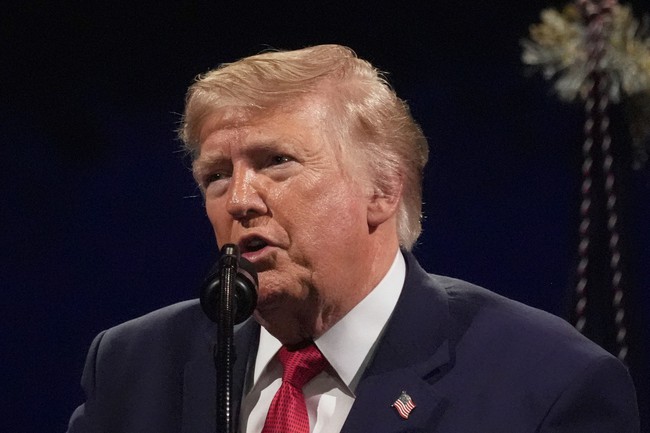
“I asked him that question, ‘Did you have any idea she was a spy?’ He said ‘I had no idea she was a spy’ and I really believe him,” Trump told reporters.
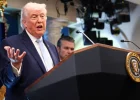
The US president later confirmed at the White House that the FBI was looking into the matter but declined to provide further details about the investigation or when it began.
The FBI also declined to comment on the development when contacted by the BBC.
According to a report by The New York Times, US intelligence officials believe Alice Huang, also known as Huang Le, was working as a spy for Beijing. She is not related to Jensen Huang.
The newspaper reported that Secretary of State Marco Rubio sent a memo to senior officials in Washington last spring, warning about the Nvidia chief’s close relationship with the suspected Chinese intelligence operative.
Alice Huang was the managing director of Singapore-based Megaspeed, a company that has conducted business with Nvidia.
The company has reportedly commissioned an independent investigation into the relationship.
Nvidia said it had no reason to believe its corporate secrets or US national security had been compromised.
The company, which is the world’s second most valuable firm after Apple, designs advanced computer chips that have become essential to artificial intelligence development.
The allegations triggered a sharp reaction in the financial market on Monday, with Nvidia losing about $250bn (£190bn) in market value as its shares fell by more than four per cent.
China, however, has dismissed the allegations, with its foreign ministry describing them as “entirely groundless, speculative and intended to smear and malign China”.
Trump said he considered Huang an honourable man and expressed confidence that he would emerge favourably from the investigations.
“I hope there’s no problem, I believe he is suffering greatly,” the president added.
He also said he contacted Huang on Monday to check on his wellbeing and discuss the allegations, reiterating that the Nvidia chief claimed he had no knowledge of Alice Huang’s alleged espionage activities.
Meanwhile, Huang has admitted being “unfaithful” to his wife and apologised for hurting her and their children.
He said he was “committed to protecting Nvidia and supporting America’s national security” and would cooperate with the company’s investigation.
Huang and Nvidia were also sued in a proposed class-action lawsuit filed in California on Monday.
The suit accuses them of defrauding shareholders by concealing the CEO’s relationship with the suspected Chinese spy.
The lawsuit alleges that Nvidia misled the media about Huang’s relationship with Alice Huang, “who is suspected of seeking to help smuggle Nvidia products to China.”
The Nvidia CEO has also been asked to attend a joint closed-door briefing involving several congressional committees next week.
It remains unclear whether he will appear.
A letter requesting the briefing stated that it would focus on “Nvidia’s security protocols against foreign adversary espionage and your interactions with a publicly reported People’s Republic of China (PRC) intelligence asset: Megaspeed executive Alice Huang”.
The controversy has heightened concerns over Nvidia’s role in the technological rivalry between the United States and China, particularly as Washington considers the company’s chip exports to Beijing a national security issue.
Huang has long opposed restrictions on Nvidia’s sales to China, arguing that the global development of artificial intelligence should be driven by American technology.
In January, the Trump administration announced that Nvidia would be allowed to sell its H200 chips to Chinese customers under certain conditions.
However, the company’s most advanced AI semiconductors, including the GB200 Blackwell superchip, remain restricted from the Chinese market.