Residents of Alberta, a western Canadian province, have voted to remain part of Canada in the region’s first-ever referendum on separation, delivering a major boost to Prime Minister Mark Carney’s efforts to preserve national unity.
According to Reuters, CBC News declared the result late Monday after 33 per cent of the votes had been counted.
At the time, 76 per cent of the votes tallied supported remaining in Canada, while 23 per cent favoured moving forward with a binding referendum on separation.
The referendum was nonbinding, meaning its outcome does not have the force of law.
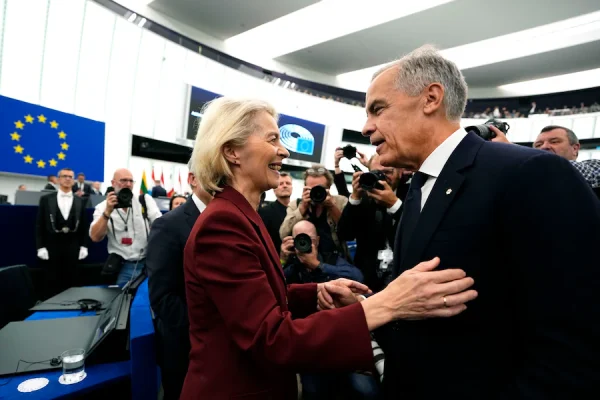
Reacting to the result, Carney said Albertans had made their position clear.
“Albertans made a clear choice,” Prime Minister Mark Carney said in a statement.
“They chose unity, to build together, and to take care of each other.”
“Canada is greater than the sum of its parts,” he said.
The outcome comes as Carney seeks to strengthen national unity amid an ongoing trade dispute between Canada and the United States.
Opinion polls and political analysts had repeatedly played down the chances of a separatist victory, citing findings that suggested about one-third of Alberta residents supported holding a future referendum on leaving Canada.
Alberta Premier Danielle Smith announced the referendum in May, arguing that residents should have the opportunity to express their views on the issue.
“It was time to have a vote, understand the will of Albertans on this subject, and move on,” she said at the time.
Following the announcement of the preliminary results on Monday, Smith said she was “very pleased” with the early indication of widespread support for remaining in Canada.
She added that she would address Albertans on Tuesday to discuss the outcome and “where our province goes from here.”
Despite the setback at the polls, the separatist movement is expected to continue.
Its supporters have argued that Alberta’s substantial energy resources generate wealth that benefits less affluent parts of Canada, while federal government policies and bureaucracy limit the province’s economic potential.
Ahead of the vote, Carney warned against separation during a rally in Calgary, urging residents to reject the idea.
He described voting to leave Canada as “a dangerous bluff that will lead to years of deep division” and appealed to Albertans to “vote like Canada depends on it.”
Carney, who spent much of his childhood in Alberta, has acknowledged that residents of the province have often felt overlooked by the federal government in Ottawa.
His administration has approved a proposed new oil pipeline intended to help Canada diversify its economy and reduce its dependence on the United States, with Alberta expected to play a significant role in the plan.
The referendum follows two previous votes on separation in Quebec, Canada’s predominantly French-speaking province. On both occasions, voters chose to remain part of the country.
Indigenous First Nations groups have also opposed the prospect of an independent Alberta, citing land treaties with the federal government that were established before the province became part of Canada.
CBC News reported significant participation by First Nations voters during Monday’s referendum.
A polling station in southern Alberta, in an area associated with the Siksika Nation, temporarily ran out of ballots before remaining open until after 10 p.m. local time to allow everyone waiting in line to cast their votes.
However, the result may not bring an end to the separatist campaign.
Some movement leaders had indicated before the referendum that they would continue pushing for another vote even if the majority rejected separation.
A poll released on October 16 by Angus Reid found that 62 per cent of Albertans believed “there will never be an end to the separatist movement” in the province.
In addition to the separation question, voters considered nine other nonbinding proposals covering issues such as immigration, eligibility for provincial services, including education, healthcare and social care, as well as voter identification requirements.
Results from those additional questions were still being counted at the time of the report.