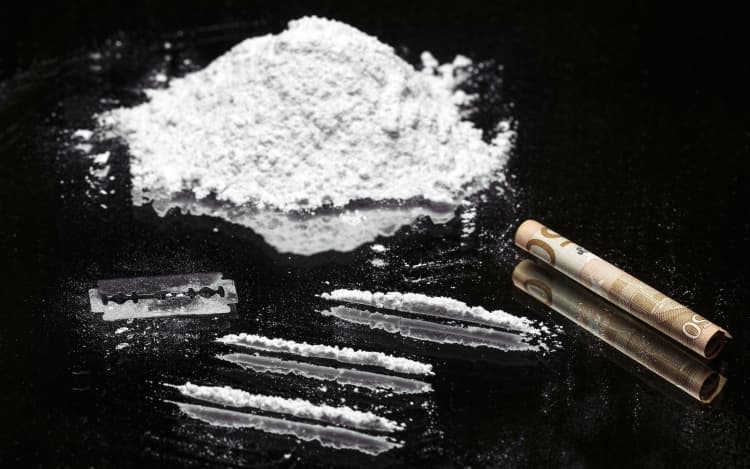
Nearly 40 kilogrammes of cocaine kept as evidence at the High Court in Suva, Fiji, have been stolen and replaced with flour, prompting an investigation into how the drugs disappeared from the court vault.
Police said seven of the 39 cocaine bars were initially discovered missing during an inspection on September 15.
Further forensic testing, however, revealed that none of the original cocaine remained, with the exhibits that were still in storage found to be substitutes.
“Forensic tests conducted on the remaining drug exhibits have all returned negative,” police said in a statement on Tuesday.
“The exhibits were all tampered with and the investigation is focused on those directly charged with the management of the exhibits at the High Court Registry.”
The drugs, valued at about 30 million Fijian dollars ($13.3m), were seized in 2019 from Fiji-Canadian national Joshua Rahman, who was convicted of unlawful possession.
The cocaine was kept at the Suva High Court while appeals in the case were being heard.
Police Commissioner Rusiate Tudravu said the exhibits were moved into the High Court vault in March 2021, but investigators had yet to establish when the cocaine was stolen.
He said tests conducted in 2019 had confirmed that the seized substances were cocaine.
Tudravu said six people working in the judiciary had been identified as persons of interest because they had access to the vault, while one of them was currently outside Fiji.
Police have also begun checking other exhibits held at the court, including confiscated cash.
The incident has raised concerns over security at Fiji’s judicial institutions.
Opposition politician Jone Usamate said in Parliament, “The replacement of the cocaine with flour, whatever it is, that is a sad indictment of … whoever is responsible.”
“How do you know now that what is in all those exhibits is really what is claimed to be in the exhibits?” he added.
Justice Minister Siromi Turaga expressed shock and disappointment over the disappearance, saying authorities were working to strengthen security and review procedures at the High Court.
The development comes as Fiji faces growing concerns over drug trafficking, with the island nation increasingly used as a transit route for narcotics destined for Australia, New Zealand and parts of Asia.
Turaga said the disappearance of the cocaine “has come at a time when we are talking about transnational crime,” adding that “it goes to show the magnitude of the problem we are facing.”
“No one is immune from this. No stone will be unturned. Anyone found guilty will be made accountable,” he said.
The latest case is not the first involving missing seized drugs in Fiji.
Police discovered in March that another 12 kilogrammes of cocaine linked to a separate criminal case had also disappeared.
At a news conference on Wednesday, journalists questioned the police commissioner over why security measures had not been strengthened after the earlier incident.
“All of us are concerned. The government is concerned. I’m concerned about this,” said Tudravu. “That is why we are trying our best to conduct the investigation as fast as we can.”