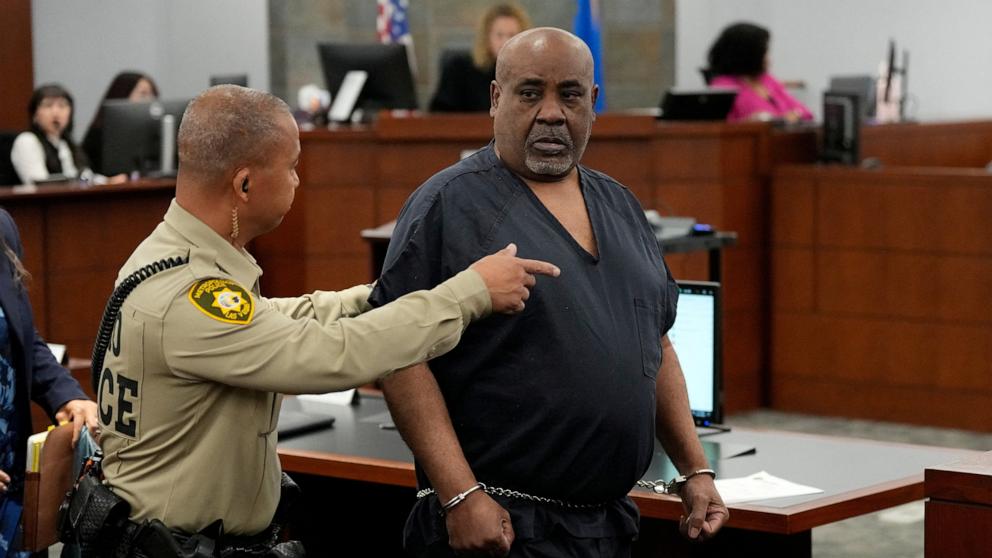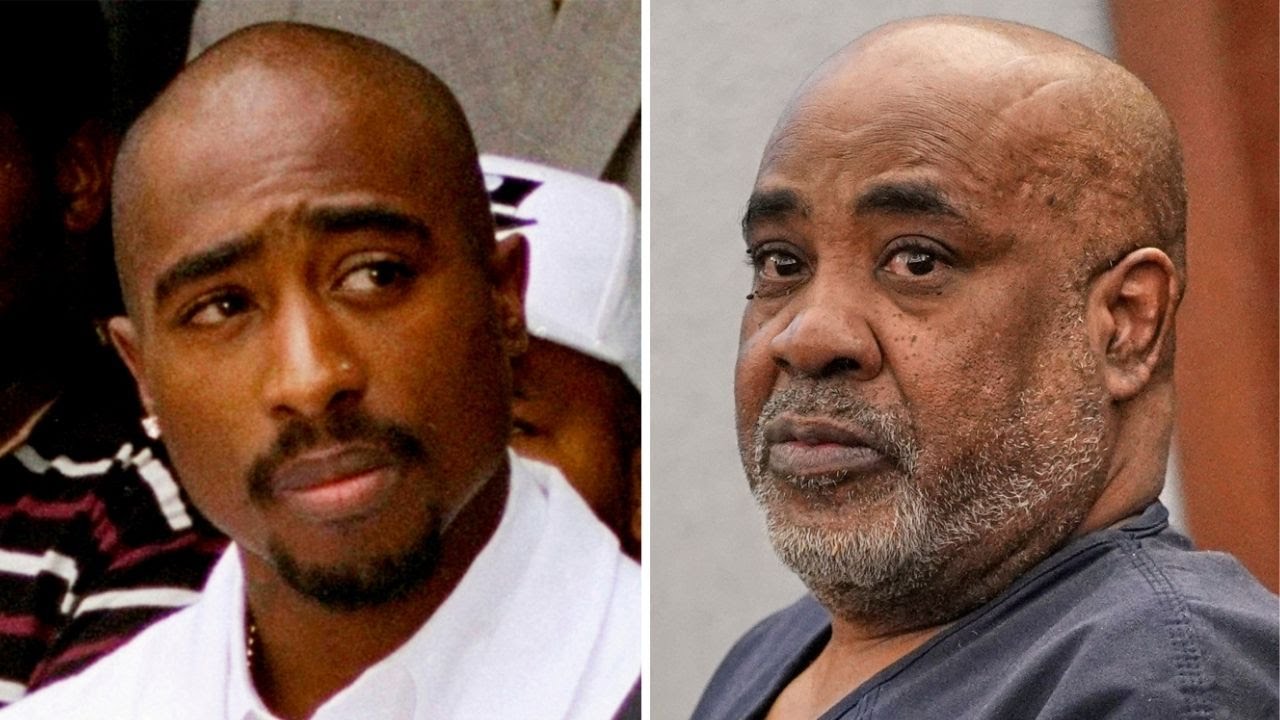
A Las Vegas jury in the United States has found Duane “Keffe D” Davis guilty of first-degree murder in connection with the 1996 killing of legendary American rapper Tupac Shakur.
The 63-year-old Davis was convicted Monday of murder with a deadly weapon following a weekslong trial. He now faces a possible life sentence in prison.
Prosecutors argued during the trial that Davis, a former leader of the South Side Compton Crips, did not pull the trigger but ordered the attack and provided the gun used by his nephew, Orlando Anderson, to shoot Shakur.
They said Davis organised the killing as retaliation after Anderson was involved in a fight with Shakur and members of the rapper’s entourage in Las Vegas earlier that day.
The verdict marks the first conviction in the nearly three-decade-old case, which has remained one of the most closely watched unsolved killings in hip-hop history.
Jurors reached their decision in less than three hours after hearing evidence from 24 prosecution witnesses and three defense witnesses over nine days.
Following the verdict, Shakur’s sister, Sekyiwa “Set” Shakur, broke down in tears and embraced members of the prosecution team. Davis’ son was also in the courtroom and covered his face with one hand.
Prosecutors argued that Davis played a central role in the shooting, even though they did not accuse him of personally pulling the trigger.
Chief Deputy District Attorney Binu Palal told jurors that Davis obtained a firearm and “went hunting” for Shakur and Death Row Records co-founder Marion “Suge” Knight after members of Shakur’s group assaulted Davis’ nephew, Orlando “Baby Lane” Anderson, earlier that night.
Palal acknowledged that Davis had given varying accounts of the shooting over the years but maintained that one important detail remained consistent: Davis repeatedly placed himself inside the white Cadillac from which the gunfire came.
“The core facts remain. The material facts remain,” Palal told the jury.
Prosecutors said the gang enhancement portion of the charge would be dismissed because of difficulties involving witnesses.
How Tupac was killed
Shakur was in Las Vegas on September 7, 1996, when a white Cadillac pulled alongside the vehicle carrying him and Knight at a red light.
Gunmen opened fire, striking Shakur multiple times.
The rapper died from his injuries six days later at the age of 25. Knight was also wounded but survived.
For years, investigators failed to charge anyone in connection with the killing.
The case changed after Davis began speaking publicly about the shooting.
He acknowledged being inside the Cadillac and said he passed a firearm to people sitting in the back seat.
Davis described the attack as retaliation for the earlier confrontation involving his nephew and members of Shakur’s entourage.
Prosecutors argued that under Nevada law, a person who assists in a murder can be held criminally responsible for the killing.
Davis was the only surviving member of the four men prosecutors say were inside the Cadillac.
The person prosecutors said initially supplied the firearm has also died.
Prosecutors rely on Davis’ own accounts
A major part of the prosecution’s case centered on Davis’ previous statements and his 2019 memoir, “Compton Street Legend.”
Palal played an interview in which Davis promoted the book as a source of the “real truth.”
Although the memoir contains a disclaimer stating that some details were altered, prosecutors argued that changes to names and locations did not undermine the central account of the shooting.
Palal also rejected the defense argument that Davis had fabricated his stories for financial gain.
“It is an entirely different proposition to be profiting from a murder,” Palal said. “And that is what Mr. Davis is doing.”
Davis had said in several interviews that he handed the gun to people in the back seat, although he did not identify the person who fired the fatal shots.
Prosecutor Marc DiGiacomo also pointed to a scrapbook Davis kept containing newspaper articles about Shakur.
“This guy’s scrapbooking his murder, for God’s sake,” DiGiacomo told jurors.
The prosecution further presented evidence about the longstanding rivalry between the South Side Compton Crips and the Mob Piru, groups associated with the competing Bad Boy Records and Death Row Records camps.
A gang expert testified that Davis was a shot caller whose younger associates were expected to follow his instructions.
Prosecutors argued that the shooting was planned rather than spontaneous, noting that the group allegedly searched for Shakur before spotting his vehicle and making a U-turn.
“It’s a plan, not an impulse,” Palal said.
Defense challenges prosecution’s case
Davis’ attorney, Michael Sanft, questioned whether prosecutors had sufficient evidence to establish that his client directed the shooting.
Sanft pointed to the lack of evidence showing that Davis had acted as a shot caller before or after the 1996 incident.
During closing arguments, Sanft also read from Davis’ memoir.
At one point, he repeated a racial slur contained in the passage, prompting visible reactions from people watching from an overflow courtroom.
Investigators also testified about a Las Vegas hotel bill discovered during a search of Davis’ home.
However, its date could not be established, and it was unclear where the evidence was currently located.
The age of the case presented additional challenges, with prosecutors acknowledging that evidence collected in the 1990s was not as extensive as what investigators routinely gather today.
This included surveillance footage from hotels on the night Shakur was shot.
With Davis now convicted, the case that has captivated music fans and true-crime followers for almost 30 years has reached its first major courtroom conclusion.
Davis is expected to face sentencing, where he could receive life imprisonment.