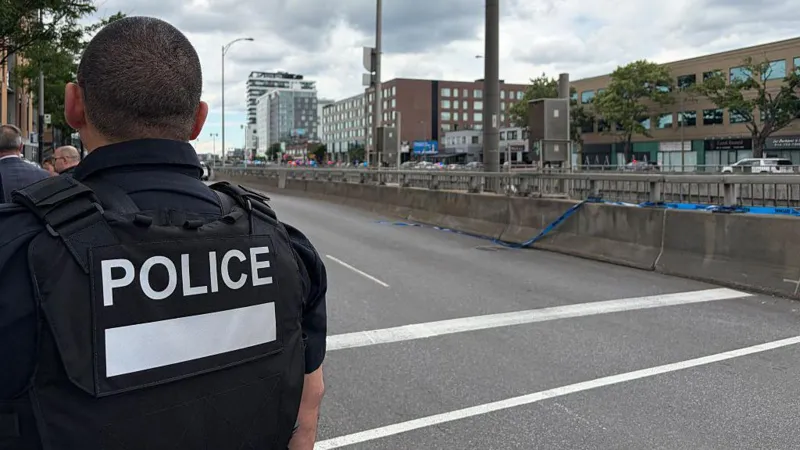
A quiet Montreal neighborhood was thrown into chaos on Monday after a gunman opened fire, triggering a deadly exchange of gunfire with police that left at least two people dead, injured several others and forced residents to remain indoors for hours.
Authorities believe the attack specifically targeted police officers, making it one of the most significant acts of violence against law enforcement in the city in decades.
The suspect was later shot dead by officers.
The incident unfolded in the Côte-des-Neiges district, where residents were ordered to shelter in place while police searched for what they described as an “armed and dangerous suspect.” Investigators later confirmed that the suspect had been killed.
Police are also reviewing a document believed to have been written by the gunman.
The more than 100-page text reportedly promotes incel ideology, according to law enforcement sources. The term “incel,” short for “involuntary celibate,” has been linked to several violent attacks motivated by misogynistic beliefs.
The Montreal Police Service identified the slain officer as Mohamed Lamine Benredouane, 34, who joined the force in 2021.
Quebec Domestic Security Minister Ian Lafrenière said the officer’s death marked the first fatal shooting of a Montreal police officer in 24 years.
Police said the suspect acted alone. Authorities have yet to publicly identify either the gunman or the second person killed during the incident.
Another officer suffered critical injuries and was rushed to hospital. Montreal Police Chief Fady Dagher later said her condition had stabilized. A civilian also sustained minor injuries.
“It appeared to be an ambush,” a Canadian law enforcement source said.
The shooting occurred only a few miles from downtown Montreal in Côte-des-Neiges, a densely populated and culturally diverse borough known for its residential character and strong Jewish community presence.
Witnesses described scenes of panic as gunfire erupted shortly after 11 a.m.
Brandon Benchimel-Elkaim, who lives in a nearby condominium, said families at a local playground scrambled to safety when the first shots were fired.
“I saw parents ripping their kids off of the play structure. They were running for their life,” he said.
He told CBC News that a second burst of gunfire followed soon afterward before police flooded the area.
According to Dagher, officers initially responded to a 911 report of gunshots and a firearm visible from a window on Décarie Boulevard at about 11:35 a.m. As officers arrived, they came under fire.
Video footage circulating online captured the intensity of the confrontation, with more than two dozen gunshots audible during the exchange.
One video showed a team of officers assembling outside a building before an officer smashed through a glass entrance, allowing heavily armed personnel and a police dog unit to enter.
Police later recovered a long gun believed to have been used by the suspect.
Heidi Doctor, who had just dropped off her child for a haircut and was on a work call nearby, described the sudden escalation.
“All of a sudden cops come swarming,” Doctor said.
Her second child had arrived at the salon shortly before the shooting began. Unable to leave the area, she remained on a nearby side street for hours while staying in contact with her children, who sheltered inside the business.
As videos of the violence spread rapidly online, public speculation intensified. Some footage appeared to show a police officer shooting a civilian, prompting scrutiny from Quebec’s police watchdog agency.
Lafrenière urged the public not to share graphic recordings of the incident while investigations continue.
Investigators are examining possible links between the suspect and incel ideology, which has previously been connected to deadly attacks in Canada.
Among the most notorious was the 2018 Toronto van attack, in which a man identifying with the incel movement deliberately drove into pedestrians, killing 10 people.
In 2020, a teenage boy fatally stabbed a female employee at a massage parlour in an attack that was later ruled by a judge to be an act of terrorism — the first crime in Canada motivated by incel ideology to receive such a designation.
Montreal has also witnessed one of the darkest episodes in Canadian history. In 1989, a gunman killed 14 women at École Polytechnique in what became known as the Montreal massacre, a misogyny-driven attack targeting women.
Despite the tragedy, firearm-related violence remains significantly less common in Canada than in the United States. Statistics show that firearms were involved in 38 per cent of Canadian homicides in 2023, compared with 76 per cent in the United States.
Canada also has substantially lower gun ownership rates. Estimates from the Small Arms Research project indicate there are approximately 35 firearms per 100 residents in Canada, compared with 121 per 100 residents in the United States.
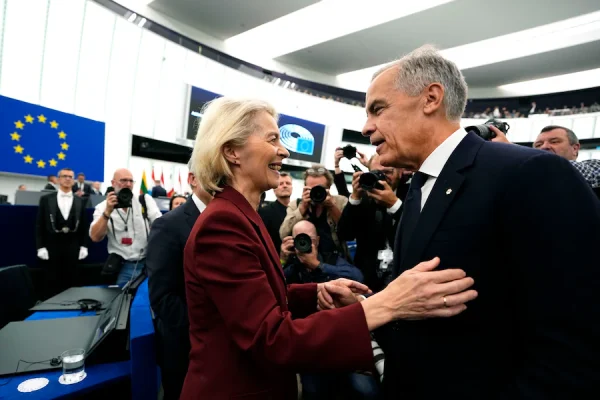
Canadian Prime Minister Mark Carney reacted to the attack by expressing shock over the loss of life.
“My thoughts are with the victims, their loved ones, the first responders, and the entire community of Côte-des-Neiges,” Carney said in a post to X. “My gratitude is with our courageous police officers whose heroic dedication protects our communities.”
Quebec Premier Christine Fréchette announced that she had requested the provincial flag be lowered to half-staff in honour of the victims.
“I would like to thank the police officers, first responders, emergency personnel, and all those working on the ground,” Fréchette said. “In the face of this ordeal, we will remain united, supportive, and determined to stand by all those affected.”