The State of Israel has said it is deepening agricultural cooperation with Nigeria, revealing that Israeli technology and seedlings are already in active use by Nigerian farmers.
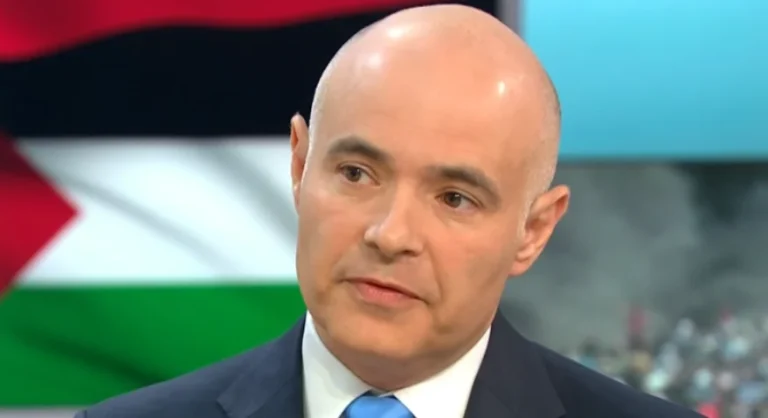
The Punch reported that while speaking in Abuja on Monday night during Israel’s 78th Independence Anniversary celebration, the Israeli Ambassador to Nigeria, Michael Freeman, noted that Israeli firms were already operating within the country.
He explained that although the seedlings and technologies originate from Israel, cultivation is being done locally by Nigerian farmers on Nigerian soil.
According to him, the partnership is steadily expanding across key sectors including agriculture, innovation, healthcare, security, education and skills development, describing the engagements as long-term investments in a shared future.
“When it comes to agriculture, Israeli companies are already working in Nigeria today. As you leave this evening, you will receive a box of vegetables.
“These vegetables were grown from Israeli seedlings using Israeli technology but grown by Nigerian farmers on Nigerian soil. Hold that box for a moment and think about what it represents. Not vegetables, possibility.
“Imagine that success multiplied across Nigeria. Higher yields, stronger rural communities, greater food security and millions upon millions of lives improved.”
He also disclosed new commitments from Israel aimed at strengthening bilateral cooperation, including a new phase of an entrepreneurship programme and the donation of emergency medical vehicles.
“I’m pleased to announce tonight that we are committing to a fifth cohort of the programme for 2027. Today, I’m also pleased to announce that the first three fully equipped ambulances donated by Israel are on their way to Nigeria.
“These ambulances will help save lives, where every minute counts, but they’re more than vehicles. They’re a symbol of partnership. They’re a symbol of what can happen when countries choose cooperation as a solution over slogans. We are expanding cooperation in innovation, agriculture, healthcare, security, education and skills development, not because these are acts of charity.
“They are investments in a shared future. The future of Israeli-Nigerian relations will not be defined by speeches. It will be defined by entrepreneurs who build companies. It will be defined by farmers who produce more. It will be defined by doctors and paramedics. It will be defined by young people who refuse to accept limitations because when Nigerian creativity meets Israeli innovation, extraordinary things happen,” he said.
Freeman also highlighted Israel’s historical development journey, saying the country transformed severe constraints into technological and agricultural breakthroughs.
“For 78 years, Israel has been making miracles happen. Transforming deserts into farmland, scarcity into abundance, ideas into technologies and challenges into opportunities.
“For just 650,000 people, we had no oil, we had no vast natural resources. Much of our land was desert. We faced existential threats from the moment independence was declared. Yet, we refused to accept that geography was destiny. We learned how to grow food in the desert. We pioneered drip irrigation and precision agriculture.
“We turned seawater into drinking water. We became a global leader in medicine, cybersecurity, artificial intelligence and innovation. Israel did not become a technological powerhouse because our challenges were small. Israel became a technological powerhouse because our challenges were enormous. We learned that every problem contained within it a seed of opportunity, and that lesson has shaped our nation ever since,” he said.
He further emphasized that Nigeria holds significant untapped potential, pointing to its youthful population, entrepreneurial energy and agricultural capacity.
He added that stronger cooperation between both nations could unlock greater economic and social benefits.
The envoy also noted that the Israel-supported IFARE programme continues to support young Nigerian entrepreneurs through mentorship and capacity-building initiatives.
Also speaking at the event, the Minister of Art, Culture and Tourism, Hannatu Musawa, congratulated the Israeli government and people on their 78th Independence Anniversary and reaffirmed Nigeria’s commitment to strengthening bilateral relations.
She described the relationship between both countries as one rooted in cooperation, economic development, partnership and shared values.
“Nigeria and Israel share a long-lasting relationship, founded on cooperation, economic transformation, partnership and community. “While our nations are separated by geography, we are united by a rich tapestry of cultural diversity and interdependent energy,” she said.
Musawa added that Nigeria is eager to expand collaboration with Israel in areas such as culture, tourism, agriculture, innovation and the creative economy.
She further stressed that cultural diplomacy remains a powerful tool for deepening international relations, fostering education, driving economic growth and encouraging people-to-people exchanges.