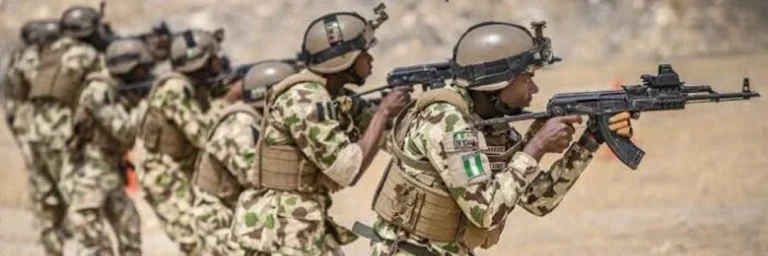
A journalist with online newspaper TheCable, Olalekan Fakoyejo, has alleged that he was physically assaulted by a soldier during a traffic-related incident in the Ogba area of Lagos State.
Fakoyejo, who serves as an Assistant Business Editor, recounted that the incident occurred on Saturday while he was travelling in a tricycle from Ikeja to Ogba.
According to him, soldiers were managing traffic around Pleasant Event Centre, off Ajao Road, when the situation escalated.
He explained that a soldier had stopped another tricycle rider and ordered him to carry out what he described as a punitive action, which he believed was worsening the traffic congestion.
“The soldier was trying to punish a tricycle driver on another lane by asking him to climb onto the roof of his tricycle. That action was already causing traffic, so I commented on it from where I was,” Fakoyejo said.
The journalist stated that his remark drew the attention of the soldier, who allegedly confronted him.
“He dragged me out of the tricycle and started threatening me. He insisted I should go and meet his colleagues, even though I had done nothing wrong. I refused, and while I was explaining myself to another soldier who came over, he suddenly slapped me,” he added.
Eyewitness accounts and a video cited by TheCable reportedly show the soldier shoving Fakoyejo and attempting to strike him with an object picked from the ground. During the altercation, the journalist’s phone was said to have fallen and its screen damaged.
Fakoyejo further claimed that as he tried to leave the scene, two other soldiers approached him and issued threats, with bystanders stepping in to calm the situation.
Attempts to obtain an official response from the Nigerian Army were unsuccessful as of the time of filing this report.
The incident adds to growing concerns over alleged cases of misconduct involving military personnel and civilians. In recent times, similar encounters have sparked public outcry, with calls for accountability and respect for citizens’ rights.
Observers say the latest development underscores the need for stronger oversight and adherence to rules of engagement, particularly in civil environments.