Five European nations have stated that Russian opposition leader and vocal Kremlin critic Alexey Navalny, who died two years ago, was killed in prison using a lethal toxin derived from South American poison dart frogs.
Analyses of samples from Navalny’s body “conclusively confirmed the presence of epibatidine,” the statement said, adding that the substance is not naturally found in Russia.
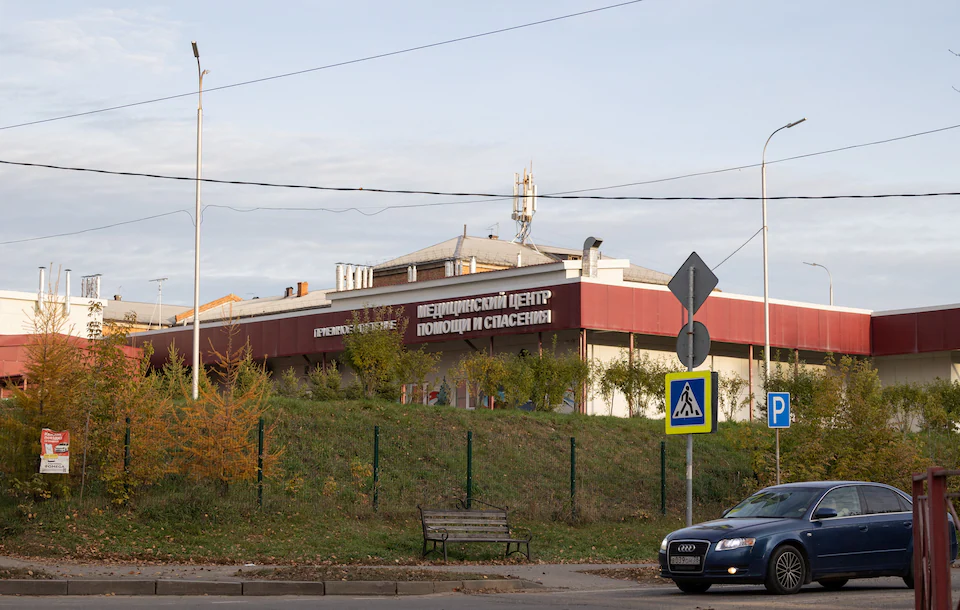
The countries, the United Kingdom, Sweden, France, Germany, and the Netherlands, claimed that Moscow “had the means, motive and opportunity to administer this poison” while Navalny was held in a penal colony north of the Arctic Circle.
They added that only “the Russian state had the combined means, motive and disregard for international law” that could have contributed to his death.
Russian authorities have consistently denied any involvement in Navalny’s death. On Saturday, Russian news agency TASS cited Foreign Ministry spokeswoman Maria Zakharova dismissing the frog poison allegation as “propaganda.” CNN has reached out to the Kremlin for comment.
The announcement coincided with the Munich Security Conference in Germany, where Navalny’s death was first revealed in 2024. At that event, Navalny’s wife, Yulia Navalnaya, took the stage in tears and received a standing ovation.
Speaking at the same conference on Saturday, Navalnaya recalled, “Two years ago, I was here in Munich. It was the most horrible day (of) my life. I came to the stage and I said that my husband, Alexey Navalny, was poisoned.”
In an X post earlier in the day, she wrote, “I was certain from the first day that my husband had been poisoned, but now there is proof: (Russian President Vladimir) Putin killed (Alexey) with chemical weapon.”
“I am grateful to the European states for the meticulous work they carried out over two years and for uncovering the truth,” she added. “Vladimir Putin is a murderer. He must be held accountable for all his crimes.”
When Navalny died, the Russian prison service stated that he had “felt unwell after a walk” and “almost immediately” lost consciousness.
He had been serving time in an Arctic penal colony since returning to Russia in 2021 from Germany, where he had received treatment after being poisoned with Novichok, a Soviet-era nerve agent.
A joint investigation by CNN and Bellingcat previously implicated the Russian Security Service in the earlier poisoning, revealing that the FSB had assembled an elite team specializing in nerve agents that followed Navalny for over three years.
Russia denied any involvement, with Putin asserting that if the security service had wanted to kill Navalny, it “would have finished” the job.
Navalny, known for organizing anti-government protests and exposing alleged corruption in the Kremlin and Russian business through his blog and social media, was considered one of the most serious threats to Putin before his death.
In a 2018 CNN interview, Navalny said, “But I’m not afraid and I’m not going to give up on what I’m going to do. I won’t give up on my country. I won’t give up on my civil rights. I won’t give up on uniting those around me who believe in the same ideals as me. And there are quite a lot of people like that in Russia.”
On Saturday, British Foreign Secretary Yvette Cooper remarked, “Russia saw Navalny as a threat. By using this form of poison, the Russian state demonstrated the despicable tools it has at its disposal and the overwhelming fear it has of political opposition.”
When asked whether he feared Putin might use similar toxins against him, Ukrainian President Volodymyr Zelensky said, “I don’t think about myself because we have already lost a large number of people. I am one of many Ukrainian citizens who continue to fight. I cannot think about Vladimir Putin, about his poisons or toxins that he has or had.”
The five countries confirmed in their joint statement that they have notified the Organisation for the Prohibition of Chemical Weapons, citing what they called a “Russian breach of the Chemical Weapons Convention.”