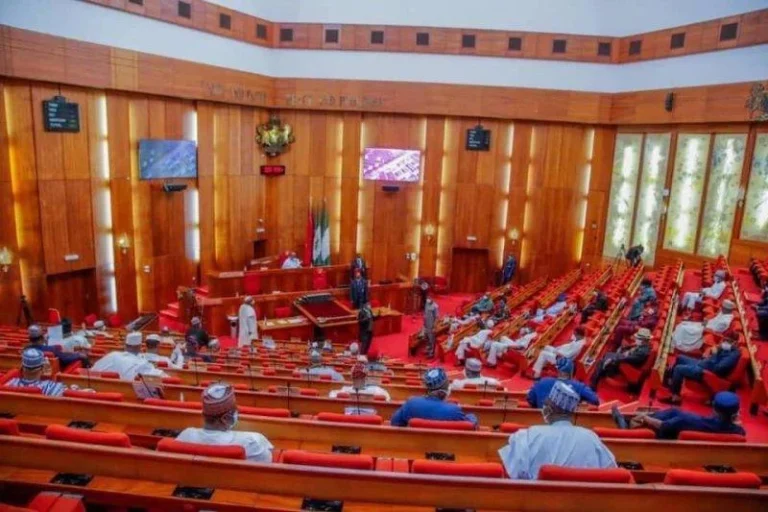
The Senate has stated that Nigeria is not yet equipped to conduct real-time electronic voting, clarifying that the electronic transmission of results should not be mistaken for the adoption of a full e-voting system.
Chairman of the Senate Ad-hoc Committee reviewing the Electoral Act Amendment Bill 2026, Senator Adeniyi Adegbonmire, made the clarification during an interview on Thursday, amid public debate over the National Assembly’s handling of provisions relating to result transmission and the INEC Result Viewing Portal.
Adegbonmire explained that IReV is not a voting platform but a portal designed to display results that have already been manually counted and declared at polling units.
“People must understand what real-time transmission means,” he said. “Real-time transmission can only take place where there is an e-voting system. As of today, INEC does not have the infrastructure for e-voting. Perhaps in the next two or three years, that may change, but for now, it is not in place.”
He stressed that Nigeria has not transitioned to electronic voting and described claims to the contrary as misleading.
“IReV is not an e-voting platform as some people believe. It is simply a software created by INEC to publicise results that have been manually recorded on Form EC8A at the polling units,” the senator said.
According to him, altering terms such as “transmit” or “upload” in the proposed law would not fundamentally change the process.
“Once the presiding officer completes and signs Form EC8A and it is countersigned by agents, the result can then be uploaded to IReV. Whether you call it upload or transmission does not change the substance,” he noted.
Adegbonmire further argued that the National Assembly cannot reconfigure INEC’s software through legislation.
“The pattern of how IReV works cannot be changed simply by writing a law. It will operate based on how it has been designed,” he said.
Addressing concerns about delays in uploading results, the Ondo lawmaker pointed to Nigeria’s logistical challenges, including difficult terrain and uneven access to network services.
“In some areas, voting may conclude by mid-afternoon, while in remote or riverine communities, it may start much later due to transportation challenges,” he said.
“These realities must be factored into our reforms.”
He cautioned that rigid timelines for uploading results could create suspicion where delays are caused by connectivity issues.
“If a result is declared at 2:00 p.m. and appears online at 7:00 p.m., people may assume manipulation, even when the delay is technical,” he warned.